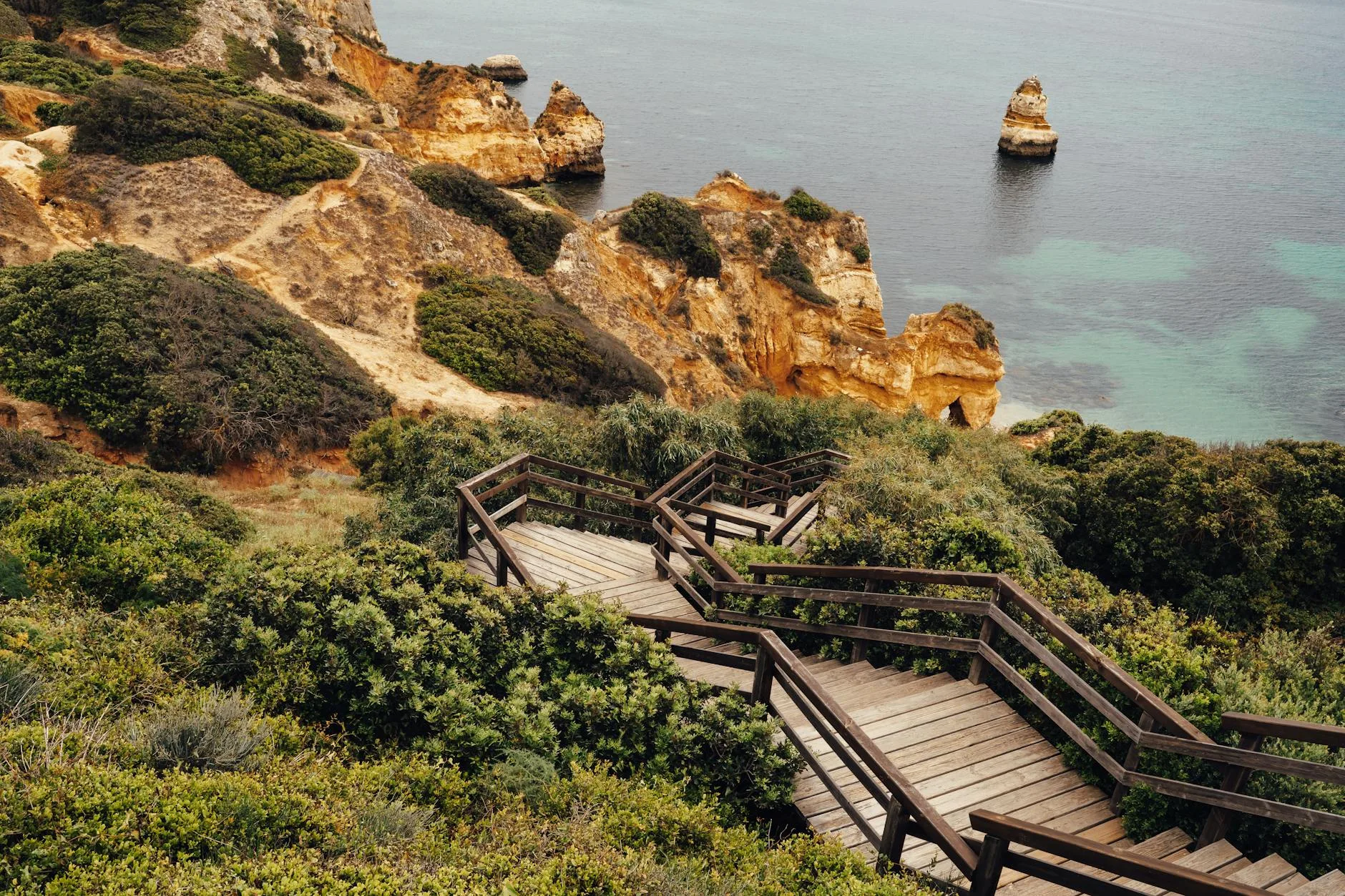
Photo by Alesia Kozik on Pexels
10 best coastal walks in Europe worth the effort
The ferry from Portofino to Camogli runs once an hour, but if you miss it, most people are glad they did. The path that threads the headland between the two — through umbrella pines and wild rosemary, over terracotta-coloured cliffs dropping straight into the Ligurian Sea — is reason enough to let the boat leave without you. That is what coastal walking in Europe does to a schedule: it makes you forget you had one.
Europe has an embarrassment of coastline — around 68,000 kilometres of it — and the walks that follow its edges range from afternoon strolls along crumbling clifftops to multi-day trekking routes requiring boots, reservations, and a certain tolerance for steep gradients. This list is not ranked in order of greatness. Every entry earns its place on its own terms: for the quality of the walking, the honesty of the logistics, and the kind of experience you actually encounter on the ground, not just in the photographs. Some are well-known. A few are not. All of them are specific enough to plan a trip around.
A note on criteria: these routes were chosen for the quality of the walking experience itself — scenery, variety of terrain, access, and what surrounds the trail — not for fame alone. Crowd levels and best seasons are noted honestly. Where a route is genuinely hard, that is stated plainly.
1. Rota Vicentina — Alentejo and Algarve, Portugal
The Rota Vicentina is two trails in one: the Fishermen’s Trail (Trilho dos Pescadores), which hugs the Atlantic coast from Porto Covo south to Burgau, and the Historical Way (Caminho Histórico), which runs inland through cork oak and cistus. Together they cover around 450 kilometres, but most walkers pick a section and follow it for three to seven days.
The Fishermen’s Trail is the more spectacular of the two. It runs along clifftops and across beaches that the Atlantic has been sculpting for millennia — places like Praia do Malhão, Praia do Carvalhal, and the extraordinary arch at Praia da Arrifana. Because this stretch of the Alentejo coast sits within the Southwest Alentejo and Vicentine Coast Natural Park, development is heavily restricted. What that means in practice: almost no buildings in sight, no beach bars, very few people outside of July and August.
Logistics: The best base towns for sectional walking are Odemira (for the northern Fishermen’s Trail), Aljezur, and Vila do Bispo. Accommodation is mostly small guesthouses and rural turismo properties. Rota Vicentina’s official website lists trail-friendly accommodation that will store luggage and arrange transfers. The trail is waymarked with painted blue fish symbols and is generally well-maintained, though sections near Odeceixe can become muddy after rain. Spring (March to May) is the finest season: wildflowers in the clifftop scrub, mild temperatures, and light crowds. August is busy and hot. The route requires no technical skills but several days include 20+ kilometres with little shade — carry water.
Portugal’s Atlantic south coast is worth more than a single walk; for a broader sense of what the region offers as a place to slow down in, see our guide to the best places for slow travel in Portugal.
2. South West Coast Path — Cornwall and Devon, England
At 1,014 kilometres from Minehead in Somerset to Poole Harbour in Dorset, the South West Coast Path is the longest waymarked footpath in the UK. Nobody walks all of it in one go unless they have three months and extraordinary knees. But the sections in north Cornwall — particularly between Padstow and St Ives via Tintagel, Port Isaac, and Boscastle — rank among the most dramatic coastal walking in northern Europe.
The stretch from Tintagel to Boscastle (about 8 kilometres) illustrates what this path does well: genuine wildness, National Trust-protected clifftops above sea caves and blowholes, with enough history embedded in the landscape (Tintagel’s castle ruins, the medieval harbour at Boscastle) to give the walking more than just scenery. Further south, the stretch between Mousehole and Land’s End passes through Porthcurno, where the Minack Theatre is cut into the cliffside above a turquoise bay — a genuinely bizarre and wonderful thing to stumble across.
Logistics: The path is accessible at hundreds of points by bus or car. The South West Coast Path Association produces a detailed annual guide (available from nationaltrail.co.uk) with accommodation listings, ferry crossings, and transport notes. The path requires frequent descents and ascents — more cumulative elevation gain than walking the full height of Everest, reportedly — so fitness matters even on short sections. April to June and September to October are the best seasons: good light, moderate temperatures, and far fewer people than summer.
3. Alta Via dei Monti Liguri and Portofino Promontory — Liguria, Italy
The Portofino promontory is one of those places that a photograph cannot honestly represent. The famous fishing village is real, but it is surrounded by a protected marine park and a network of paths that most day-trippers ignore entirely. The route from Santa Margherita Ligure to Camogli via the headland — passing through San Fruttuoso, accessible only by boat or on foot — takes around five hours at a steady pace and involves significant climbing through pine forest and Mediterranean scrub.
San Fruttuoso itself is worth the effort: a 13th-century Benedictine abbey tucked into a small bay with no road access, a single bar selling focaccia and cold beer, and a Christ of the Abyss statue visible through the clear water offshore. The walk out from San Fruttuoso to Camogli via the Punta del Piviere ridge gives sweeping views of the Ligurian coast in both directions.
Logistics: Take the train to Santa Margherita Ligure or Camogli (both on the Genoa–La Spezia line). Ferries run seasonally between Santa Margherita, Portofino, San Fruttuoso, and Camogli; check Servizio Marittimo del Tigullio timetables before your trip. Paths are well-signed but can be slippery after rain. The route is feasible from April through October; August is crowded at the boat landings but quieter on the inland ridge sections. Accommodation is widely available in Camogli, which is less expensive than Portofino.
4. GR 223 — Normandy Coastal Path, France
The GR 223 is not a famous trail. That is partly the point. It follows the Normandy coast from Mont-Saint-Michel north and east through the Cotentin Peninsula and along the Alabaster Coast (Côte d’Albâtre) — chalk cliffs, sheep-grazed clifftops, narrow fishing ports, and the kind of weather that the French coast reliably delivers: grey, dramatic, and occasionally piercing.
The Étretat section is deservedly well-known (Monet painted it; that tells you something about the light), but the stretch north from Fécamp to Étretat, or south from Étretat to Le Havre, is where the walking earns its keep. The cliffs here are among the tallest chalk cliffs in Europe, and they are actively eroding — several kilometres of path have been rerouted inland in recent years due to cliff falls. Walk early in the season to see which sections are open.
Logistics: The GR 223 is a long-distance route that can be walked in sections using French regional trains (SNCF) for access. Fécamp and Étretat are both accessible from Le Havre by bus or local train. There is a shortage of accommodation in the smaller coastal villages on this stretch — book ahead outside summer, when some gîtes operate on reduced seasons. Lonely Planet’s France guide covers the Normandy coast in context. Spring and autumn deliver the best light for photography and the lowest tourist numbers; Étretat itself is extremely busy in July and August.
5. Camí de Cavalls — Menorca, Spain
Menorca’s Camí de Cavalls is a 185-kilometre loop that circles the entire island along its coastline, originally used by soldiers patrolling for invaders. Now it is a recognised long-distance path (GR 223, Balearic designation) that passes through every kind of Menorcan landscape: turquoise coves accessible only on foot, prehistoric talayot settlements in the scrub above the cliffs, pine woodland above the south coast’s famous white sandbars.
The south coast sections between Cala Galdana and Macarella, and then continuing east past Cala Turqueta and Son Saura, deliver some of the finest coastal walking in the Mediterranean. The coves here — transparent water over white sand, surrounded by limestone cliffs — are accessible by path but not by road, which means arriving on foot genuinely changes what you find there. In May, you will likely have Macarella to yourself. In August, the same cove has a boat tender service.
Logistics: Menorca is reached by ferry from Barcelona (approximately 9 hours with Balearia or Acciona) or by short flights from Madrid, Barcelona, and several UK airports. Renting a car helps for accessing trailheads, though the island’s local bus (TMSA) serves the main towns. The trail is divided into 20 stages, each roughly 8–12 kilometres. It can be walked as day sections from Ciutadella or Maó, or as a full circuit over 8–12 days with accommodation in hotels, rural agroturismos, and two refuges. April, May, and October are ideal. June and September are manageable; July and August are hot and some southern sections lack shade.
6. Lystivandringsruta and the island paths of Lofoten — Norway
The Lofoten Islands deliver a specific kind of visual shock that is hard to prepare for: jagged granite peaks rising almost vertically from a sea that changes colour every hour, fishing villages built on stilts over the water, a sky in summer that simply does not get dark. The walking here is not gentle, but it is extraordinarily rewarding.
The Reinebringen trail above the village of Reine is the most photographed viewpoint in Lofoten and is genuinely stunning — but it involves 445 metres of ascent in less than 2 kilometres via steps cut into the rockface. More interesting as a full day’s walk is the route from Fredvang across the Yttersand beach to Selfjorden, or the path from Å (the village at the end of the E10 road, not a typo) along the Moskenesøya island’s southern edge. The latter requires good navigation and good boots; the reward is views of the Moskestraumen — one of the world’s strongest tidal currents — churning between the island and the mainland.
Logistics: Lofoten is reached by ferry from Bodø to Moskenes or Svolvær (2.5–6 hours depending on route, with Torghatten Nord). The E10 highway connects the main islands and is served by local buses, though infrequently. Car hire from Leknes or Svolvær gives significantly more flexibility. Most accommodation is in rorbuer (traditional fishing cabins) converted for tourism, bookable directly from local operators. June to August is the season for midnight sun and stable weather; September offers autumn colour and northern lights possibilities but shorter walking hours.
7. Cinque Terre — Sentiero Azzurro and beyond, Liguria, Italy
The Cinque Terre is genuinely beautiful and genuinely crowded in summer — that is the full and honest picture. The famous Sentiero Azzurro (Blue Trail) linking the five villages — Monterosso, Vernazza, Corniglia, Manarola, Riomaggiore — was severely damaged by floods in 2011 and has been partially closed and reopened in stages ever since. As of 2026, all five sections are open, but conditions change; check the Parco Nazionale delle Cinque Terre website before visiting.
The section between Vernazza and Monterosso is the most dramatic: about 3.8 kilometres with significant climbing and sea views that justify the effort entirely. For those who want to escape the main path, the higher Sentiero Rosso (Red Trail) runs the length of the park along the ridge above the villages, passing through chestnut forest and terraced vineyards at an elevation where the crowds simply do not go. It is a substantially harder walk but a completely different experience.
Logistics: Cinque Terre is best reached by train — the La Spezia–Levanto line stops at all five villages and runs frequently. A Cinque Terre Card covers unlimited train travel between the villages and trail access fees (€7.50/day in 2025; check current pricing). Accommodation in the villages themselves is expensive and books out months in advance for summer. La Spezia and Levanto are practical, cheaper alternatives. Visit in April, May, or October. July and August see trail queuing on the busiest sections.
8. Sveti Stefan to Ulcinj coastal path — Montenegro
Montenegro’s coast is compact — about 293 kilometres in total — and the walk between the island fortress of Sveti Stefan and the city of Ulcinj in the far south encompasses most of what makes it worth visiting. This is not an established long-distance trail but a series of connected coastal paths, tracks, and quiet roads that can be linked over three to four days.
The stretch from Sveti Stefan south to Petrovac na Moru passes through the Buljarica wetland (one of the last undeveloped wetlands on the Adriatic) and the small resort of Buljarica, then continues to the old walled town of Bar and eventually to Ulcinj — a historically Albanian-influenced city with an old town perched on a cliff above the Adriatic. Velika Plaža, the 12-kilometre beach south of Ulcinj, is one of the longest stretches of unspoiled sandy beach in the Adriatic, and in May it is nearly empty.
Logistics: Montenegro has no EU membership and the currency is the euro despite that status — a practical convenience. Tivat airport is the most useful entry point for the southern coast. Local buses (Autoprevoz) connect the coastal towns. The route is not waymarked as a single trail and some navigation is required; a paper map or downloaded GPX track helps. May to June and September are the best months. The Albanian Riviera begins just across the border at Muriqan/Han i Hotit — if you are considering extending the journey southward, the budget travel in Albania guide covers what to expect on that side.
9. Pembrokeshire Coast Path — Wales
Wales’s only national trail that is also a national park, the Pembrokeshire Coast Path covers 299 kilometres from Amroth in the south to St Dogmaels in the north. The section from St David’s Head to Fishguard — roughly 35 kilometres — is consistently cited by long-distance walkers as among the finest coastal walking in Britain, and it does not disappoint: ancient sea stacks, Iron Age forts on the headlands, grey seal colonies below the cliffs at Stumble Head.
St David’s itself is the smallest city in the UK (population around 1,800) and has a remarkable 12th-century cathedral tucked into a hollow below the city centre, invisible until you are almost on top of it. The walk between St David’s and Whitesands Bay, and then north to St David’s Head and Porthmelgan, makes for a superb half-day even without engaging the full trail. Further north, the path between Newport (Pembrokeshire) and the Parrog gives a quieter stretch that most walkers reach only partway through a multi-day route.
Logistics: The Pembrokeshire Coast Path is served by a remarkably good coastal bus network (the Poppit Rocket and Celtic Coaster services) that allows point-to-point walking without a car. National Express coaches reach Haverfordwest from London in around 4.5 hours; from there, local buses cover most of the coast. Accommodation ranges from campsites directly on the path to B&Bs in the coastal villages. April to June and September are the best months for walking; the path is officially open year-round. The coastline is known for challenging weather regardless of season — layers are non-negotiable.
10. The Albanian Riviera — Sazan to Sarandë, Albania
The Albanian Riviera remains one of the least-visited stretches of Mediterranean coastline that does not require extraordinary logistics to reach. The coast runs roughly 120 kilometres from Vlorë in the north to Sarandë in the south, and while the main road (SH8) now runs the length of it, the footpaths connecting the fishing villages above the road — Dhermi, Himara, Qeparo, Borsh, Lukova — are a different Albania entirely.
The walk from Himara south along the clifftops to Qeparo and Borsh passes above beaches that are reachable only by rough track or on foot. The olive groves here are ancient — some trees are estimated to be over 1,000 years old — and the villages retain a character that the coast road has not yet undone. Sarandë, at the southern end, is a fast-growing resort town with a ferry connection to Corfu (45 minutes with Finikas Lines); combining both in a single trip makes obvious geographic sense.
Logistics: Saranda is reachable by bus from Tirana (around 4 hours) or by ferry from Corfu. Himara is roughly 2 hours from Saranda by furgon (shared minibus). The coastal path is not formally waymarked but is navigationally straightforward with a downloaded map. Accommodation is inexpensive — guesthouses in Himara and Dhermi run €20–35 per night for a double room in 2025. May and June are ideal. July and August see significant domestic and Kosovar Albanian tourism, particularly at the main beaches; the ridge-top paths remain quiet. The ferry travel in Greece guide is useful if you are arriving via Corfu and want to extend the trip through the Greek islands.
At a glance: comparing the 10 routes
| Route | Country | Total distance | Difficulty | Best season | Crowd level (peak) | Can be done in sections? |
|---|---|---|---|---|---|---|
| Rota Vicentina (Fishermen’s Trail) | Portugal | ~230 km | Moderate | Mar–May | Moderate | Yes |
| South West Coast Path | UK (England) | 1,014 km | Moderate–Hard | Apr–Jun, Sep–Oct | High | Yes |
| Portofino Promontory | Italy | ~18 km | Moderate | Apr–Oct | Moderate | No (day walk) |
| GR 223 Normandy | France | ~200 km | Easy–Moderate | Apr–Jun, Sep | Low–Moderate | Yes |
| Camí de Cavalls | Spain (Menorca) | 185 km | Moderate | Apr–May, Oct | Low–Moderate | Yes |
| Lofoten island paths | Norway | Varies | Hard | Jun–Aug | Moderate | Yes |
| Cinque Terre (Sentiero Azzurro) | Italy | ~12 km | Easy–Moderate | Apr–May, Oct | Very High | Yes (by village) |
| Sveti Stefan to Ulcinj | Montenegro | ~80 km | Easy–Moderate | May–Jun, Sep | Low | Yes |
| Pembrokeshire Coast Path | UK (Wales) | 299 km | Moderate | Apr–Jun, Sep | Moderate | Yes |
| Albanian Riviera ridge paths | Albania | ~120 km | Moderate | May–Jun | Low | Yes |
The Bottom Line
Choose the Rota Vicentina or the Albanian Riviera if you want genuine solitude on a Mediterranean or Atlantic coast. Both are established enough to navigate without difficulty, undeveloped enough to feel like something found rather than bought.
The South West Coast Path and Pembrokeshire are the most logistically convenient options for walkers based in the UK or flying into London — well-served by public transport, with reliable infrastructure and a long tradition of coastal access.
Menorca’s Camí de Cavalls is the best choice for a self-contained island circuit that mixes spectacular coves with real walking terrain, at a pace entirely of your own choosing.
Lofoten is the most visually dramatic entry on this list, but it requires the most preparation: limited transport, variable weather, and significant elevation gain even on “easy” routes. It rewards those who plan carefully.
Cinque Terre is worth visiting, but go in April or October and take the high path. The Sentiero Azzurro in August is less a walk than a queue with views.
For all of these routes, season matters more than any other single factor. The difference between May and August on a popular coastal path is not a matter of degree — it is a completely different experience.
Keep reading: Best places for slow travel in Portugal