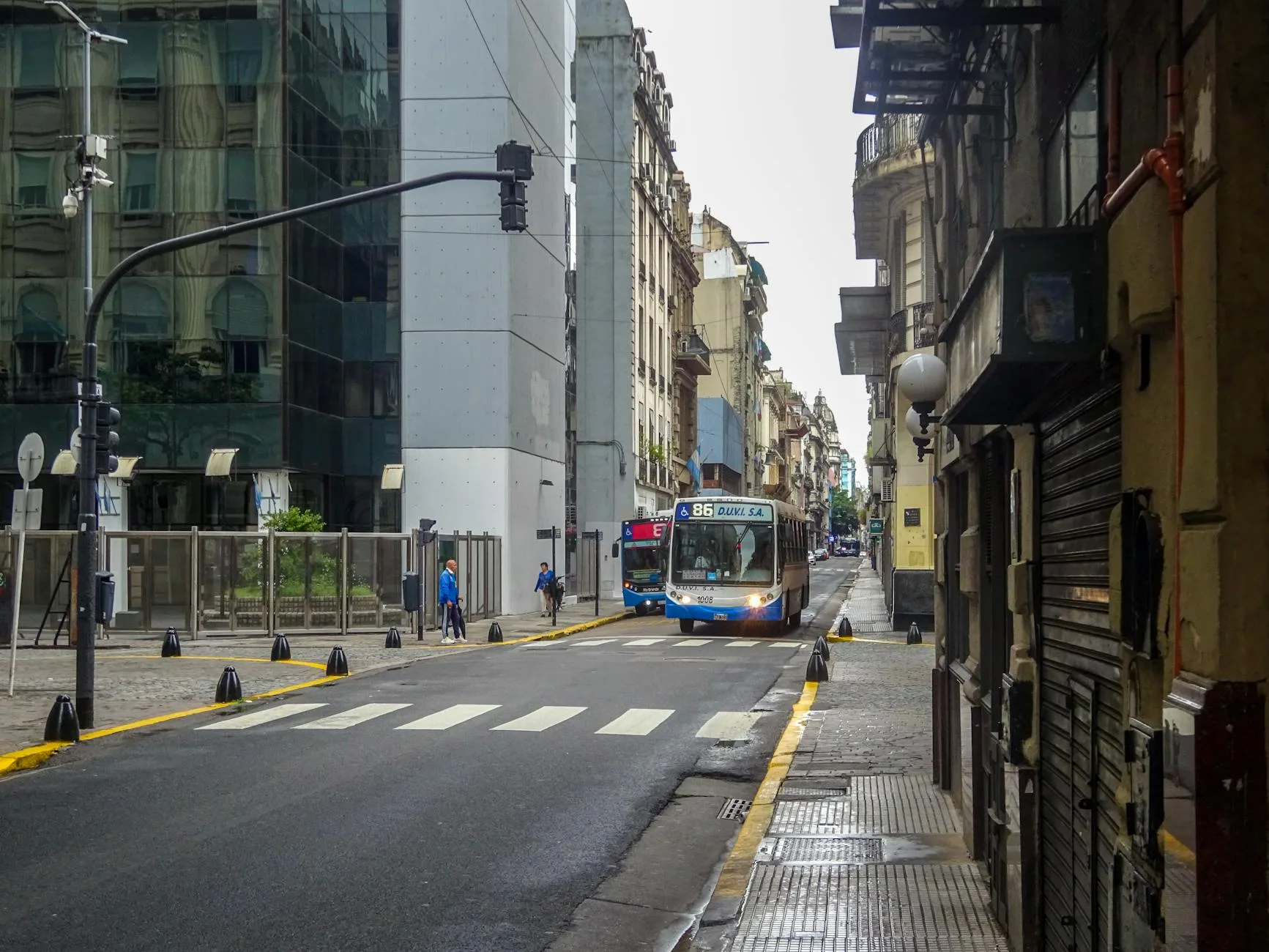
Photo by Nikolai Kolosov on Pexels
Bus travel in South America: the honest guide
The overnight bus from Cusco to Puno leaves at around 22:00, climbs out of the Sacred Valley, and crosses the Altiplano at 3,800 metres. By 05:30, when grey light starts seeping through the curtains, you’re descending toward Lake Titicaca. The journey takes roughly seven hours, costs between $15 and $40 depending on the company, and gives you a window seat view of Andean highland that no flight could. It also involves cold legs, a reclining seat that never reclines quite enough, and a snack stop at 02:00 where a woman sells empanadas from a polystyrene cooler in the dark. Both things are true.
Bus travel in South America is not a romantic abstraction. It is a practical, often excellent, sometimes exhausting way to move through a continent where distances are vast, flights are expensive, and the land in between is often more interesting than the destination. Done well — which means knowing which routes, which companies, and what to actually expect — it is one of the most rewarding ways to see the continent.
This guide covers the major routes, the bus classes, the border crossings, the costs, and the practical details that actually matter when you are standing at a terminal in Bogotá at midnight wondering which bus to board.
How South American buses actually work
The first thing to understand is that there is no single “South American bus system.” Each country operates differently, with its own terminal culture, ticketing infrastructure, and standards of comfort. Brazil has a highly organised national network run through centrais de ônibus (central bus terminals) in most cities, with printed tickets and reserved seats. Peru has a mix of reliable private companies operating out of major terminals and chaotic smaller depots. Bolivia has some of the most dramatic mountain routes on earth and some of the most variable conditions. Argentina’s long-distance network is efficient and well-priced. Chile’s bus infrastructure is among the continent’s best.
In most countries, private companies compete on the same routes and terminals are often aggregators of multiple operators. This is broadly good news: it creates competition on price and service. The downside is that terminals can be overwhelming, with touts for different companies grabbing your arm, and quality differences between operators on the same route can be significant.
Ticketing is increasingly online. In Argentina, Plataforma 10 is the dominant aggregator. In Peru, companies like Cruz del Sur, Oltursa, and CIVA sell directly through their own websites. In Brazil, the Clickbus platform covers most major routes. Buying in advance is strongly recommended for popular routes during high season (December–February in southern South America, June–August in the Andes) and around national holidays. For less-travelled routes, you can often buy on the day.
Bus classes: what you are actually paying for
South American bus classes matter enormously on long routes, and the naming conventions vary by country. Here is what the tiers generally mean in practice:
| Class | What you get | Typical seat recline | Good for |
|---|---|---|---|
| Económico / Semi-cama | Basic reclining seat, often 4 across | ~120° | Short hops, budget trips under 5 hrs |
| Semi-cama / Ejecutivo | More recline, footrest, better a/c | ~140° | Overnight routes up to 10 hrs |
| Cama / Cama Ejecutivo | Fully flat or near-flat, 2-2 layout | ~160–180° | Long overnight routes (12+ hrs) |
| Suite / Salón Cama Premium | Near-flat, 1-1 layout, meals, blankets | ~180° | Very long routes: Buenos Aires–Mendoza, Lima–Santiago |
In Argentina and Chile, the cama tier is genuinely comfortable — the seats in a salón cama on Turbus or Andesmar are closer to a business class flight seat than anything you might expect from a ground bus. In Peru, Cruz del Sur’s Cruzero Suites offer privacy screens and meals. These premium tiers are worth the price on any route over 10 hours; the difference between semi-cama and cama on a 15-hour journey is the difference between arriving functional and arriving wrecked.
Budget accordingly. The económico class on a Bolivian mountain road is survivable for two hours. It is not survivable for eighteen.
The routes worth knowing in detail
Bogotá to Cartagena (Colombia)
Distance: roughly 1,000km. Time: 20–22 hours. Cost: $25–$45.
The road runs north from Bogotá through the Magdalena River valley, and for the first four hours the scenery is excellent: steep green hillsides, small towns, the occasional roadside fruit stall selling mango biche with lime and salt. Berlinas del Fonce and Expreso Brasilia are the reliable operators from the Terminal de Transportes del Norte in Bogotá’s Salitre neighbourhood. Night buses are the sensible choice — you lose the views but gain a bed and save on accommodation. Cartagena’s bus terminal is in the Manga neighbourhood, well outside the walled city; from there, a taxi to Getsemaní costs around $5.
If you have time to break the journey, Mompox is a detour worth taking: a colonial riverside town on the Magdalena, largely unchanged in atmosphere, with no functioning bus terminal of its own — you reach it by shared minivan from Magangué after a river crossing. This route adds half a day but is one of the more quietly extraordinary things you can do between Bogotá and the coast. If you’re building a longer Central and South America overland trip, the guide to backpacking Central America on a shoestring budget is useful context for what precedes this leg.
Lima to Cusco (Peru)
Distance: roughly 1,100km. Time: 20–24 hours. Cost: $20–$80 depending on class.
This is Peru’s most iconic overland route, crossing the Andes via the Abra La Raya pass at 4,335 metres. Most travellers fly it (45 minutes on LATAM, around $60–$120), but the overnight bus with Cruz del Sur or Oltursa in their top-tier service is a genuinely different experience — you arrive in Cusco having crossed a landscape instead of hopped over it. The road has improved substantially in the past decade and the Cruz del Sur Cruzero Suite includes meals, a blanket, and reclining seats that reach near-horizontal. Book two days ahead minimum.
Departure is from La Victoria district in Lima, at the Cruz del Sur terminal on Javier Prado Este. Not the most atmospheric part of the city, but well-connected by taxi and the Lima Metropolitano bus.
Cusco to La Paz (Peru–Bolivia)
Distance: roughly 400km. Time: 8–10 hours, depending on the crossing. Cost: $15–$35.
This route crosses into Bolivia at the Yunguyo–Kasani border, passes through Copacabana on Lake Titicaca’s Bolivian shore, and involves a short barge crossing at the Strait of Tiquina where the bus drives onto a wooden raft. It is unhurried and occasionally surreal. Tour Peru and Bolivia operate direct services, but many travellers take the local route: bus from Cusco to Puno, colectivo to Yunguyo, walk the border crossing, minibus to Copacabana, then onward bus to La Paz. Total cost that way: under $15. The through-ticket option trades simplicity for slightly less flexibility at the border.
The Kasani–Yunguyo crossing is straightforward — both countries process tourists quickly, no visa required for most Western passport holders — but allow an hour for the whole process and don’t assume the connecting bus will wait.
Buenos Aires to Mendoza (Argentina)
Distance: roughly 1,050km. Time: 14–16 hours. Cost: $15–$50.
Argentina’s bus infrastructure is the most polished on the continent. Retiro terminal in Buenos Aires is a large, organised hub in the Retiro neighbourhood — trains, subte line C, and taxis all connect to it cleanly. Andesmar, El Rápido, and Autotransportes JM all run this route. A cama ejecutivo seat with Andesmar on this route is about $40 and includes dinner, breakfast, and a fully reclining seat. Night departure at 22:00 gets you into Mendoza’s central terminal at around 13:00. Mendoza’s terminal is a 15-minute walk or five-minute taxi from the city centre.
The Andes become visible in the last two hours of daylight — if you are not on a night bus — as snow-capped ridgelines above flat scrubland. Worth a daytime ticket if you can manage the timing.
Santiago to Puerto Montt (Chile)
Distance: roughly 1,000km. Time: 12–14 hours. Cost: $25–$60.
Turbus and Pullman Bus are the dominant operators on this north-to-south corridor, and both run efficient, clean services. Departure from Santiago’s Terminal Alameda on Avenida Libertador Bernardo O’Higgins. This is the practical starting point for Patagonia — Puerto Montt is the gateway to the Lake District and the Carretera Austral. If you are heading further south into Patagonia for hiking, the guide to the best multi-day hikes in Patagonia for beginners picks up where this bus journey ends.
Border crossings by bus: what no one tells you
The mechanics of crossing a land border on a bus are not difficult, but they are not seamless either. Here is what to expect:
The bus will stop at the border, not take you through it. You get off with all your luggage, queue at the exit immigration counter, have your passport stamped, walk or shuttle to the entry counter on the other side, queue again, have your bags X-rayed or hand-inspected (especially into Chile, where agricultural controls are strict — declare all fresh produce, dairy, and meat or face a fine). Then you reboard. The whole process can take 30 minutes or three hours depending on the crossing and the day.
Common crossings and their realistic wait times:
– Yunguyo/Kasani (Peru–Bolivia): 45–90 minutes, usually smooth
– Los Libertadores / Cristo Redentor (Chile–Argentina, RN 7): 1–3 hours, can be longer in summer; this high mountain pass closes in heavy snow
– Rumichaca (Ecuador–Colombia, near Ipiales/Tulcán): 30–90 minutes; currently one of the busiest crossings on the continent
– Foz do Iguaçu/Puerto Iguazú (Brazil–Argentina): 20–40 minutes, generally efficient
Practical advice: Carry your passport, not a photocopy, and keep it accessible. Have pen in hand for arrival cards — some countries still use paper forms. Download the offline version of Maps.me or use Google Maps offline for the border town area; it’s useful if you get separated from your group or need to find a taxi independently.
According to Lonely Planet’s South America guide, the Bolivian border zone near Copacabana and the Colombian crossing at Rumichaca are the two where travellers most commonly experience delays or confusion — worth scheduling buffer time on both.
Safety and the things worth being careful about
Bus travel in South America is broadly safe. The most common problems are opportunistic theft — bags left unattended, luggage stored in overhead compartments that disappears during stops, phone snatched at a terminal. None of these require paranoia to prevent.
The practical steps: use a padlock on your main bag when it goes in the hold; keep your daypack on your lap or between your feet, not overhead; keep your phone in a front pocket or money belt when walking through terminals. Express kidnappings — where a traveller is taken from a taxi to an ATM, forced to withdraw cash, and released — do occur in some cities, particularly Bogotá and Lima, but almost always involve unofficial taxis, not buses.
Night buses are statistically safe and practically sensible for long routes. The risks are lower than solo night driving in a rental car by a considerable margin. The armed robberies of Andean night buses that appear occasionally in travel forums are rare and concentrated on specific routes in specific periods — check current FCO or State Department advisories before travelling, as the situation evolves. The BBC Travel guide on South American overland travel notes that the quality of road and driver varies far more dramatically than the safety risk.
Altitude sickness is genuinely relevant on Andean routes. If you are arriving in Cusco, La Paz, or any city above 3,000 metres by overnight bus, your body has not had time to acclimatise. Drink water, avoid alcohol on the bus, and plan to rest the first day.
Costs in real numbers (2026 estimates)
| Route | Distance | Hours | Budget class | Premium class |
|---|---|---|---|---|
| Bogotá–Cartagena | ~1,000km | 20–22 hrs | $18–$25 | $35–$45 |
| Lima–Cusco | ~1,100km | 20–24 hrs | $20–$30 | $60–$80 |
| Cusco–La Paz (via Copacabana) | ~400km | 8–10 hrs | $12–$18 | $28–$35 |
| Buenos Aires–Mendoza | ~1,050km | 14–16 hrs | $15–$22 | $38–$50 |
| Santiago–Puerto Montt | ~1,000km | 12–14 hrs | $22–$30 | $45–$60 |
| Quito–Guayaquil (Ecuador) | ~420km | 8–9 hrs | $8–$12 | $15–$20 |
| La Paz–Uyuni (Bolivia) | ~350km | 9–11 hrs | $8–$14 | $18–$25 |
These are indicative. Prices fluctuate with fuel costs, season, and how far in advance you book. Booking 48–72 hours ahead on popular routes in high season saves money and secures better seats; showing up on the day often means the cheapest seats are gone.
What to pack for the bus
The overnight Andes bus is cold. Genuinely cold. A down jacket or thick fleece belongs in your carry-on for any journey through Peru, Bolivia, or highland Ecuador — the air conditioning on many buses is calibrated for equatorial lowlands and feels arctic at altitude. A neck pillow is worth carrying for any journey over 8 hours. An eye mask and earplugs make the difference on night buses. Bring more snacks than you think you need: bus food at rest stops is hot, greasy, and sometimes genuinely good (the salchipapas — fried sausage and chips — at Peruvian rest stops are a specific pleasure), but you may not want to rely on a 02:00 stop for your nutrition.
A small day bag with your valuables — passport, cash, phone, cards — should never leave your body. Not in the overhead rack, not in the hold, not left on the seat while you use the bathroom at a rest stop.
The Bottom Line
Book premium class for overnight routes over 10 hours. The price difference between semi-cama and cama is $10–$25. Over a 15-hour journey, that is money well spent. Budget elsewhere.
Use the big, named operators. Cruz del Sur in Peru, Turbus and Pullman Bus in Chile, Andesmar in Argentina, Berlinas del Fonce in Colombia — these are not glamorous choices, but they are reliable ones. Smaller operators cut costs somewhere, and you generally find out where mid-journey.
Build time into border crossings. Three hours of buffer is not excessive at busy crossings. The rest of your schedule can tighten up; the border crossing cannot.
Altitude catches bus travellers more than it catches flyers. If you land in Lima and take a night bus to Cusco, you arrive at 3,400 metres without acclimatisation. Plan a rest day. Drink water. Go easy on the exertion.
The in-between is the point. The landscape crossing the Bolivian Altiplano, the moment the Andes appear above the Argentine flatlands, the Pacific coastline on the Lima–Trujillo route — these are not consolation prizes for not flying. They are the journey.
Keep reading: Backpacking Central America on a shoestring budget