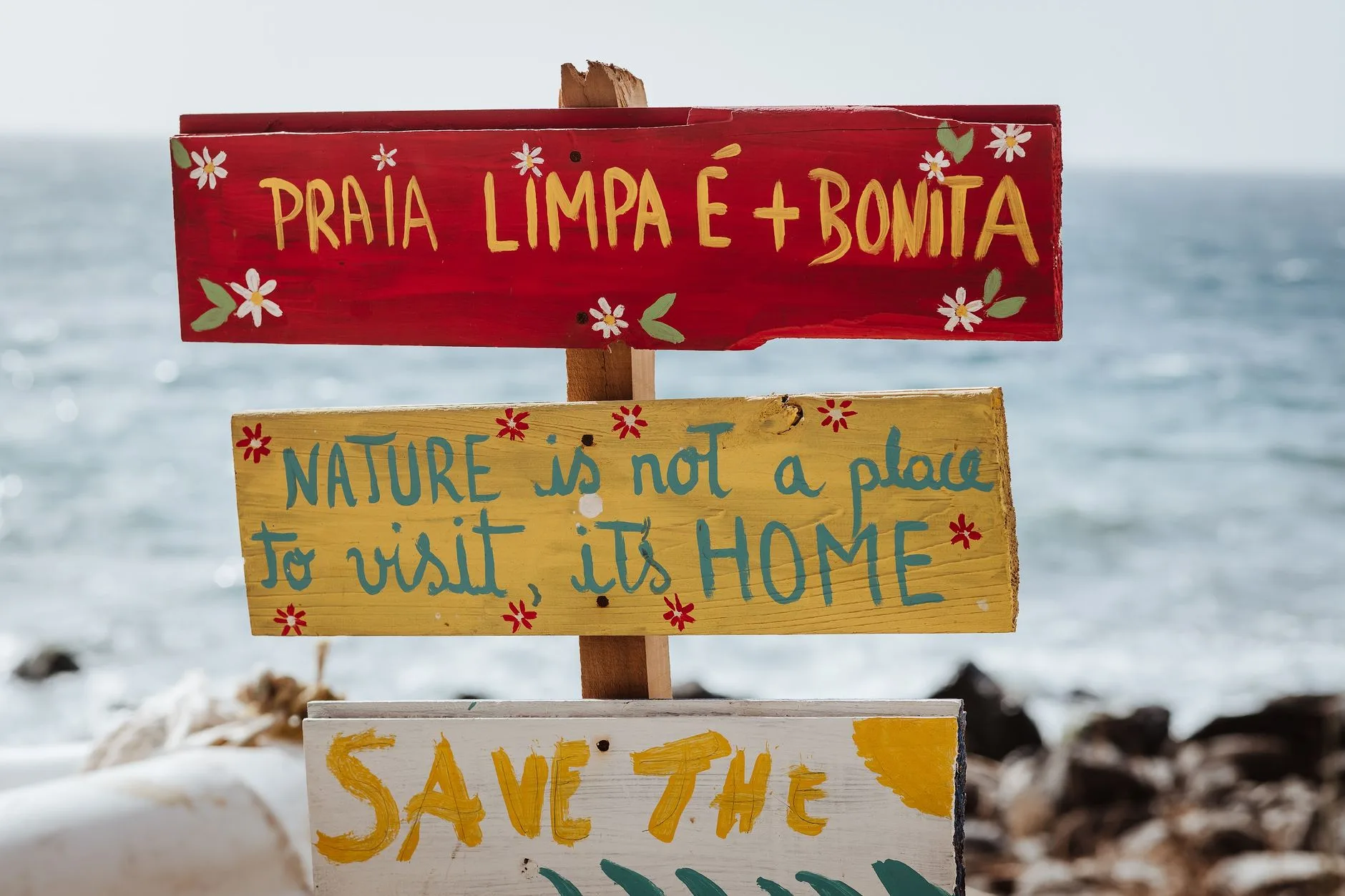
Photo by Kęstutis Paškevičius on Pexels
How to travel more sustainably without giving it up
The overnight train from Belgrade to Sofia leaves just after 9pm. You find your couchette, stow your bag, and watch the city’s orange light dissolve into dark countryside. By morning you’re in Bulgaria — no airport, no security theatre, no carbon spike equivalent to a month of home energy use. This is not sacrifice. The slow boat down the Mekong from Huay Xai to Luang Prabang takes two days. The gorge walls rise red and green, river vendors pass sticky rice through the windows, and you arrive knowing the land you’ve crossed. The flight would have taken forty minutes and shown you nothing.
Sustainable travel gets framed as an act of giving things up: giving up convenience, giving up distance, giving up the trip you actually want. That framing is wrong, and this guide will show you why. Most of the changes that reduce your travel footprint also make the trip better — slower, more specific, more connected to the place. The ones that don’t are worth knowing honestly, with trade-offs named clearly.
This is not a guilt list. It’s a practical guide to travelling more thoughtfully, with real routes, real costs, and real decisions.
Start with the flight: reduce it, not eliminate it
Aviation accounts for roughly 2.5% of global CO₂ emissions, but when you factor in contrail effects and high-altitude warming, the true climate impact is estimated to be two to four times higher. That doesn’t mean never fly. It means fly with intention.
The single biggest lever is trip length. A two-week trip to Japan has roughly the same flight emissions whether you spend those days in Tokyo or divide them between five cities. Slow down, and the per-day footprint shrinks. Fly long-haul once and go deep, rather than taking four short-haul weekend flights that collectively emit as much but teach you less.
When flying is unavoidable, direct routes are meaningfully cleaner than connecting ones — short-haul legs are proportionally the dirtiest part of any flight, burning the most fuel per kilometre during climb. Economy class has a lower per-seat footprint than business (fewer seats, smaller share of total emissions). Carbon offsetting has a patchy record, but verified schemes through Gold Standard are more credible than airline-sold offsets.
For a practical companion on this, the detailed breakdown of what actually reduces emissions in the air is worth reading: how to reduce your carbon footprint when flying covers the numbers honestly, including where offsets fail.
Replace flights with surface travel where the journey is worth doing
This is where sustainable travel stops being a compromise and becomes an upgrade.
Europe’s night train network has expanded significantly since 2023. The Nightjet service now connects Vienna to Paris, Amsterdam, Rome, and Hamburg. From London, Eurostar connects to Brussels in under two hours, and onward trains reach most of western Europe by morning. The Paris–Barcelona high-speed route takes six and a half hours; the Madrid–Lisbon route is slower (about ten hours by day train) but passes through the Extremadura plateau, which is worth seeing. These are not approximations of flying — they’re a different, often better experience.
Eastern Europe remains one of the best-value overland networks in the world. Travelling slowly through the Balkans by train costs a fraction of flying, passes through landscapes that don’t appear in destination marketing, and puts you in compartments with people who live in the places you’re crossing.
In Asia, the calculus is different. Vietnam’s Reunification Express from Hanoi to Ho Chi Minh City takes 30–35 hours; a flight takes two. But the train runs along the coast through Da Nang, Hue, and Nha Trang — you’re watching the country rather than flying over it. The Mekong slow boat from Huay Xai to Luang Prabang (two days, around $50–$70 including a night in Pakbeng) is one of the most rewarding transit experiences in Southeast Asia precisely because it’s transit.
| Route | Flight time | Surface alternative | Surface duration | Approx cost difference |
|---|---|---|---|---|
| London → Paris | 1.5 hrs | Eurostar | 2.5 hrs | Similar or cheaper by train |
| Vienna → Rome | 2 hrs | Nightjet overnight train | 12 hrs | €40–€100 vs €80–€200 flight |
| Hanoi → Ho Chi Minh City | 2 hrs | Reunification Express train | 30–35 hrs | ~$30–$60 vs $40–$120 flight |
| Huay Xai → Luang Prabang | 40 min | Mekong slow boat | 2 days | ~$50–$70 vs $80–$150 flight |
| Belgrade → Sofia | 1.5 hrs | Overnight train | ~9 hrs | ~€20–€40 vs €60–€150 flight |
The honest trade-off: surface travel takes more time. If your annual leave is ten days, a two-day boat on the Mekong may not be viable. But if you have three weeks in Southeast Asia, it almost certainly is.
Where you spend money matters more than you think
The most direct lever any traveller has on a destination’s economy is where their money goes. A night at an international chain hotel sends most of its revenue out of the country. A night at a family-run guesthouse in Yogyakarta’s Prawirotaman neighbourhood, or a homestay in a village outside Bukittinggi, keeps that money circulating locally. A meal at a tourist-facing restaurant on Ubud’s main strip feeds a different economy than dinner at a warung two streets back.
This isn’t about frugality — it’s about direction of spend. A homestay in rural Indonesia can cost the same as a budget hotel and provide a fundamentally different connection to the place. The practical guide to doing a homestay in rural Indonesia walks through how to find them, what to expect, and how to make it work logistically.
Eating at local food markets — in Southeast Asia, Europe, or anywhere else — is both cheaper and more traceable than most restaurant meals. You’re buying from the person who made or grew the food. That supply chain is about as short as it gets.
Hiring local guides independently, rather than through large international agencies, keeps more of that fee in the destination. The key is knowing how to find guides who are genuinely good — how to find a good local guide without an agency covers the vetting process in practical terms.
Choose destinations with less pressure on them
Some places are genuinely strained by the volume of visitors they receive. Venice’s historic centre, Angkor Wat at peak season, Machu Picchu, Maya Bay in Thailand — these are not ruined, but they carry real ecological and social costs from overtourism. Choosing alternatives, or choosing to visit at different times, redistributes both economic benefit and environmental impact.
Portugal’s interior — Alentejo, the Douro Valley, Trás-os-Montes — receives a fraction of the visitors that Lisbon and the Algarve absorb, while offering landscapes and food that are arguably more distinctive. Albania and North Macedonia receive perhaps a tenth of the visitors that Croatia and Slovenia do. Georgia’s Svaneti region has the same dramatic mountain landscapes as more-visited parts of the Caucasus but far fewer people in them.
The practical effect: smaller crowds, lower prices, greater local engagement, and your spending going to communities that see very little tourism revenue. The trade-off: less infrastructure, sometimes more difficult logistics. That’s worth knowing upfront.
Pack lighter, waste less, pollute less
A lighter bag has measurable effects. On flights, less weight means marginally less fuel; on overland travel, you’re not paying for checked luggage, not struggling with cobblestones, not taking taxis because your bag won’t fit on a bus. Packing down to carry-on only is a logistical upgrade that also happens to reduce footprint — the full breakdown of how to manage six months in a carry-on is in packing light for long-term travel.
Single-use plastic is a significant and visible problem in many popular travel destinations, particularly in South and Southeast Asia. Carrying a filtered water bottle (a Lifestraw or Grayl filter bottle costs $30–$70 and works in most tap water globally) eliminates the need to buy plastic bottles. A solid shampoo bar, a reusable bag, and a bamboo cutlery set take up almost no space and solve most of the daily plastic encounters. The fuller guide to travelling with less plastic on the road goes into specifics by region.
Slow down: the most underrated sustainability strategy
Staying longer in fewer places reduces transit emissions, reduces the infrastructure demand of high turnover tourism, and produces a better trip. Three weeks in one country — a month in Portugal’s Alentejo, six weeks cycling through Sri Lanka, two months overland through East Africa — costs less per day than constant movement, generates far less transport carbon, and produces the kind of understanding of a place that a ten-country sprint cannot.
This is also where sustainable travel and good travel converge most clearly. The travellers who describe places most vividly are not the ones who passed through in forty-eight hours. They’re the ones who ate at the same market three times, got lost in the same neighbourhood twice, and learned something about where they were.
The question to ask when planning: am I rushing through a list of places, or am I actually going somewhere?
The Bottom Line
- The flight decision is the biggest one. Reduce frequency and length-of-trip is the most impactful single change. When you do fly, fly direct and economy. Surface alternatives are often slower and frequently better.
- Where your money goes matters. Local guesthouses, market food, independent guides — these choices redirect spend to the people and communities that form the actual fabric of a place.
- Slow travel is not a sacrifice. Spending more time in fewer places reduces transport emissions, costs less per day, and produces a trip with more depth and less blur.
- The practical gear changes are minor. A filter water bottle and carry-on discipline solve most of the daily waste and logistics friction. Neither requires serious sacrifice.
- Avoid the places that are genuinely strained. Not because crowds mean you shouldn’t go, but because alternatives are usually less expensive, less crowded, and more interesting — and your visit does more good there.
Keep reading: Community-based tourism examples that actually work