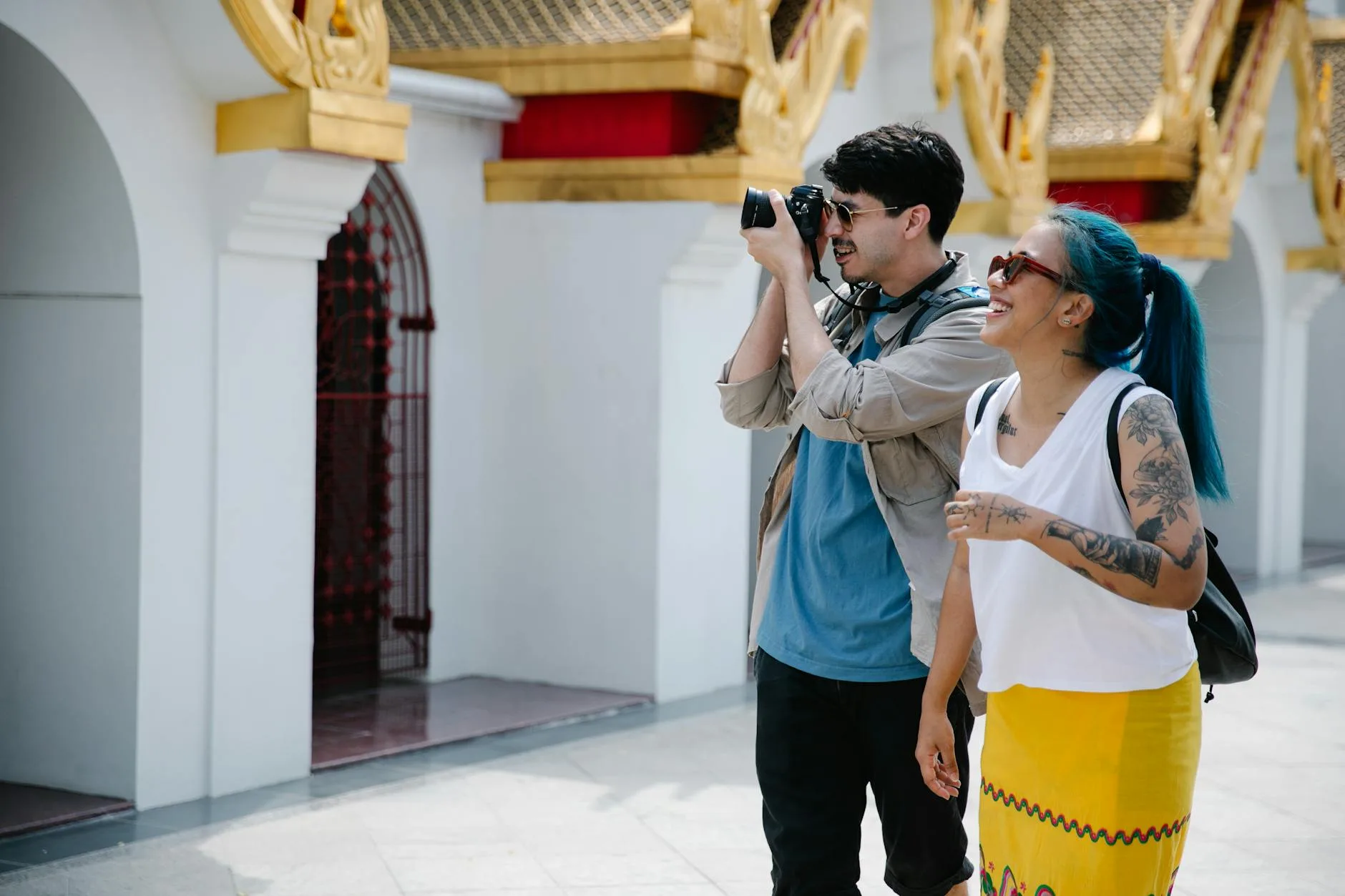
Photo by George Pak on Pexels
Photography etiquette when travelling in different cultures
The moment happens fast. You’re standing in the Djemaa el-Fna in Marrakech — the square is full of smoke from the food stalls, the light is going amber, and a Gnawa musician in a red robe is mid-performance. Your camera is already in your hand. He meets your eye. You haven’t asked. He hasn’t agreed. The shutter moment has passed, and so has something else.
That silent exchange — however brief — is the whole question of travel photography compressed into a second. Not whether you can take the photograph, but how you arrived at the moment of trying. Photography etiquette when travelling in different cultures is less a list of rules than a set of habits: ways of approaching people, places, and ceremonies that tend to produce better outcomes for everyone, including better photographs.
This guide is specific. It names places where the rules are formal and enforced, places where they are informal but real, and situations where the right thing to do is simply not to take the picture at all.
Why etiquette varies so sharply between cultures
In much of northern Europe and North America, street photography has a long, contested but broadly accepted tradition. Pointing a camera at a stranger in Amsterdam or New York exists in a relatively tolerant legal and cultural grey zone. Elsewhere, the context is entirely different.
In Japan, photographing strangers without consent — particularly women — has been restricted in response to covert photography scandals, and social norms around personal privacy in public spaces are significantly stricter than in the West. In many Muslim-majority countries, photographing women without permission is considered deeply disrespectful regardless of local law. In parts of sub-Saharan Africa, particularly around border zones or government buildings, photographing in public can attract legal consequences including detention and confiscation of equipment. In indigenous communities across the Americas, Southeast Asia, and the Pacific, images of ceremonies or sacred objects may be forbidden outright — not as a bureaucratic rule but as a matter of cultural and spiritual integrity.
None of these contexts is about making photography difficult. They reflect different understandings of what an image is, what it takes from a person, and who owns a moment. Understanding that variation before you arrive is more useful than any list of dos and don’ts.
Where formal photography restrictions exist — and what they mean
Some restrictions are posted, enforced, and non-negotiable.
Religious sites impose some of the most consistent rules. At the Shwedagon Pagoda in Yangon, Myanmar, photography is permitted in the outer precincts but discouraged during active prayer. At the Western Wall in Jerusalem, photography is forbidden during Shabbat (Friday sunset to Saturday nightfall), and photographing worshippers at close range is considered intrusive at any time. In Tibetan Buddhist monasteries throughout Ladakh and Nepal, many temples prohibit photography entirely inside the prayer hall — look for signs at the entrance, and if there are none, ask the monk at the door rather than assuming. The same principle applies in Hindu temples across South India, where photography of the deity in the sanctum sanctorum (the innermost shrine) is routinely banned.
Museums and heritage sites are more variable than they used to be. The Topkapi Palace in Istanbul allows photography almost everywhere except the treasury rooms. The Egyptian Museum in Cairo technically permits photography (without flash) but attendants will frequently approach you and suggest — sometimes persistently — that paying a small fee unlocks better access. It often doesn’t. Many of the most photogenic sites in Bhutan, including the Taktshang (Tiger’s Nest) monastery, permit photography outside but not inside. When planning an independent trip to Bhutan, check the Tourism Council of Bhutan’s current guidelines before you go — rules around religious photography there are taken seriously.
Indigenous and ceremonial contexts deserve particular attention. In parts of the American Southwest, including Hopi and Zuni pueblos in New Mexico and Arizona, photography is banned entirely, including in public plazas during ceremonial dances. Signs are posted, but the rule also applies in the absence of signs. In Bali, temple ceremonies are open to respectful visitors but attending as an outsider comes with obligations — dress code, physical positioning, and a genuine understanding of what you are witnessing rather than documenting.
Street photography: where and how to ask
The phrase “ask permission” is so widely repeated that it has lost most of its practical meaning. Here is what it actually looks like in specific places.
In Morocco’s medinas — Fez, Marrakech, Chefchaouen — the visual richness is almost overwhelming, and the resistance to being photographed is also real. Street vendors, artisans in the souks, and residents of the residential derbs (narrow residential streets) are photographed constantly by visitors and are often tired of it. In the tanneries district of Fez (Chouara quarter), touts will offer to take you to a rooftop overlooking the tanning vats — this is a transaction, and a tip is expected. The photos you take from up there are fine; photographing the workers below without acknowledgement is not.
In India — particularly in Rajasthan’s more visited cities like Jaipur and Jodhpur — the dynamic is well-established: some people welcome photographs, some don’t, and the gap between the two is often the gap between urban and rural, young and old, those accustomed to tourism and those who aren’t. In the blue lanes of Jodhpur’s old city around Mehrangarh Fort, children will often pose enthusiastically; older residents sometimes do not want to be photographed, particularly women. The baseline approach: make eye contact first. Mime the camera. Wait for a nod. If the response is unclear, put the camera away.
In Japan, particularly in Kyoto’s Gion district, the situation around photographing geiko and maiko (geisha and apprentices) has become a formal issue. In 2023, the Gion neighbourhood association installed barriers blocking access to certain alleys and issued rules explicitly prohibiting photography of geiko on their way to and from appointments. These rules are enforced by local volunteers. Violating them results in being asked to leave, and repeated violations are escalating into formal fines. The backstory matters: the volume of tourists crowding, grabbing, and blocking the path of geiko to get a photograph had become a form of harassment. The rule exists because visitors didn’t self-regulate.
The money question: paying for portraits
Across much of the world — Ecuador’s highland markets, the hill tribe villages of northern Thailand, the Himba communities in Namibia, the waterfront in Havana — there is a de facto economy around portrait photography. People expect payment, and the expectation is not unreasonable.
The ethics here are genuinely complicated, and anyone who gives you a simple answer is probably simplifying. On one hand, paying someone for their image is a direct economic transaction that puts value on their time and likeness. On the other hand, in high-volume tourist areas, the dynamic can reduce people to props and distort the economics of entire communities — the overtourism pressures across Southeast Asia are in part driven by exactly these feedback loops.
A useful working principle: if you’re in a context where payment is the local norm, pay without haggling. If you’re in a context where payment isn’t expected but you want to show appreciation, a small purchase from a vendor you’ve photographed is more dignified than pressing coins into someone’s hand. If you’re photographing someone in a situation of obvious poverty — a beggar, someone in visible hardship — ask yourself honestly whether the image is something you’re taking for your own enrichment.
Sacred objects, ceremonies, and the images you shouldn’t take
Some photographs should simply not exist. The criteria are not always obvious, and worth thinking through before you arrive.
In many Aboriginal Australian communities, photographs of certain sacred objects or deceased individuals are forbidden, and the protocols are enforced both informally and sometimes legally. In parts of Papua New Guinea, photographs taken during initiation ceremonies can have serious social consequences for the community, regardless of the visitor’s intentions. At the Church of the Holy Sepulchre in Jerusalem, some Christian communities ask that photography stop during active services — this is not enforced by staff but by the visible distress of worshippers being photographed at prayer.
The practical question is not “is this technically allowed” but “am I adding something to this moment or subtracting from it?” In most cases, the answer comes quickly if you’re paying attention.
Camera gear, conspicuousness, and how you carry yourself
How you carry your camera changes how people respond to you. A large DSLR with a telephoto lens reads as surveillance; a small mirrorless or a compact camera is less threatening. This is not an argument for any particular gear, but it is worth knowing that in tight medina streets, crowded rural markets, or temples, a large camera raised at shoulder height is an announcement of intent that people will either welcome or resent before you’ve made any other gesture.
Keeping the camera down until you’ve made human contact first — eye contact, a greeting, some acknowledgement of another person’s presence — changes the dynamic almost every time. In Morocco, a simple “labas?” (a casual Darija greeting meaning “how are you?”) before raising a camera will change the response in most situations more than anything else you could do. In Thailand, learning a few phrases before you go — the basics of Thai can be picked up in a day or two — is worth more than any formal photography etiquette guide.
A quick-reference guide to photography norms by region
| Region | Portrait approach | Key restrictions | Payment norms | Notes |
|---|---|---|---|---|
| Japan | Ask or avoid; privacy norms strict | Gion alleys (Kyoto), some shrines | Rare | No geiko photography in Gion |
| Morocco | Ask verbally; some resistance in residential areas | Government buildings, some mosques | Common in souks and tanneries | Learn basic Darija greetings |
| India (Rajasthan) | Eye contact first; women often decline | Sanctum sanctorum in temples | Variable; common with costumed performers | More relaxed in tourist-heavy sites |
| Bali, Indonesia | Generally welcoming; ceremonies require restraint | Active temple ceremonies | Uncommon | Dress code required at ceremony sites |
| Peru / Andes | Some communities expect payment; ask first | Active festivals, some ruins | Common in Cusco’s Plaza and markets | Agree on amount before photographing |
| Sub-Saharan Africa | Context-dependent; often welcoming | Military/government buildings; some community areas | Common in tourist areas | Avoid photographing borders or security |
| Middle East | Ask first; women generally decline | Active prayer at mosques, churches | Uncommon | Mosques during prayer: no cameras |
| Indigenous Americas | Assume no unless told otherwise | Many pueblo communities: full ban | N/A | Hopi and Zuni: no photography at all |
What to do when you get it wrong
You will, at some point, take a photograph you shouldn’t have, miss a cue, or find that someone is angry with you for a reason you don’t fully understand. The response matters more than the mistake.
Don’t argue about local law or your rights. Don’t claim you didn’t know. Show the image, offer to delete it, and do so visibly if requested. In many situations, the anger dissipates the moment someone sees you’re willing to act on it. In a few situations — particularly around government buildings or security checkpoints in countries like Ethiopia, Egypt, or Uzbekistan — being cooperative and calm is genuinely important for your own safety, not just good manners.
The BBC Travel’s guide to responsible photography and National Geographic’s ethics guidelines for photographers both address the underlying philosophy in useful depth if you want to go further.
The Bottom Line
- Ask before you raise the camera, not after. In almost every culture, the act of asking — even imperfectly, even in mime — changes the interaction from extraction to exchange.
- Research site-specific rules before you arrive. Gion’s photography ban, Hopi’s no-camera policy, and Bhutan’s monastery rules are not local quirks — they are formal restrictions with real consequences for ignoring them.
- Pay when payment is the norm; don’t haggle. If a community or individual has developed an economy around portrait photography, they’ve done so for a reason. Engage with it honestly.
- The quality of your photographs will improve. The images taken when someone knows you’ve asked — when they’ve chosen to be in your frame — carry something that grabbed shots never do.
- Put the camera down sometimes. Some moments are worth being inside rather than documenting. That is not a loss; it’s a different kind of keeping.
Keep reading: How to respectfully visit religious sites abroad