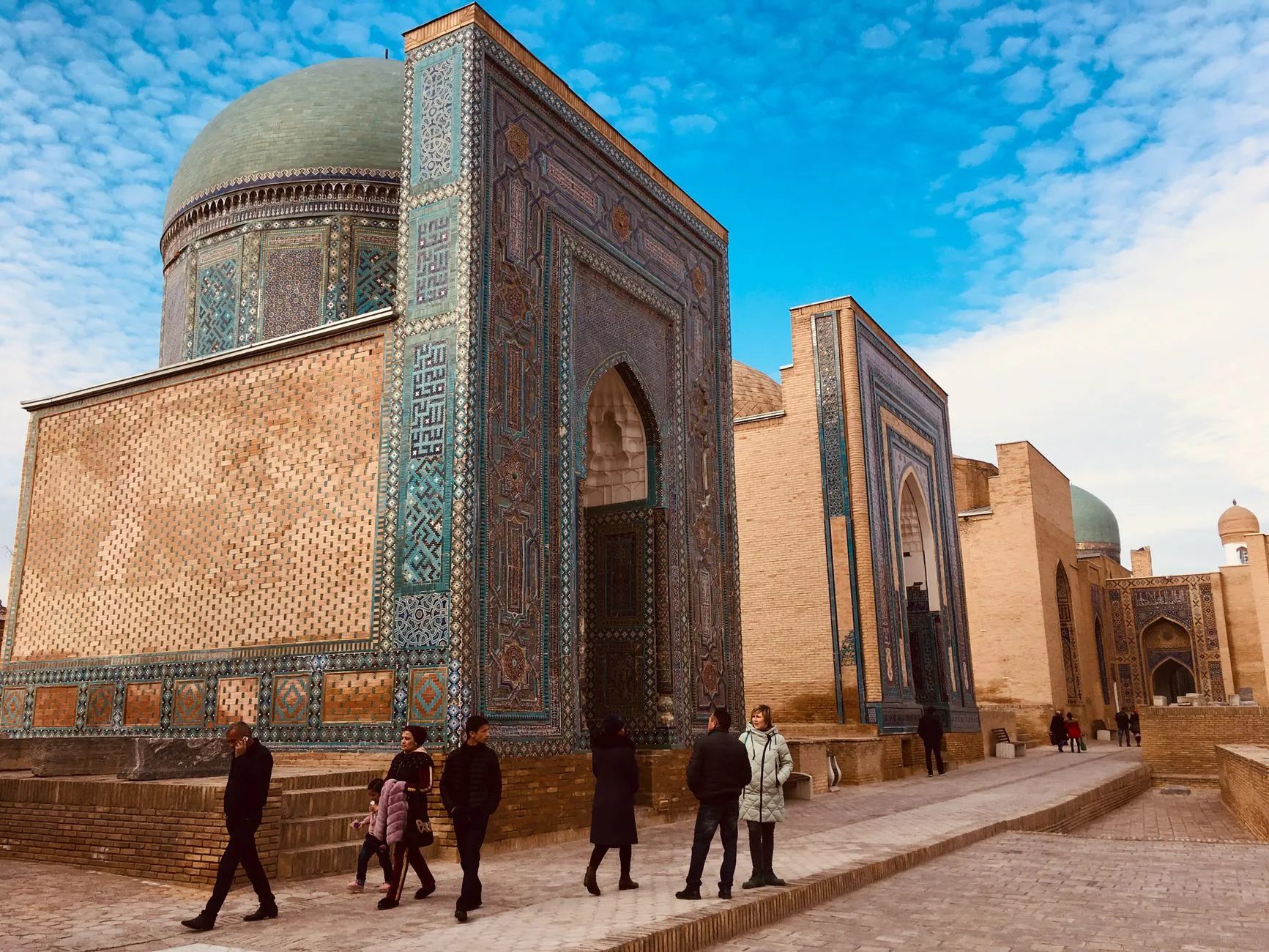
Uzbekistan has undergone significant change since 2016, when a new government began relaxing restrictions on tourism, simplifying visa procedures, and allowing a degree of press freedom. The result is a country that is simultaneously one of the most historically extraordinary destinations in Central Asia and one that now welcomes independent travellers with reasonable ease.
The Silk Road cities — Samarkand, Bukhara, Khiva — are the main draw, and they deserve the reputation. The scale and condition of the Islamic architecture, built between the 9th and 17th centuries and heavily restored in the Soviet era, is genuinely astonishing. Samarkand’s Registan is one of the most impressive public spaces in the world. Bukhara’s old city is a functioning living neighbourhood as well as an architectural ensemble. Khiva is essentially an open-air museum inside its ancient walls.
This guide covers the practical logistics for independent travel.
Getting In: Visas and Entry
As of 2026, citizens of the EU, UK, USA, Canada, Australia, and many other countries can enter Uzbekistan visa-free for up to 30 days. The eligible country list has expanded significantly in recent years — check the Uzbekistan e-Visa portal to confirm your nationality’s current status.
For nationalities not on the visa-free list, an e-visa is available online (around $20–30, processed in 3–5 business days).
Entry points:
– Tashkent International Airport (TAS) — main hub, connected to Istanbul, Dubai, Moscow, Beijing, and major European cities
– Samarkand Airport (SKD) — increasingly connected to international destinations; convenient if Samarkand is your first stop
– Land borders from Kazakhstan (Gisht Kuprik crossing near Tashkent) and Tajikistan (Oybek crossing) are used by travellers on broader Central Asia routes
On arrival: You’ll receive an immigration card on the plane or at the border. Keep this — you’ll need it when you leave. Hotels register you automatically; if staying privately (Airbnb, with a host), you’re technically required to register yourself online via the government portal within 3 days of arrival (in practice, enforcement for short stays has been variable, but registering costs nothing and avoids any theoretical issue).
Getting Between Cities
High-speed train (Afrosiyob): The most comfortable and efficient way to travel between Tashkent, Samarkand, and Bukhara. The Afrosiyob operates Spanish-built Talgo trains and covers Tashkent–Samarkand in 2 hours and Tashkent–Bukhara in under 3.5 hours. Book tickets in advance at railway.uz or at the station. Fares are very reasonable — around $15–25 for second class (business) on Tashkent–Samarkand.
Shared taxis: Faster than regular trains and cover routes not served by the Afrosiyob (particularly Bukhara to Khiva, which requires a 5–6 hour shared taxi ride through the desert). Shared taxis depart from specific taxi parks near bus stations when full. Fares run around $10–15 per person for most intercity routes.
Marshrutkas (shared minibuses): Slower than taxis, cheapest option. Depart from the same taxi parks.
Khiva is the most logistically difficult destination — no direct train, typically accessed via Urgench (the nearest city, about 35km away). Fly from Tashkent to Urgench (1 hour, around $30–60), then shared taxi to Khiva. Alternatively, overnight sleeper trains from Tashkent to Urgench are available but take 14+ hours.
Samarkand: What to Actually See
Samarkand is the most-visited city in Uzbekistan and justifiably so. The core sights:
The Registan — three towering madrassas facing a central square, covered in intricate turquoise and blue tilework. Built in the 15th–17th centuries. Admission around 50,000–70,000 UZS (approximately £3.50–5). A night illumination show runs from around 21:00 in summer — worth seeing but not a substitute for the daytime visit. Get there at opening (8:00–9:00) to have the courtyard to yourself.
Gur-e-Amir mausoleum — the tomb of Timur (Tamerlane) and his descendants, with a ribbed turquoise dome that has become one of the defining images of Central Asia. Less visited than the Registan, which makes it easier to explore quietly.
Shah-i-Zinda — a necropolis of 15th-century mausoleums on a hillside, accessed via a staircase. The interiors have remarkably well-preserved tile work in deep blues and greens. Allow 1–2 hours.
Ulughbek’s Observatory — 15th-century astronomical observatory, now mostly underground but with a good museum. Ulughbek (Timur’s grandson) measured the length of the solar year to within 58 seconds of its actual value without telescopes.
Two full days is the right amount for Samarkand.
Bukhara: Living City, Not Museum
Bukhara is historically as significant as Samarkand but feels less touristic and more inhabited. The old city (ichon-qala) is still a working residential neighbourhood — people live, shop, and pray in and around the monuments.
Kalon Minaret and Mosque — the 12th-century minaret that Genghis Khan reportedly spared when he destroyed the rest of the city, allegedly out of aesthetic admiration. At 47 metres, it dominated the Central Asian skyline for centuries.
Ark Citadel — the ancient fortress that served as the seat of the Emirate of Bukhara until 1920. Heavily reconstructed but with a good museum of the Emir’s court and the city’s history.
The trading domes (tims) — six covered bazaar domes dating from the 15th–16th centuries, still functioning as craft markets. The quality varies; the carpet and silk stalls are the most interesting.
Chashma Ayub — a mausoleum built around a spring associated with Job (Ayub in Arabic/Uzbek tradition). The museum of water inside it traces the history of Bukharan irrigation.
The Lyabi-Hauz — a central pond surrounded by mulberry trees and teahouses, surrounded by three of Bukhara’s finest madrassas. This is where locals gather in the evening. Sit, drink tea, watch.
Two full days minimum; three if you’re interested in going deeper into the surrounding villages and the Sitorai Mohi Hosa summer palace 5km outside the city.
Khiva: Stepping Inside the Walls
Khiva’s Itchan Kala (inner city) is a UNESCO World Heritage site and the most complete example of an ancient Central Asian city. Entering through the West Gate in the early morning, before other visitors arrive, is one of the more striking urban experiences in the region — a labyrinth of narrow alleys, mosques, and caravanserais that has barely changed in outline since the 18th century.
The main sights are all within the walls: the Kalta Minor minaret (never finished, broader than tall), the Juma Mosque (213 carved wooden columns), and the Islam Khodja complex. A combined ticket covering the main sites costs around 100,000 UZS (£7).
Khiva is smaller than Samarkand or Bukhara — one full day is generally enough to see everything inside the walls, with a second day for slower exploration or day trips to the surrounding landscape.
What Things Cost
Uzbekistan remains inexpensive by European standards. The currency is the Uzbek Som (UZS); in 2026 approximately 14,000–15,000 UZS to £1.
| Item | Approximate cost |
|---|---|
| Guesthouse (double room) | £15–35/night |
| Plov (national rice dish with lamb) | £1–2 |
| Restaurant dinner | £5–12/person |
| Bottle of local beer | £0.80–1.50 |
| Samarkand-Bukhara train (2nd class) | £3–5 |
| Entry to Registan | £3.50–5 |
| Shared taxi between cities | £8–15 |
A week of independent travel in Uzbekistan (flights excluded) typically runs £250–450 per person, depending on accommodation standard and pace.
Practical Notes
Currency: USD is widely accepted alongside the Som; many guesthouses price in USD. Bring some US dollars in good condition (no tears, pre-2013 serial numbers sometimes rejected). ATMs in larger cities dispense Som; some accept Visa and Mastercard. Don’t rely solely on cards.
Food: Plov (rice, lamb, carrots, onion) is the national dish and eaten at lunchtime, traditionally. Shashlik (grilled meat skewers), lagman (pulled noodle soup), and samsa (baked meat pastry) are eaten throughout the day. Vegetarians will find limited options outside of major cities.
Photography: Many sites require a separate photography fee (a few thousand Som, often). Ask before shooting inside mosques.
Best guidebook: The Bradt Guide to Uzbekistan remains the most comprehensive for independent travellers.
Conclusion
Uzbekistan is among the most rewarding independent travel destinations in the world for people interested in Islamic architecture, Central Asian history, and routes genuinely off the Western tourist trail.
- Visa-free entry for most Western nationalities makes logistics straightforward — check your status and go
- The Afrosiyob high-speed train connects Tashkent, Samarkand, and Bukhara efficiently; book in advance
- Khiva requires extra planning — fly to Urgench or take the overnight train from Tashkent
- Arrive early at major sites — the Registan and Shah-i-Zinda in the first hour of opening are qualitatively different experiences from the midday crowds
- Budget £35–65 per person per day for comfortable independent travel — this is one of the most affordable culturally rich destinations anywhere
Keep reading: How to travel Kyrgyzstan independently on a budget