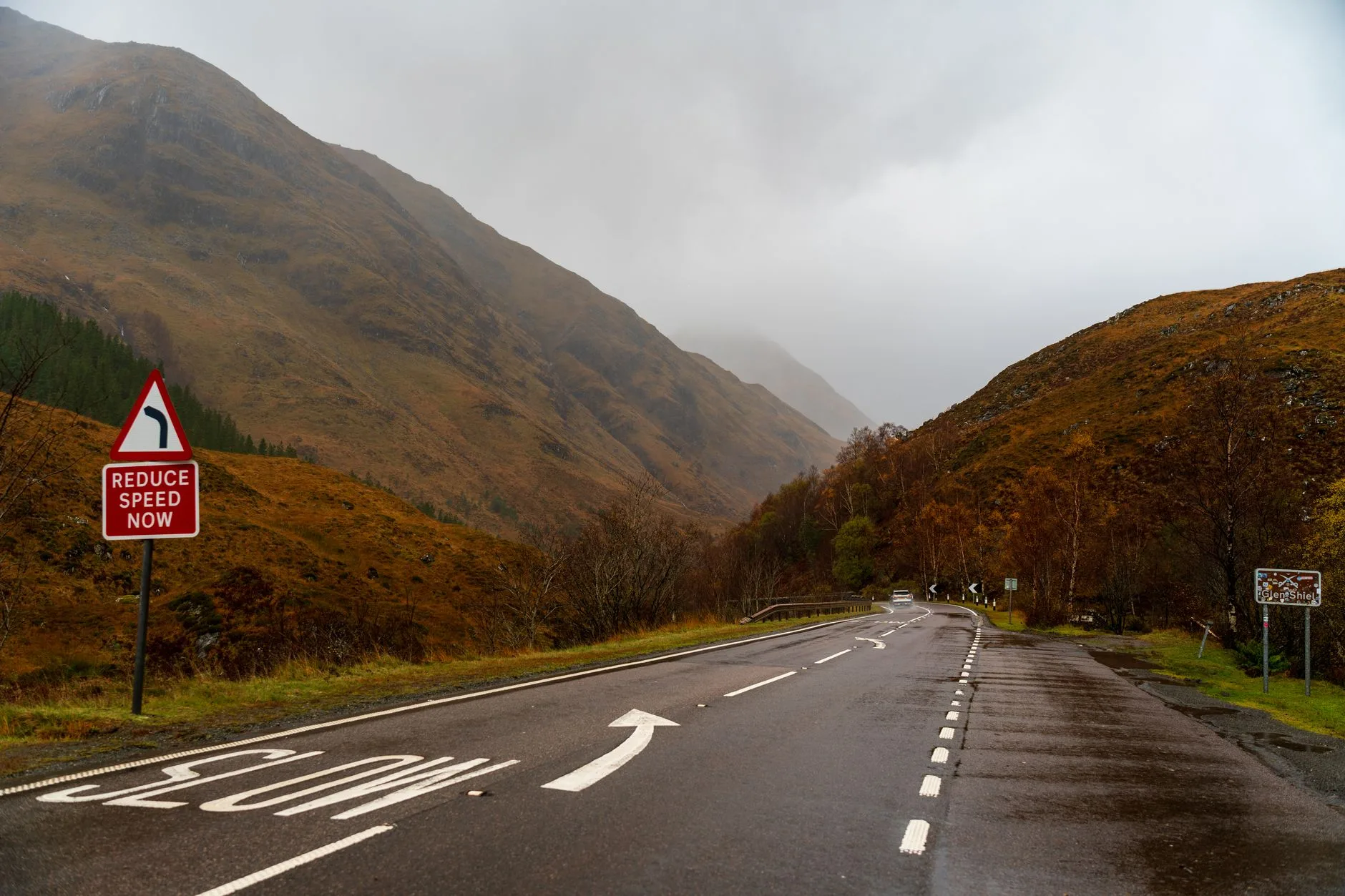
Photo by Michał Robak on Pexels
The Scottish Highlands covers roughly 41,000 square kilometres of the northern third of Great Britain — mountains, glens, sea lochs, islands, and a handful of small towns connected by single-track roads. The population is sparse: the entire Highland Council area has fewer people than the London Borough of Hackney. In many parts of the region, you can walk for a full day without seeing another person.
Slow travel here means something specific. It means choosing a base and staying long enough for the place to stop feeling like scenery and start feeling like somewhere you actually know. It means learning which route is better with low cloud, which pub the local hill runners drink in, which beach is quieter than the famous one three kilometres up the road. The Highlands are particularly well-suited to this approach because the more time you spend, the more you notice — the light on a hill at 6am, the otter that appears at the same spot on the river every evening, the way a local conversation about weather is actually about something else entirely.
This is what to expect if you go.
Choosing Your Base
The Highlands is large enough that where you base yourself determines what you can do. The main options:
Inverness: The largest city in the Highlands (population ~50,000), with a rail connection to Edinburgh, Glasgow, and London, a good selection of accommodation, and day-trip access to Loch Ness, the Black Isle, and the Cairngorms. The best logistics base, particularly if you’re arriving without a car. Less remote-feeling than other options.
Fort William: Gateway to Ben Nevis and the Nevis Range, the Ardnamurchan peninsula, Glencoe (40 minutes south), and the Road to the Isles west to Mallaig and the Small Isles. The town itself is functional rather than beautiful, but the surrounding terrain is extraordinary. Rail access from Glasgow on the West Highland Line (one of the most scenic train journeys in Britain).
Torridon: A small village on the northwestern coast, surrounded by some of the oldest mountains in the world (Torridonian sandstone, 750 million years old). No train, no supermarket, one pub, one small hotel, several self-catering cottages. For people who want real remoteness within reach of a base.
Skye: The most-visited island in the Highlands, accessible by road bridge from Kyle of Lochalsh. Portree is the main town. The Cuillin mountains are the finest ridge walk in the UK; the Quiraing and Old Man of Storr are iconic landscape features. The downside: Skye is heavily touristed in summer and the single-track roads can grid-lock in peak July/August. Go in May or September.
Assynt: The northwest corner around Lochinver and Inchnadamph — one of the most sparsely populated areas in Britain, with extraordinary landscape (Suilven, Quinag, Stac Pollaidh rising from a flat moorland unlike any other mountains in Europe). Almost no tourist infrastructure. Self-catering is the primary accommodation model. Rewards the patient and the self-sufficient.
Getting Around
A car is close to essential for most of the Highlands. The public transport network is limited, infrequent, and rarely coincides with where you want to be. Exceptions:
Rail: The West Highland Line (Glasgow–Mallaig via Fort William) and the Far North Line (Inverness–Thurso/Wick) are both remarkable rail journeys in their own right. The Kyle of Lochalsh line (Inverness–Kyle) is the most scenic in Scotland.
Postbuses and community buses: Some remote areas have postbus services that also carry passengers. The Westerbus and similar community transport schemes serve parts of Wester Ross and Sutherland on specific days. Useful if you’re willing to plan around their schedules.
Cycling: Road cycling in the Highlands is viable for fit cyclists willing to deal with hills, single-track roads, and variable weather. Mountain biking trails exist at Laggan Wolftrax, Glentress (Borders, not Highlands), and Nevis Range above Fort William.
Hitching: Works in the Highlands to a degree not found in most of Britain. Traffic is sparse enough that drivers routinely pick people up. A combination of occasional hitches and public transport can get you a surprising distance.
What Slow Travel Actually Looks Like Here
Walking: The Highlands have more walking than any visitor can absorb. Beyond the famous routes (Ben Nevis, the Cairngorms, the Cuillin) there are hundreds of glen walks, coastal paths, forest tracks, and munro approaches that see few people. The Mountaineering Scotland website and Harvey’s 1:25,000 maps are better resources than commercial walking apps for this terrain.
Wild camping: Legal in Scotland under the Land Reform Act. You can camp on almost any unenclosed ground without permission, provided you move on if asked, leave no trace, and follow the Scottish Outdoor Access Code. This is what makes slow travel in the Highlands genuinely different from most of Europe — you can sleep on a loch shore, pack up in the morning, and feel the place in a way that doesn’t happen from a guesthouse.
Bothies: The Mountain Bothies Association maintains around 100 unlocked shelters throughout the Highlands — stone buildings open to anyone on a first-come basis, free to use. Some have a fire; most have sleeping platforms. Staying in a bothy requires carrying everything you need (sleeping bag, food, stove), but gives you access to locations miles from the nearest road.
Learning to read weather: Highland weather is complex. Rain can come in horizontally and stop within 20 minutes; a day that starts under solid cloud can clear by noon. Learning to read the local weather patterns — which direction a front is coming from, what the cloud on Suilven means for the next three hours — is one of the things that marks time well-spent. The Met Office’s Mountain Weather Information Service (MWIS) is the most reliable forecast for hill days.
Eating and Provisioning
Supermarkets outside Inverness and Fort William are Co-ops and small independents, often with limited stock and opening hours that reflect a local rather than tourist schedule. Plan your provisions carefully if you’re in remote areas.
What’s worth seeking out:
- Seafood: West coast shellfish — langoustines, mussels, oysters, scallops — is some of the finest in Europe and often cheapest at the source. Fishmongers in Ullapool, Lochinver, and Kyle of Lochalsh stock direct from the boats. Shellfish from a supermarket truck elsewhere in Britain often passed through the Highlands on its way south.
- Venison: Culled from estates throughout the Highlands; widely available in local butchers at lower prices than in cities.
- Whisky: The distilleries of Speyside and the western coast run regular tours; Glenfarclas, Glendronach, and Springbank offer non-ticketed or low-cost visits that the more famous brands (Glenfiddich, Laphroaig) charge more for.
| Provisioning option | Notes |
|---|---|
| Inverness / Fort William | Full supermarket choice; stock up before going west |
| Co-ops (Ullapool, Lochinver, Portree) | Limited stock; basics reliably available |
| Local butchers | Venison, haggis, quality meat at good prices |
| Fishmongers | West coast seafood at source prices |
| Farm shops | Variable; best in Black Isle, Strathspey |
What Doesn’t Work
Arriving in a rush: The Highlands are large and the roads are slow (60mph limits on single-track means 25mph in practice). A route that looks manageable on a map can take three times as long as expected. Build in time.
Assuming July is the best month: July and August bring midges (biting insects — a genuine deterrent to being outside in still air, particularly in the western glens), higher prices, more traffic, and the busiest accommodation. May, June, and September offer comparable or better conditions with fewer people and no midges.
Underestimating weather: The Highlands can produce all four seasons in a single day. A morning on the hill with inadequate rain gear is not a small problem — it can become a serious one quickly at altitude.
Conclusion
Slow travel in the Scottish Highlands works best when you commit to one corner of it and let the landscape come to you rather than trying to cover ground.
- Base yourself in one place for at least 5–7 days — the Highlands reward local knowledge, not a succession of single nights in different locations
- A car opens the region — without one, you’re limited to rail connections and occasional buses; manageable but limiting
- Wild camping is legal and exceptional — the freedom to camp where you want changes the quality of your time in a way that indoor accommodation doesn’t
- Go in May, June, or September — fewer people, no midges, often better weather for hill days than July
- The west coast and northwest are less visited than Skye and the Cairngorms — Torridon, Assynt, and Knoydart reward the extra distance required to reach them
Keep reading: Wild camping in Scotland: what you need to know