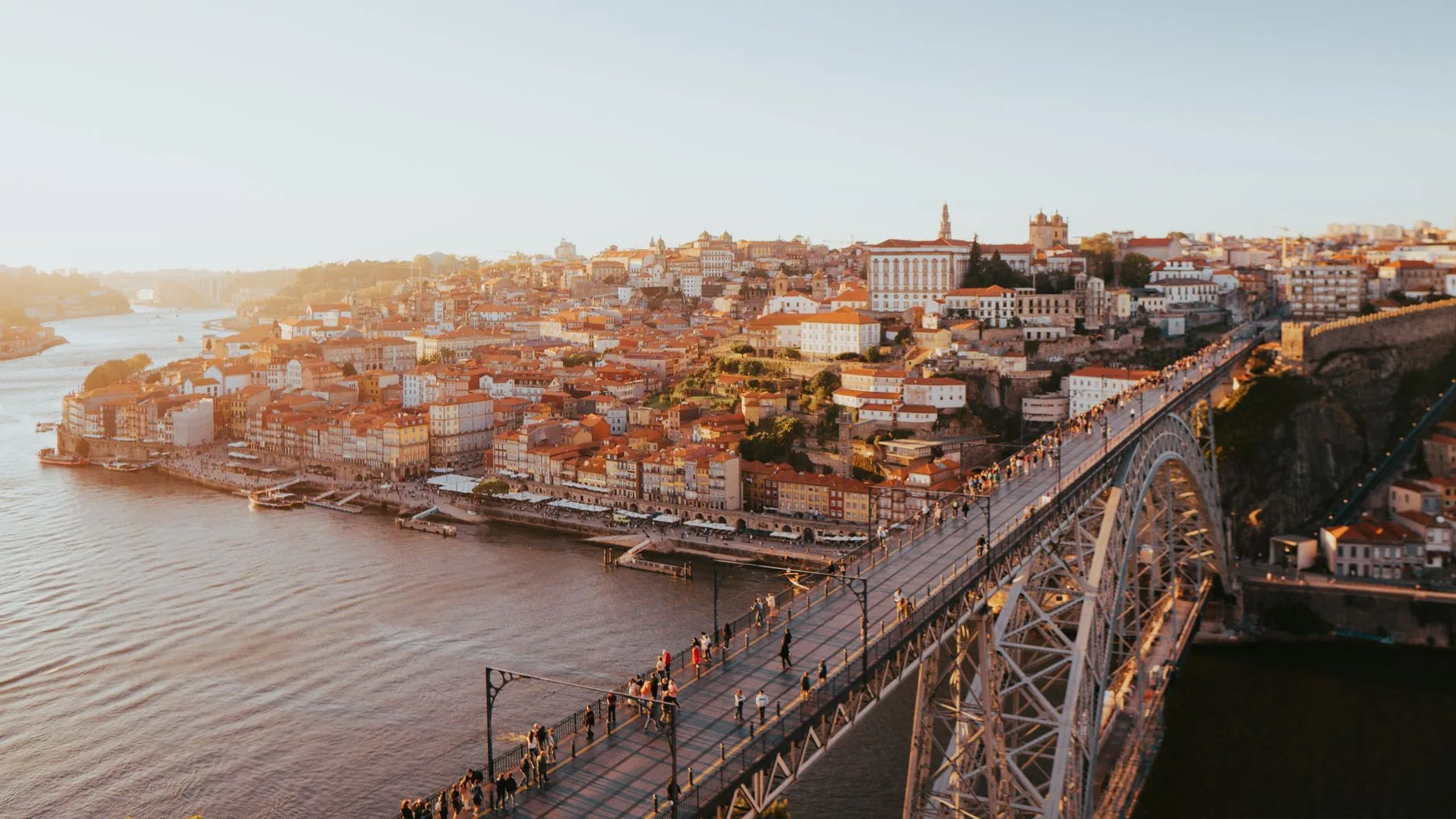
Photo by Artūras Kokorevas on Pexels
Portugal is one of Europe’s most popular destinations, and the appeal of Lisbon and Porto is well-deserved. But both cities have become expensive and busy in ways that work against slow travel. The Portugal that rewards extended exploration is elsewhere — in the Alentejo’s cork oak plains, the Serra da Estrela’s granite mountains, the Douro Valley’s terraced wine country, and the Algarve’s western coast before it becomes a resort complex.
This is a guide to the Portugal beyond the cities — where to go, how long to stay, and how to get around.
The Alentejo
The Alentejo covers roughly a third of Portugal’s land area and less than 5% of its population. It is a landscape of vast horizons, cork oak forests, whitewashed hilltop villages, and agricultural plains planted with wheat, olives, and vines. If you want to understand rural Portuguese life outside the tourist circuit, the Alentejo is where you go.
Évora is the region’s main city — a walled town with a Roman temple in the central square, a Gothic cathedral, and one of the more unusual attractions in Portugal: the Capela dos Ossos (Chapel of Bones), where the walls and ceiling of a church are decorated with the skulls and bones of approximately 5,000 monks. The city is small enough to walk entirely and is a reasonable base for the surrounding region. 1.5 hours from Lisbon by coach.
Monsaraz is a fortified medieval village on a ridge above the Alqueva reservoir — the largest artificial lake in Western Europe. Fewer than 200 people live within the walls; the views across the reservoir and the Alentejo plains are exceptional. A few very good rural hotels and restaurants inside the walls.
Mértola sits at the confluence of the Guadiana and Oeiras rivers on the border with the Algarve — a small town with a church that was a mosque (and was a Visigothic church before that), a Moorish castle, and an exceptional archaeological museum covering the town’s multi-layered history. Almost no tourists outside summer.
The Alentejo is wine country too — the reds, particularly from the Alicante Bouschet and Aragonez grapes, are some of Portugal’s most distinctive and are available in local restaurants for a fraction of what they cost in Lisbon.
The Douro Valley
The Douro Valley is where Port wine comes from — terraced schist hillsides above the Douro river, planted with vines that produce some of the most concentrated grapes in the world. The landscape is extraordinary: the valley runs east from Porto to the Spanish border, and the terraces cut into near-vertical hillsides create a geometry that’s been a UNESCO World Heritage Site since 2001.
Base: Pinhão is the main town in the upper Douro — a small rail station famously decorated with azulejo tile panels illustrating the wine harvest, surrounded by quintas (wine estates) on the surrounding hillsides. The train from Porto to Pinhão (around 3 hours) is one of the most scenic railway journeys in Europe.
What to do: Most quintas welcome visitors for tastings and tours — some require appointments, others are walk-in. The Quinta do Crasto, Quinta da Romaneira, and Quinta de la Rosa all have accommodation as well as tastings. Boat trips on the Douro from Pinhão are common; cycling the valley on the Ecopista do Douro (a former railway converted to cycling path) is an excellent alternative to driving.
Allow 3–4 days in the valley. Don’t rush through for a single day from Porto — the light on the terraces changes dramatically through the day, and an overnight stay gives you the valley without the day-trip coaches.
The Serra da Estrela
Portugal’s only mountain range with significant altitude, the Serra da Estrela rises to 1,993m at Torre — the highest point on mainland Portugal. In winter, it has the only snow sports in the country. In summer and autumn, it’s a landscape of glaciated valleys, granite boulders, clear mountain rivers, and almost no visitors.
Manteigas in the glacial valley of the Zêzere is the best base — a small spa town with guesthouses and the starting point for the valley walk up to the plateau. The Serra da Estrela natural park has marked trails ranging from easy riverside walks to the full ascent of Torre.
The region is also known for Queijo Serra da Estrela — a creamy, soft sheep’s milk cheese that is one of Portugal’s most prized food products and tastes considerably better bought directly from producers in the mountains than from a supermarket shelf.
The Algarve’s Western Coast
The main Algarve resort coast (Lagos to Faro) is overdeveloped for slow travel purposes. The western coast — from Lagos to Sagres and the Costa Vicentina above it — is entirely different. This section falls within the Southwest Alentejo and Vicentine Coast Natural Park, which restricts development. The beaches are wild, backed by cliffs and dunes, and the towns (Sagres, Vila do Bispo, Aljezur) have remained small.
Sagres is at the southwestern tip of continental Europe. The fort above the cliffs was where Henry the Navigator’s school of navigation supposedly operated in the 15th century; the headland itself (Cabo de São Vicente, a few kilometres west) has one of the most atmospheric lighthouse settings in Europe. Surf schools operate in Sagres; the waves on this coast are powerful and consistent.
The Via Algarviana (a 300km walking route from Alcoutim on the Spanish border to Sagres) and the Rota Vicentina (a walking and cycling route along the western coast) attract long-distance walkers and cyclists, but the individual sections are easily walked as day trips.
Getting Around
Train: Good for the Douro Valley (Porto–Pinhão), Alentejo towns near Évora, and intercity connections. Portuguese rail (CP) is affordable and comfortable.
Bus: Rede Expressos coaches connect Lisbon with Évora, Portimão, and other major Alentejo/Algarve destinations. Reliable, cheap (€8–18 for most intercity routes).
Car: Essential for the Alentejo’s village-to-village exploration and the Serra da Estrela. Roads are good and car rental is relatively affordable. Many of the best places in these regions are inaccessible by public transport.
When to Go
Spring (March–May) and autumn (September–November) are ideal: wildflowers in the Alentejo, harvest in the Douro, comfortable temperatures on the western Algarve. Summer is hot inland (35–40°C in the Alentejo in July) and busy on the coast. Winter is mild, mostly rainy, and very quiet — good for Serra da Estrela if snow is your aim.
Conclusion
The Portugal beyond the cities offers some of the best slow travel in Europe — distinctive food and wine culture, extraordinary landscapes, and visitor numbers low enough that you can genuinely sink into a place:
- The Alentejo is the place to base yourself for a proper slow week — base in Évora and explore the surrounding villages by car
- Take the train from Porto through the Douro Valley — one of Europe’s great scenic railway journeys, and worth 3–4 days at the valley end
- Sagres and the western Algarve are what the Algarve should be — wild, undeveloped, excellent surf
- Serra da Estrela is almost unknown outside Portugal — particularly good in autumn when the light on the granite is extraordinary
- Rent a car for the Alentejo and Serra da Estrela — the best of both regions is inaccessible by public transport
Keep reading: Slow travel in the Scottish Highlands: what to expect