Eating in Oaxaca: Markets, Dishes, and Where to Find Them
The smell hits first: charcoal smoke, roasting meat, corn on the griddle. Mercado 20 de Noviembre is Oaxaca’s food market, a warren of stalls and small shops built on multiple levels. By 7am, women are patting out fresh tlayudas (large crispy tortillas), men are setting up displays of mole pastes in earthenware bowls, vendors are arranging produce for the day’s cooking. This is where Oaxacans eat breakfast — not in tourist restaurants with menus and English speakers, but in the stalls where the food is made fresh and the price assumes local wages.
Oaxaca is a cooking destination, but “Oaxaca food tourism” has largely become a curated experience for outsiders. Real Oaxacan food exists in the markets, in family comedores (no-frills restaurants where workers eat), and in the neighbourhoods where nobody expects tourists. Understanding this distinction changes what you eat and how much you pay.
The Core Oaxacan Dishes: What to Order
Tlayuda: A large crispy tortilla (30cm+ diameter), often served with refried beans, dried meat (chapulines or quesillo cheese sometimes substituting), and salsa. It’s eaten by hand, folded or broken into pieces. This is the Oaxacan staple — it’s breakfast, lunch, street food, and party food depending on context. Cost at a market stall: 15–25 MXN ($0.90–1.50). Cost at a tourist restaurant: 80–150 MXN ($4.75–9). The ingredient difference is minimal; price is determined by setting.
A good tlayuda is cooked to order on a charcoal griddle (not prepared ahead), uses fresh tortilla dough, and is served hot. In markets, you watch it being made. In restaurants, it arrives after a wait (because it’s made fresh). Both are authentic; one costs less and involves more activity.
Memelas: Smaller than tlayudas (about 10–15cm), thicker, with a raised edge (pinched up around the border). Filled with beans, cheese, and topped with salsa and onions. Eaten with hands. Cost: 10–15 MXN (60 cents–90 cents) per piece. Memelas are usually sold in groups — you might buy 3–4 for a light meal. This is breakfast food, typically eaten with hot chocolate or coffee.
Tetelas: Triangular-shaped tortillas filled with cheese, beans, or epazote (a local herb with a pungent taste). Boiled or lightly fried. Eaten for breakfast or snacks. Cost: 8–12 MXN (50–70 cents) per piece. The filling matters — ask what’s inside before buying.
Empanadas oaxaqueños: Deep-fried pastries with various fillings (mole, cheese, spiced potato, tuna). These are street food and market food, eaten as snacks or breakfast. Cost: 10–20 MXN (60 cents–$1.20) per piece. The best ones are made fresh and served while still warm.
Mole: The signature Oaxacan sauce, made from chiles, spices, nuts, and chocolate (usually). There are multiple types — mole negro (most complex, nearly black colour, sometimes served at celebrations), mole rojo (red, spicier), mole amarillo (yellow, less common). Mole is served over chicken or turkey, with rice and tortillas. Cost: 40–80 MXN ($2.40–4.80) at a market comedor; 150–300 MXN ($9–18) at a restaurant. The difference between market and restaurant mole is complexity (home-made vs. restaurant-made) but both are legitimate.
Chapulines (grasshoppers): A protein source and delicacy, especially in Oaxaca. They’re toasted, salted, and eaten as a snack or topping for tacos and tlayudas. They have a nutty, slightly seafood-like taste (they’re nutritionally more similar to shrimp than insects). Cost: 100–150 MXN ($6–9) per 100g at tourist-facing places; 40–60 MXN ($2.40–3.60) in markets. Chapulines are genuinely good if you accept them as food and not a dare — they’re crunchy, flavourful, and satisfying. Local kids eat them as snacks like popcorn.
Quesillo (Oaxaca cheese): A stringy white cheese made from cow’s milk, similar to mozzarella but denser. Eaten plain with honey, fried, or in tlayudas. Cost: 80–120 MXN ($4.80–7.20) per 250g block in markets; 100–150 MXN ($6–9) in restaurants. This is a staple ingredient in Oaxacan cooking.
Humo de Oaxaca: A complex cheese and spice preparation (the name means “smoke of Oaxaca”). Served as an appetizer in restaurants, rarely found in markets. Cost: 60–100 MXN ($3.60–6) at a restaurant. It’s delicious but not essential.
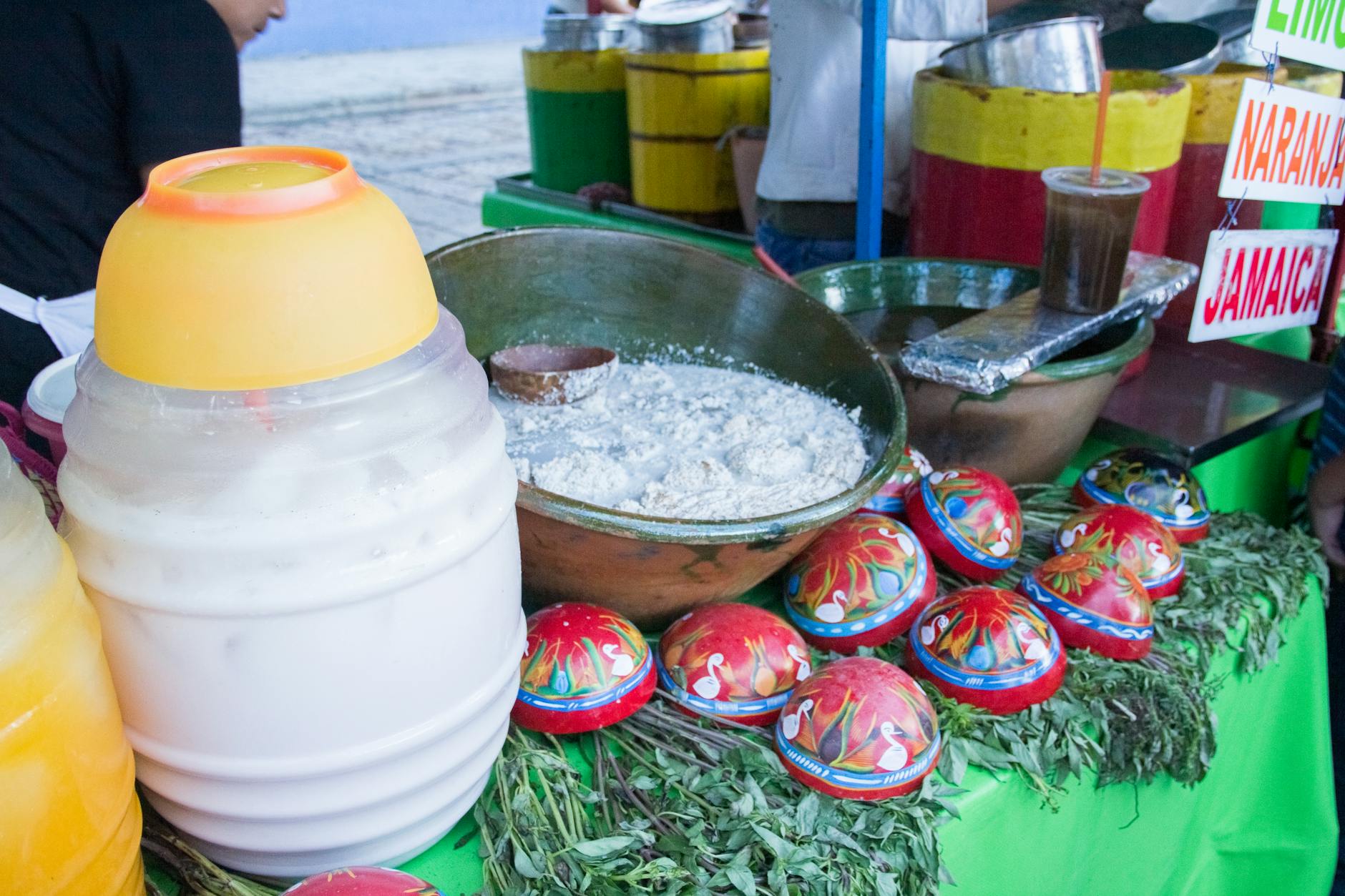
Tejate: A pre-Hispanic drink made from corn flour, cacao, and maize, thickened. It’s served cold, frothy, and slightly sweet. Found in markets in the morning. Cost: 10–20 MXN (60 cents–$1.20) per cup. It’s thick and filling — one cup is a snack, two cups is a light meal.
Where to Find These Foods: Market by Market
Mercado 20 de Noviembre (Central Food Market): This is the main food market in the centre. It’s multiple levels — the ground floor is produce, the second level is prepared food (cooked meats, soups, moles), the third level is small restaurants and stalls. Entry is free.
On the ground floor, you’ll find vendors selling dried chiles, spices, chocolate, and prepared ingredients. On the food preparation levels, look for women cooking at open stalls. A stall with a line of local workers is a sign it’s good and fair-priced.
What to buy:
– Tlayudas: Look for women at large griddles with stacks of finished tlayudas. Order one or a few, specify toppings. Takes 5 minutes if ordered fresh. Cost: 15–25 MXN.
– Memelas: Multiple vendors have these arranged on large plates. Point at what you want. Cost: 10–15 MXN each.
– Mole: Several stalls serve prepared dishes. Point at the mole type (colour is a guide), ask for a plate with chicken and rice. Cost: 40–60 MXN.
– Quesillo and cheese: Ground floor, multiple vendors. Buy a block and eat it at a café with honey and hot chocolate.
– Empanadas: Made fresh throughout the day. Cost: 10–20 MXN each.
Time to visit: 7–10am (breakfast and early lunch crowd, everything is fresh), 12–2pm (lunch rush, lively). Avoid 3–5pm (slow period, some stalls close). Open until around 6pm generally.
Mercado de Abastos: Larger and more commercial than Mercado 20 de Noviembre. It sells both ingredients and prepared food. This is where serious cooks shop, so quality is high. It’s also less tourist-oriented — fewer vendors speak English, less pressure to buy.
Walk through the produce section, then find the food stalls (usually toward the back). Look for stalls with mole, tlayudas, soups. Similar cost to Mercado 20 de Noviembre. This market is less visually “charming” but the food is as authentic and often less expensive.
Street Stalls and Comedores: Outside the major markets, small restaurants and stalls operate throughout the city. These are where locals eat — simple spaces with plastic chairs, a kitchen visible (or open to the street), and a small menu written on a board or not written at all (ask what they have today).
A comedor breakfast (tlayuda + chapulines + café): 40–60 MXN ($2.40–3.60).
A comedor lunch (mole with chicken, rice, beans, tortillas): 50–80 MXN ($3–4.80).
These spaces are where you’ll sit with local workers, understand the rhythm of the city, and eat genuinely well. Hygiene is generally fine — if a place is busy with locals, it’s safe.
Mezcal: Where to Drink and What to Know
Mezcal is a distilled spirit made from agave, and Oaxaca is the centre of mezcal production and culture. It’s different from tequila (different agave species, different production method, usually higher alcohol content and more complex flavour).
Palenques (small-scale producers in villages): These are the producers — artisanal mezcal made in small batches. Some open to visitors (Xataca, Santa Catarina Minas — both near Oaxaca city). Visiting a palenque means seeing the production, tasting the spirit straight from the producer, and buying at the lowest price (150–300 MXN/$9–18 per bottle vs. 400–600 MXN/$24–36 in bars).
Getting to palenques requires transport — hire a guide or use a mezcal tour operator (there are many). Cost: 400–600 MXN ($24–36) for a half-day visit to one or two palenques, usually including tastings and education.
Mezcalerías in Oaxaca city: Bars specializing in mezcal. Most offer flights (tastings of 2–4 mezcals) for 100–150 MXN ($6–9). A single mezcal drink: 80–120 MXN ($4.80–7.20). The better mezcalerías focus on quality and education rather than tourism spectacle. Ask for recommendations from hotel staff — guides know which places are genuine vs. tourist theatre.
Mezcal is traditionally drunk in a small glass (caballito), neat, not mixed with anything. The worm (a larva that sometimes lives in agave) is folklore — it’s not necessary and not found in quality mezcal.
The Chocolate and Coffee Sections
Chocolate shops: Oaxaca has distinct chocolate culture. Mayordomo is the most famous shop, selling chocolate in various forms (tablets, powder, ready-to-drink packets). Cost: 80–150 MXN ($4.80–9) for a tablet or powder bag. Mayordomo is functional and good; avoid the tourist-focused café if you just want to buy chocolate (buy directly from the shop counter).
Other chocolate shops exist throughout the city. Some sell traditional chocolate prepared the old way (heated and whisked into foam). Cost: 30–50 MXN ($1.80–3) for a prepared cup.
Coffee: Oaxaca grows excellent coffee in the highlands. Look for local roasteries (several operate in the city). Cost: 50–80 MXN ($3–4.80) for a café, 250–400 MXN ($15–24) for a bag of beans to take home.
Coffee and chocolate are often paired — you can buy both and make your own breakfast experience.
Budget for Eating Well in Oaxaca
Daily breakdown (one person, eating only in markets and comedores):
– Breakfast (tlayuda, chapulines, café): 40 MXN
– Lunch (mole or main from comedor): 60 MXN
– Snacks (memelas, empanadas, tejate): 40 MXN
– Dinner (quesadillas, tlayuda, simple meal): 40 MXN
– Daily total: 180 MXN (~$11 USD)
If you eat one meal in a mid-range tourist restaurant:
– Breakfast (market): 40 MXN
– Lunch (restaurant): 150 MXN
– Snacks: 40 MXN
– Dinner (market): 40 MXN
– Daily total: 270 MXN (~$16 USD)
Eating well in Oaxaca is cheap. The distinction isn’t quality (market food is excellent) but atmosphere and the presence of English menus.
What Most Tourists Miss About Oaxaca Food
Tourist food tours and cooking classes focus on mole-making and traditional techniques — useful but missing the actual point. Real Oaxacan food is about markets, daily eating, and the integration of food into community life. A tlayuda at a market stall at 7am — eaten standing with locals, observed being made, paid fairly — is more authentically Oaxacan than a cooking class that recreates it later.
The food hasn’t changed to accommodate tourists. What has changed is what tourists see. Most tourists eat in restaurants designed for them. Markets exist as they always have, serving locals. The privilege of tourist budgets is that you can choose which system to participate in.
The Bottom Line
Oaxaca’s food is exceptional and available everywhere. The best approach: spend mornings in markets (Mercado 20 de Noviembre or Mercado de Abastos), eat what’s cooking, buy ingredients if interested in cooking, understand how food actually works in the city. One meal per trip in a restaurant (Humo de Oaxaca, a good mole place) is reasonable for specific dishes or special atmosphere. The rest of your food should be from markets and comedores where the real work of cooking and eating happens.
Budget $10–15 per day for excellent, diverse food. This frees money for mezcal palenques, chocolate shops, and other culinary experiences. Eat standing at market stalls. Eat sitting with workers at comedores. Understand tlayudas not as a food item but as the framework of Oaxacan daily life. The food is the way into the culture.