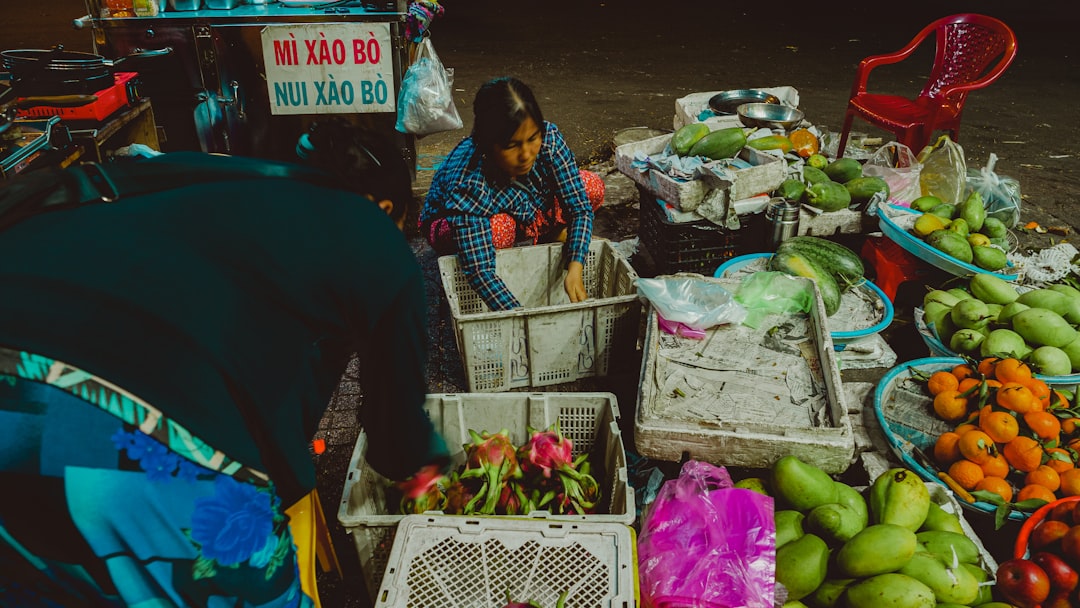
Photo by Hanna Lazar on Unsplash
Eating at Southeast Asian Markets: Safety, Quality, and What to Order
The smell hits before you see the stall — fish sauce, chilies, cooking oil, grease collected from decades of woks. Chatuchak Market in Bangkok at 10am is operating at full capacity. Thousands of people are eating from hundreds of stalls. The food is cheap ($1–3 USD per meal), it’s delicious, and most importantly, it’s safe if you know what to look for. The key to eating street food without getting sick is understanding the difference between stalls where locals eat (safe) and stalls designed for tourists (risky).
Food poisoning in Southeast Asia is usually not from street food. It’s from hotels with unreliable kitchens, tourist restaurants cutting corners because they can, or places that sit with food uncovered for hours. Local stalls, by contrast, operate with consistent volume (high turnover = fresh food), local health awareness (Thais and Vietnamese know what makes them sick), and reputation risk (locals won’t eat at a place that makes them sick).
Reading a Stall: The Indicators That Work
The queue: A stall with a line of local workers eating is a sign. They’re not eating for the experience or the photo; they’re eating lunch because it’s good and it won’t make them sick. Conversely: a stall with only tourists and no locals is a risk.
Turnover: How fast is the food moving? If you see the stall cook preparing food continuously (not sitting idle) and a line of people waiting, turnover is high. High turnover means ingredients are used quickly, so they’re fresh. If a stall has pre-cooked food sitting under a heat lamp, that food has been there hours. Avoid it.
Cleanliness of the stall: Does the cook wash their hands between orders? Is the cooking surface reasonably clean (not spotless, but not visibly grimy)? Are the plates/bowls being washed? If you see the cook washing hands and tools, it’s a good sign. If you see someone reaching bare-handed into the food, walk away.
Appearance of the cook: Does the cook look healthy? Are they handling food carefully? Does the stall reflect pride (organized, tools accessible, seeming efficiency)? A cook who cares about their work typically cares about food safety.
The ingredients: Can you see them? Are they fresh? Meat should look like it was butchered recently (not greyish or dried). Vegetables should be crisp and bright. If you see a pile of onions that look ancient, the stall might not have fresh ingredients. Most good stalls are transparent — you’re watching food being prepared in front of you.
No ice or ice made from questionable water: This is rarer now, but in rural areas some stalls use ice from non-potable water. If you’re unsure about the water source, ask: “Nam som mhai?” (Thai: “Is the water cold?”). The stall owner will clarify their ice source or offer you bottled water instead.
Specific Markets Worth Eating At
Chatuchak Weekend Market (Bangkok): The largest weekend market in the world. Thousands of food stalls organized by region — Thai food, Chinese, Japanese, seafood, desserts, drinks. It’s genuinely overwhelming and genuinely good.
What to eat: Khao pad gai (fried rice with chicken), pad thai (stir-fried noodles), som tam (green papaya salad), grilled chicken skewers, mango sticky rice. Cost: 40–100 THB ($1.15–2.85) per plate.
Where to eat: Avoid the official “food court” (overpriced for tourists). Go to the regular stalls in the market sections. Section 24–26 (northeastern food) is excellent. Walk, observe, find stalls with queues.
Jalan Alor (Kuala Lumpur): An alley of food stalls, open nightly. Packed with locals and tourists. It’s famous but still genuinely good because it operates on reputation.
What to eat: Char kway teow (stir-fried rice noodles), laksa (spicy noodle soup), grilled seafood, satay (meat skewers with peanut sauce). Cost: 7–12 MYR ($1.50–2.60) per plate.
How to navigate: Walk the alley slowly, look for stalls with visible activity. Most are legitimately good. Order based on what looks freshly cooked and has a queue.
Hoi An Central Market (Vietnam): A traditional market in Hoi An, smaller and less touristy than Bangkok’s Chatuchak. Locals shop here; tourists sometimes eat here.
What to eat: Banh mi (Vietnam sandwich, 10–15k VND/$0.50–0.75), pho (noodle soup, 15–25k VND/$0.75–1.25), spring rolls, grilled meat. The central market has stalls serving both ingredients and prepared food. Find the cooked-food section and eat where locals are sitting.
Pasar Seni (Jakarta): Also called Grand Indonesia Market. Less touristy than international markets but more accessible than purely local ones.
What to eat: Gado-gado (vegetable and peanut sauce dish, 20–30k IDR/$1.25–1.90), satay, soto ayam (chicken soup), bakso (meatball soup, 15–25k IDR/$0.95–1.60). The same principle applies: find stalls with locals, watch preparation, check cleanliness.
Water, Ice, and What to Actually Worry About
Tap water: Not reliably safe to drink in most of Southeast Asia (though it’s getting better). Drink bottled water.
Ice: Generally safe in tourist areas and cities (made from bottled water now). In rural areas, ask. In stalls, the ice is usually fine because the stall owner drinks the same water and would get sick too.
Raw vegetables: This is the actual risk. A plate of raw salad in a restaurant can be problematic if washed in non-potable water. At markets, vegetables are usually cooked (fried, boiled, stirred). If you want raw vegetables at a market stall, it’s less risky than a restaurant (because turnover is high and the cook eats the same food), but still lower-risk if you eat cooked versions.
Raw meat or undercooked meat: Southeast Asian markets cook meat thoroughly. Undercooked meat is not common. The risk is beef or pork that’s been sitting — buy from stalls with high turnover.
Seafood: The risk of fresh seafood is lower than you’d think because coastal markets have daily supply. Inland markets with fresh seafood are riskier (how long has it been preserved?). At a market, look for bright eyes (fish) and smell (should smell ocean-fresh, not fishy-stale).
What to Order and How to Order
Start with one dish: Order one plate from one stall. Eat it. If it’s good and you don’t get sick, you can order from the same stall next time. If you get food poisoning (which will happen to you at some point), you’ll have narrowed down the source.
Order something that’s visibly being cooked: Pad thai (noodles fried in front of you), grilled meat (cooked on a griddle right then), soup (hot water kills pathogens). These are safer than pre-cooked items sitting under heat lamps.
Gesturing: If you don’t speak the language, point to what looks good. Say “one” (using your finger). Most stall operators understand pointing. Describe with “spicy?” or “no spice?” (use hand gestures — make a burning mouth motion for spicy, shake head for no).
Common dishes that are safe:
– Pad thai (Thailand) — fried in front of you
– Pho (Vietnam) — hot soup, freshly cooked
– Khao pad (Thailand) — fried rice, made to order
– Laksa (Malaysia) — hot soup with coconut milk
– Satay (Indonesia/Malaysia) — grilled meat
– Som tam (Thailand) — green papaya salad (fresh, no cooking)
– Grilled fish or chicken — cooked in front of you
Avoid or be cautious of:
– Buffet items sitting in heat lamps for hours
– Pre-made cold salads
– Mayonnaise-based dishes (mayo can spoil in heat)
– Dishes with raw vegetables if you’re concerned
– Anything that’s been sitting uncovered for hours
When You Get Food Poisoning: What Actually Happens
It will probably happen. You’ll have diarrhea, nausea, maybe vomiting. It’s unpleasant but not usually dangerous.
What to do:
– Stay hydrated (water, electrolyte solutions like coconut water or ORS packets)
– Don’t eat solid food until your stomach settles (6–12 hours usually)
– Rest
– Most food poisoning resolves in 24–48 hours without treatment
When to get medical help:
– If you have blood in stool
– If fever is very high (>39°C)
– If you’re unable to keep fluids down (risk of dehydration)
– If symptoms persist beyond 3 days
Most cases are mild and resolve on their own. Travelling in Southeast Asia requires accepting this risk as manageable, not catastrophic. Locals live with it. Your immune system adapts.
Budget for Eating Well in Markets
You can eat excellently for $3–5 per day if you eat at markets (vs. tourist restaurants at $10–25).
Breakfast (market stall): Rice porridge, fried eggs, toast, coffee = 40–60 THB ($1.15–1.70)
Lunch (market stall): Pad thai or khao pad = 50–80 THB ($1.43–2.30)
Snack (market): Fresh fruit, ice cream, drink = 20–30 THB ($0.57–0.85)
Dinner (market): Grilled fish, som tam, rice = 60–100 THB ($1.71–2.85)
Daily total: $4–8 USD
This is how locals eat — well-fed, diverse food, cheaply.
Regional Differences in Market Safety
Thailand: Markets are very safe because Thais are aware of hygiene and food safety is taken seriously. Stalls are regulated. The risk is low compared to other regions.
Vietnam: Similar to Thailand. Pho is made fresh (boiling water kills pathogens). Markets are reasonably safe if you follow the rules.
Indonesia: More variable. Jakarta and Bali markets are safer (urban, regulated). Rural areas are less safe. Apply more scrutiny in smaller markets.
Cambodia: Phnom Penh markets are fine. Rural markets are less predictable. Use more caution if you’re unsure.
Malaysia: Generally very safe. KL markets are excellent.
The Reality Check
Food poisoning in street markets is statistically lower risk than in hotels and tourist restaurants. The narrative that street food is dangerous is overstated. What’s actually risky is mixing: going to a high-end hotel with poor kitchen practices, eating at a restaurant designed for tourists with low standards, then eating street food and blaming the street food.
If you’re going to get food poisoning, it’s more likely from the hotel restaurant than from a busy market stall where thousands of locals eat daily. This is the actual epidemiology of food-borne illness in Southeast Asia.
The Bottom Line
Eat at markets where locals eat. Look for turnover (activity, queues), cleanliness (the stall is organized and the cook washes hands), and transparency (you can see cooking happening). Order food that’s freshly prepared. Drink bottled water. Accept that you’ll probably have an upset stomach at some point (it’s manageable). You’ll eat better, spend less, and have a more authentic experience than eating in tourist restaurants.
The markets in Southeast Asia are how locals eat. They’re safe, they’re excellent, and they’re the gateway to understanding food culture. Eat at them confidently.