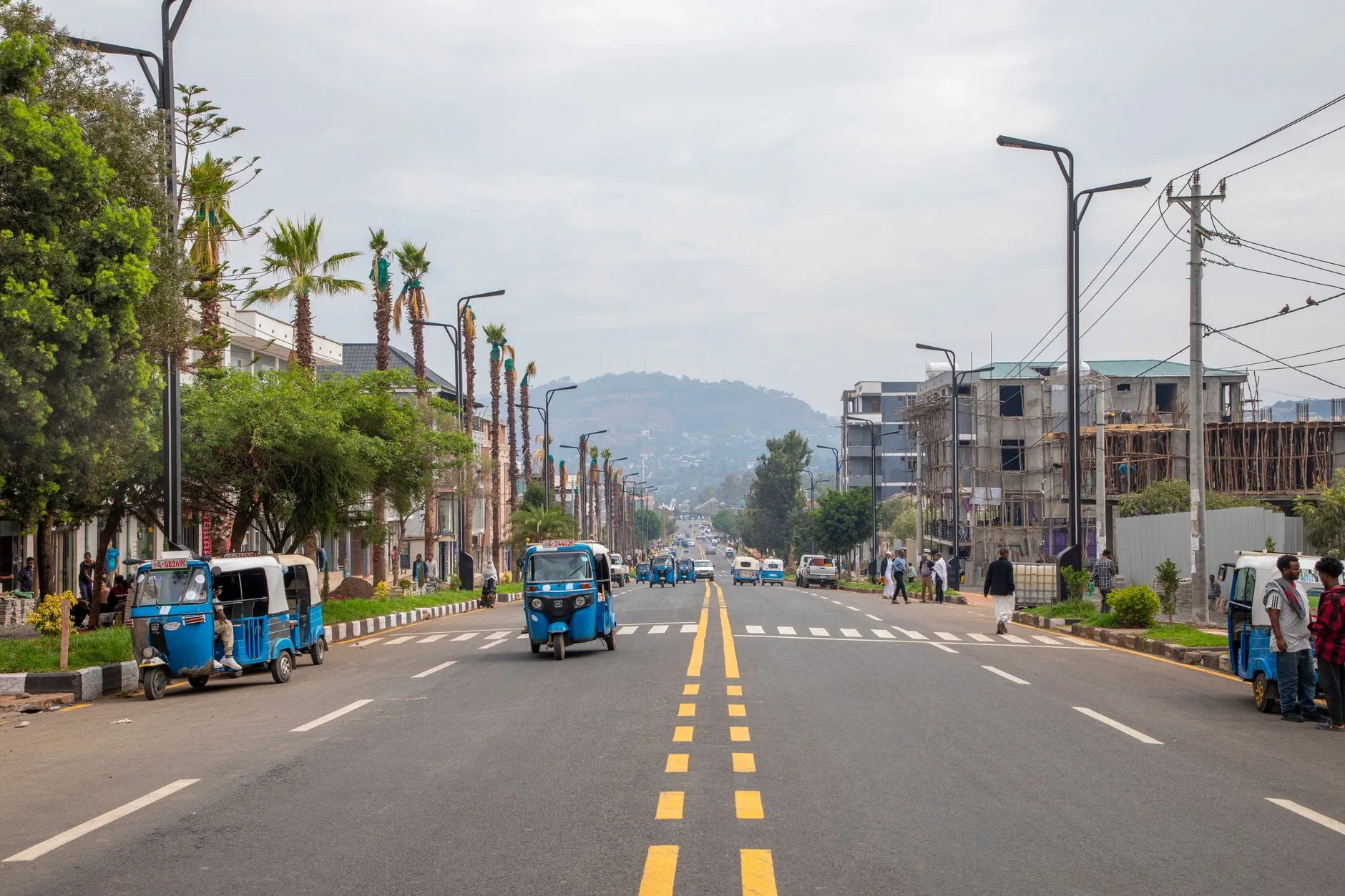
Photo by Abenezer Muluken on Pexels
Ethiopia is unlike anywhere else in Africa — a country that was never colonised (the only African nation to resist European colonisation, defeating Italy at the Battle of Adwa in 1896), with its own script (Ge’ez/Ethiopic), its own calendar (currently 2016 in the Ethiopian calendar — the country is seven years behind the Gregorian calendar), and one of the oldest Christian traditions in the world.
It is also one of the least-visited countries in Africa relative to its extraordinary range of historical sites, landscapes, and cultural depth — which is its main appeal for independent travellers.
Getting In
Visa: Most nationalities can obtain an Ethiopian e-Visa online at evisa.ethiopia.gov.et for approximately $82 (30-day single-entry). Processing typically takes 3–5 business days. Visa on arrival is available at Addis Ababa Bole International Airport for some nationalities.
Important note: Check the current FCO/State Department travel advisory before planning any trip to Ethiopia — regional conflicts (particularly in the Tigray and Amhara regions) have affected safety for travellers in recent years, though the situation has been improving.
Flights: Ethiopian Airlines has an excellent regional and international network. Direct flights from London to Addis Ababa take approximately 8.5 hours. Ethiopian Airlines is the largest African carrier and widely considered the best.
Addis Ababa
Ethiopia’s capital at 2,355m altitude has less colonial architecture than most African capitals (given the country’s non-colonised history) and more of its own aesthetic — a mix of Imperial Ethiopian, Soviet-era development, and modern construction.
The National Museum of Ethiopia houses the skeletal remains of “Lucy” (Australopithecus afarensis, 3.2 million years old) and traces the entire history of human evolution in the place where it happened — the most important natural history museum in Africa.
The Holy Trinity Cathedral is the most important Ethiopian Orthodox Christian church outside Axum — burial place of Emperor Haile Selassie. The stained glass, the painted ceiling, and the atmosphere of the services (held in Ge’ez, the ancient liturgical language) are remarkable.
Mercato: One of the largest open-air markets in Africa — a genuine working market for locals rather than tourist goods, covering the full range of Ethiopian trade.
The Historic Route
The “Historic Route” links the main historical sites of northern Ethiopia — Addis Ababa, Bahir Dar, Gondar, Axum, and Lalibela. All are accessible by Ethiopian Airlines’ domestic network (flights between each are typically £30–80, and the distances are prohibitive by road).
Lalibela
The most extraordinary site in Ethiopia and one of the most remarkable in Africa — eleven monolithic rock-hewn churches, carved directly from solid volcanic rock, connected by passages and trenches in the ground. The churches are still active — priests in white robes, the smell of incense, the sound of chanting, and genuine religious devotion at sites that have been in continuous use since the 12th–13th centuries.
Bet Giorgis (the Church of St George, cross-shaped, excavated to a depth of 12 metres) is the most famous and the one photographs most often show. But the cluster of churches at Bet Maryam and Bet Medhane Alem (the largest rock-hewn structure in the world) are equally significant.
Allow 2 full days in Lalibela. Ethiopian Christmas (Genna, around 7 January) and Timkat (Ethiopian Epiphany, late January) are celebrated here with extraordinary processions.
Gondar
The 17th-century royal capital — a walled complex of palaces built by Emperor Fasilides and his successors (the Royal Enclosure, Fasil Ghebbi, is a UNESCO World Heritage Site). The Fasilides Bath complex (used for the Timkat ceremony) is a separate highlight. Gondar is the base for trekking in the Simien Mountains National Park.
Simien Mountains
A UNESCO site of dramatic highland landscape — the Ethiopian wolf, gelada baboon (found only in the Ethiopian highlands), and Walia ibex. Trekking routes range from 1-day walks to multi-day mountain hikes. The escarpment views are extraordinary.
Axum (Aksum)
Ancient Axum was the capital of one of the world’s most powerful kingdoms from the 1st to the 7th centuries CE — contemporary with (and trading with) Rome and Persia. The granite obelisks (stelae) are the most visible monuments. The Church of Our Lady Mary of Zion reportedly houses the Ark of the Covenant (displayed to no one, guarded by a single monk) — which is taken seriously here rather than as mythology. The Axum museum covers the Kingdom’s history and the coins, inscriptions, and gold objects found in the region.
Omo Valley
In the far south — a world apart from the Historic Route. The Omo Valley is inhabited by a remarkable collection of indigenous tribes (Mursi, Hamar, Dassanech) with distinct cultural practices including lip plates (Mursi women), bull jumping ceremonies (Hamar), and elaborate body painting and scarification traditions.
This is not easy or comfortable tourism — the Omo Valley requires a 4WD vehicle, significant time, and a sensitivity to the dynamics of indigenous community tourism that has a complicated history here. But for those interested in cultural diversity, it is one of the most extraordinary places in Africa.
Costs
Ethiopia is moderately priced for Africa:
| Item | Approximate cost |
|---|---|
| Budget guesthouse | £10–25 |
| Injera with tibs/wot (local meal) | £2–5 |
| Ethiopian coffee ceremony (coffee service) | £1–2 |
| Domestic flight (e.g., Addis–Lalibela) | £40–80 |
| Lalibela church complex entry | £30–40 |
Daily budget: £30–50 excluding domestic flights.
Conclusion
Ethiopia rewards travellers who invest the time to understand what they’re seeing:
- Fly between Historic Route sites — distances by road are very long on poor roads; Ethiopian Airlines domestic flights are cheap and reliable
- Lalibela demands 2 full days — the churches are vast and the detail extraordinary
- The Simien Mountains are worth the detour — the gelada baboons and escarpment views are unique
- Check current FCO advice before booking — some regions have ongoing security concerns
- Ethiopian coffee is a ceremony — accept the invitation to sit through the three rounds; it’s one of the best cultural experiences the country offers
Keep reading: First time in Kenya: safari planning guide