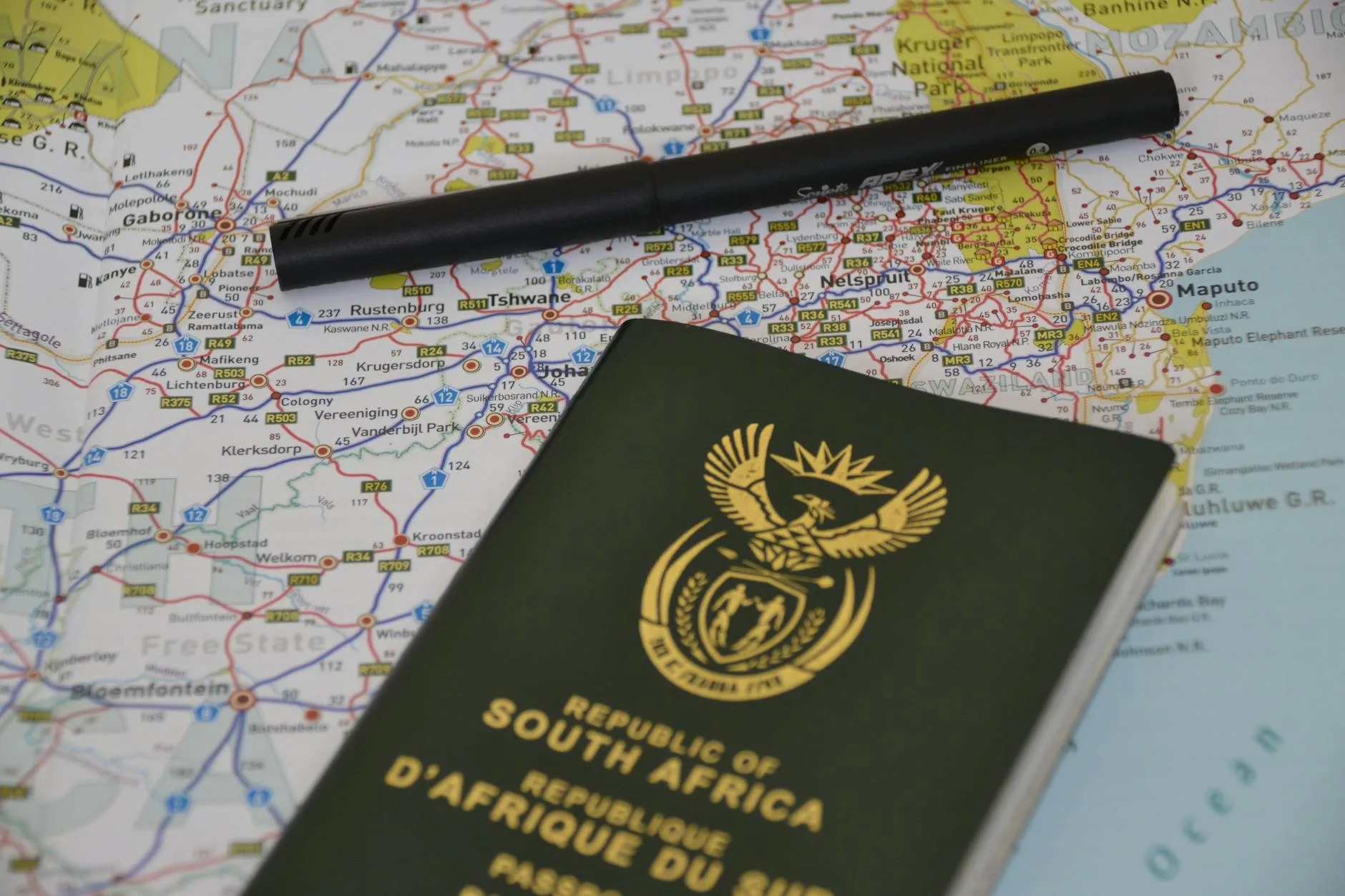
Photo by Tyler Leigh Vivier on Pexels
How to get a long stay visa for Southeast Asia
The immigration hall at Suvarnabhumi Airport smells of industrial air conditioning and jet fuel, and at two in the morning it is full of people dragging bags toward a row of booths staffed by officers who have seen every variation of this story before. The backpacker in line ahead of you has a one-way ticket and a vague plan. The couple behind you are clutching printed bank statements and a lease agreement. You have done your research. You know which queue to join.
Long-term travel in Southeast Asia is entirely possible — millions of people do it every year — but the visa landscape is genuinely complicated. Rules change without much announcement, enforcement varies by country and by border crossing, and advice that was accurate two years ago may now be wrong. This guide covers the main options as of 2026 for the region’s most-visited countries: what exists, what it costs, how to apply, and what to watch out for.
This is not a guide about staying indefinitely on tourist visas through border runs. That strategy has become increasingly unreliable, and some countries now actively restrict it. This is about legitimate, sustainable long-stay options.
Thailand: the most structured long-stay landscape in the region
Thailand has, over the past few years, built the clearest long-stay visa framework in Southeast Asia — which is both a compliment and a warning that it comes with paperwork.
Thailand Long-Term Resident (LTR) Visa — introduced in 2022, this is a ten-year visa for people who meet specific income or investment criteria. There are four categories: wealthy global citizens (who must demonstrate a minimum of $1 million USD in assets and a personal income of at least $80,000 per year), digital nomads under the Work-from-Thailand category (a minimum income of $80,000 per year for the previous two years, or $40,000 with a master’s degree or patent), retirees (minimum pension or passive income of $40,000 per year, or $25,000 with a health insurance policy and $250,000 in assets), and skilled professionals working for Thai-registered companies. The LTR is processed through the Board of Investment’s dedicated portal and typically takes four to eight weeks. It grants 90-day re-entry permission and a 10-year visa — not a residence permit, but close enough for most long-term travellers.
Thailand Retirement Visa (Non-Immigrant O-A) — for travellers over 50, this remains the most accessible and widely used long-stay option. You apply at a Thai consulate abroad (Bangkok’s own consulate system does not accept these applications — you apply in your home country or at a consulate in a third country like Kuala Lumpur or Vientiane). Requirements: proof of a bank balance of at least 800,000 Thai baht (approximately $22,000 USD) in a Thai bank account, or a monthly income of at least 65,000 baht, or a combination. You also need health insurance with a minimum coverage of 40,000 baht for outpatient and 400,000 baht for inpatient — this is now enforced, not optional. The visa is valid for one year, renewable annually from within Thailand at any immigration office. Chiang Mai’s immigration office on Airport Road, Phuket’s on Phuket Road in Phuket Town, and Bangkok’s Chaeng Watthana Government Complex are the most-used renewal points. Budget a full morning — often longer.
Thailand Special Tourist Visa (STV) — a 90-day visa extendable to 270 days, targeted at long-stay tourists rather than retirees or workers. Available at Thai embassies and consulates abroad, it requires proof of accommodation (a hotel booking, lease, or letter of invitation) and 500,000 baht in accessible funds. Less bureaucratic than the retirement visa, but it doesn’t recur automatically — you’d need to apply fresh each time.
If you plan to spend extended time in the north, the rhythms of Chiang Mai as a base — its neighbourhood structure, cost of living, and pace — are worth understanding before you commit to a year there.
Indonesia: Bali’s new visa framework
Indonesia overhauled its visa system in 2023 and 2024, partly in response to the mess of tourist behaviour in Bali, and the new framework is now reasonably settled — though still imperfect in execution.
Visitor Visa B211A (Social/Cultural) — this is the primary long-stay option for most travellers and is what most people mean when they talk about “the Bali visa”. It is a 60-day visa, extendable four times in increments of 30 days, giving a maximum stay of 180 days (6 months). You apply online through the Indonesian immigration portal (imigrasi.go.id) or through a local visa agent in Bali — both work, but agents are often faster at catching errors. Cost: approximately $45 USD for the initial visa, plus $35 per extension. Extensions are handled at the regional immigration office (Kantor Imigrasi) — in Bali, the busiest offices are in Denpasar on Jalan Raya Puputan and in Singaraja for those based in the north.
Second Home Visa — a 5 or 10-year visa for those with significant assets. Requirements are steep: a minimum of 2 billion Indonesian rupiah (approximately $125,000 USD) in a government-owned Indonesian bank account, or ownership of property worth at least 5 billion rupiah. Not relevant for most long-stay travellers, but worth knowing exists.
The practical reality for most people spending three to six months in Bali is the B211A route: apply online, arrive at Ngurah Rai Airport, collect your stamp, start the extension process at week seven. Budget at least a half-day for each extension visit, and note that the Denpasar office is open Monday to Friday only. If you want to understand Bali beyond the paperwork — its village structure, its ceremonies, the texture of daily life — the distinction between tourist Bali and lived Bali matters enormously. What it’s actually like to attend a local ceremony as an outsider gives a better picture of what you’re staying for.
Vietnam: longer stays now possible
Vietnam’s visa policy has shifted markedly toward long-stay visitors. The E-visa, which previously capped at 90 days with a single entry, now allows 90-day multi-entry stays — and more importantly, it can be extended once from within Vietnam for another 90 days, giving potential stays of up to six months.
Vietnam E-visa — apply at evisa.xuatnhapcanh.gov.vn. Cost: $25 USD. Processing: typically three business days. You’ll need a passport-quality photo, a scan of your passport’s data page, and payment. The e-visa covers all official border crossings — including land borders like Moc Bai (from Cambodia), Lao Bao (from Laos), and the main northern crossings at Huu Nghi Quan (Friendship Gate, from Nanning, China). Approval rates are high, but applications have been rejected for low-quality passport scans — use a flatbed scanner, not a phone photo.
For stays beyond 90 days, the most common route is a Temporary Residence Card applied for at a provincial immigration department. This requires a local sponsor — typically a Vietnamese company you work with, an educational institution, or a registered representative office. It’s bureaucratically heavy and most independent travellers don’t use it. The realistic long-stay option for most is the 90-day e-visa followed by an in-country extension to 180 days.
Vietnam’s immigration enforcement has tightened considerably in the past three years. Overstaying — even by a day — results in fines and can result in entry bans. Keep your exit date visible in your calendar.
Malaysia: quiet ease, often overlooked
Malaysia is underrated as a long-stay destination partly because it doesn’t have Bali’s beaches or Thailand’s infrastructure — but its visa landscape is among the most straightforward in the region.
Malaysia My Second Home (MM2H) — this is Malaysia’s flagship long-stay programme, reintroduced in 2021 after a two-year suspension with tighter requirements. The current programme has three tiers (Platinum, Gold, Silver) based on income and asset requirements:
| Tier | Min. Monthly Income | Fixed Deposit (MYR) | Property Requirement | Annual Fee |
|---|---|---|---|---|
| Platinum | $40,000 USD | 1,000,000 | Must purchase min. MYR 1.5M property | $1,000 USD |
| Gold | $10,000 USD | 500,000 | Optional | $500 USD |
| Silver | $4,000 USD | 150,000 | None required | $250 USD |
The Silver tier, while restrictive compared to earlier versions of MM2H, is accessible to early retirees or those with passive income. Applications are processed through the Ministry of Tourism, Arts and Culture Malaysia (motac.gov.my) and approved applicants receive a 20-year renewable visa — the longest duration in the region by a significant margin.
Standard visa-free entry — Malaysia also offers visa-free stays of up to 90 days for most Western passport holders, with straightforward renewal possible by briefly crossing into Singapore or Thailand. Unlike Thailand, Malaysia has not cracked down on repeated border re-entries, making it a common base for people who don’t qualify for MM2H.
Cambodia: the simplest entry, but fewer formal long-stay routes
Cambodia remains one of the easiest countries in the region to enter and stay. The E-visa (available at evisa.gov.kh, $30 USD, processed in 3 business days) or visa on arrival at Phnom Penh and Siem Reap airports grants 30 days. The standard tourist visa can be extended once for 30 days at the immigration department on Street 5 in Phnom Penh or through local agents for $45 to $55 total.
For longer stays, Cambodia’s Ordinary Visa (Type E) — available on arrival or via the same e-visa portal — is extendable for 1, 3, 6, or 12 months for business or social purposes. The 12-month extension costs approximately $290 and is handled through local agents who know the process far better than the official process lets on. This is legal and common. The agents cluster around the immigration offices and are an unremarkable part of the system.
Cambodia does not have a dedicated retirement or long-stay programme in the formal sense. The 12-month business/social extension is the de facto route. One practical point: getting a Cambodia visa on arrival is worth reading before you fly, especially if you’re entering by land.
Laos and Myanmar: a note on current conditions
Laos issues tourist visas on arrival (30 days, $30 to $42 USD depending on nationality) and via e-visa. Extensions of 30 days are available from Vientiane’s immigration office on Thanon Phai Nam. There is no structured long-stay programme; the country simply isn’t set up for it yet. Most long-stayers use repeated extensions and occasional border exits.
Myanmar as of 2026 remains subject to travel advisories from most Western governments due to ongoing military conflict following the 2021 coup. Independent travel is extremely limited, entry is complicated, and meaningful long-stay options do not realistically exist in the current environment. Check your government’s advisory — the UK Foreign Office and the US State Department both maintain current assessments — before making any plans involving Myanmar.
The practicalities that actually matter
Where to apply: For most of these visas, you apply at a consulate in your home country, online through official government portals, or — for extensions — at immigration offices within the country. Bangkok’s consular district in Wireless Road (Witthayu Road) handles applications for several countries. Kuala Lumpur’s Jalan Ampang diplomatic strip is useful for Indonesia and Vietnam applications if you’re already in the region.
Proof of funds: Every country requires it. In practice, a PDF bank statement from your home bank showing a steady balance (not a one-day spike) is what officers want to see. Three to six months of statements is standard. Cryptocurrency holdings, brokerage accounts, and savings in fintech apps are often not accepted — ask the specific consulate.
Health insurance: Thailand now requires it for the O-A visa; Indonesia and Malaysia recommend it. Policies from providers like Pacific Cross, Cigna Global, or AXA that explicitly cover Southeast Asia and list the policy in English are the most straightforward to present.
Tax considerations: A long-stay visa is not tax residency — but spending more than 180 days in a country can trigger tax obligations in some jurisdictions, both local and in your home country. This varies significantly by nationality. It’s worth a conversation with an accountant before you commit to a year in one place.
Timing your application: Thai and Indonesian visas benefit from applying 4 to 6 weeks before your intended arrival. Vietnam e-visas are quicker (3 working days) but surge in processing time around Vietnamese New Year (Tết, late January or early February).
The region has much more depth than a single city or coast. If you’re spending months here rather than weeks, you’ll have time to get past the obvious. Thinking carefully about how to spread your time across different countries in Southeast Asia — and which places reward longer, slower visits — is worth doing before you lock in any visa’s terms. More time in fewer places is often more satisfying than chasing a stamp in every passport.
Quick comparison: main long-stay options by country
| Country | Best long-stay option | Max duration | Min. income/asset threshold | Apply where |
|---|---|---|---|---|
| Thailand (50+) | Non-Immigrant O-A (Retirement) | 1 year, renewable | 800,000 THB in bank (~$22k) | Thai consulate abroad |
| Thailand (any age) | LTR Visa | 10 years | $80,000/yr income (digital nomad) | BOI portal online |
| Indonesia | B211A Visitor Visa | 180 days | No income requirement | imigrasi.go.id |
| Vietnam | E-visa + extension | 180 days | No income requirement | evisa.xuatnhapcanh.gov.vn |
| Malaysia | MM2H (Silver tier) | 20 years | $4,000/month + MYR 150k deposit | MOTAC website |
| Cambodia | Type E Visa (12-month ext.) | 12 months | No formal requirement | Immigration office/agent |
| Laos | Tourist visa + extensions | 60–90 days | No formal programme | On arrival/immigration office |
The Bottom Line
-
Thailand and Malaysia have the most developed long-stay frameworks. Thailand’s O-A retirement visa is accessible and well-understood for those over 50; Malaysia’s MM2H Silver tier suits early retirees or those with reliable passive income. The LTR visa suits higher-earning digital workers.
-
Indonesia’s B211A is the most practical entry point for most travellers who want up to six months in Bali without meeting an income threshold — the bureaucracy is manageable and the agent system fills in the gaps.
-
Vietnam’s e-visa extension gives 180 days with minimal paperwork and no income requirement — the easiest route for a half-year stay.
-
Rules change. Check official government immigration portals directly — not visa agent blogs or forum posts from 2023. The IATA Travel Centre is a reliable cross-reference for current entry requirements.
-
Apply early, carry physical and digital copies of every document, and don’t let your passport’s validity drop below six months before any application. Officers have discretion, and a passport expiring in four months will complicate your day even if the rules technically allow it.
Keep reading: Digital nomad life in Chiang Mai: honest review