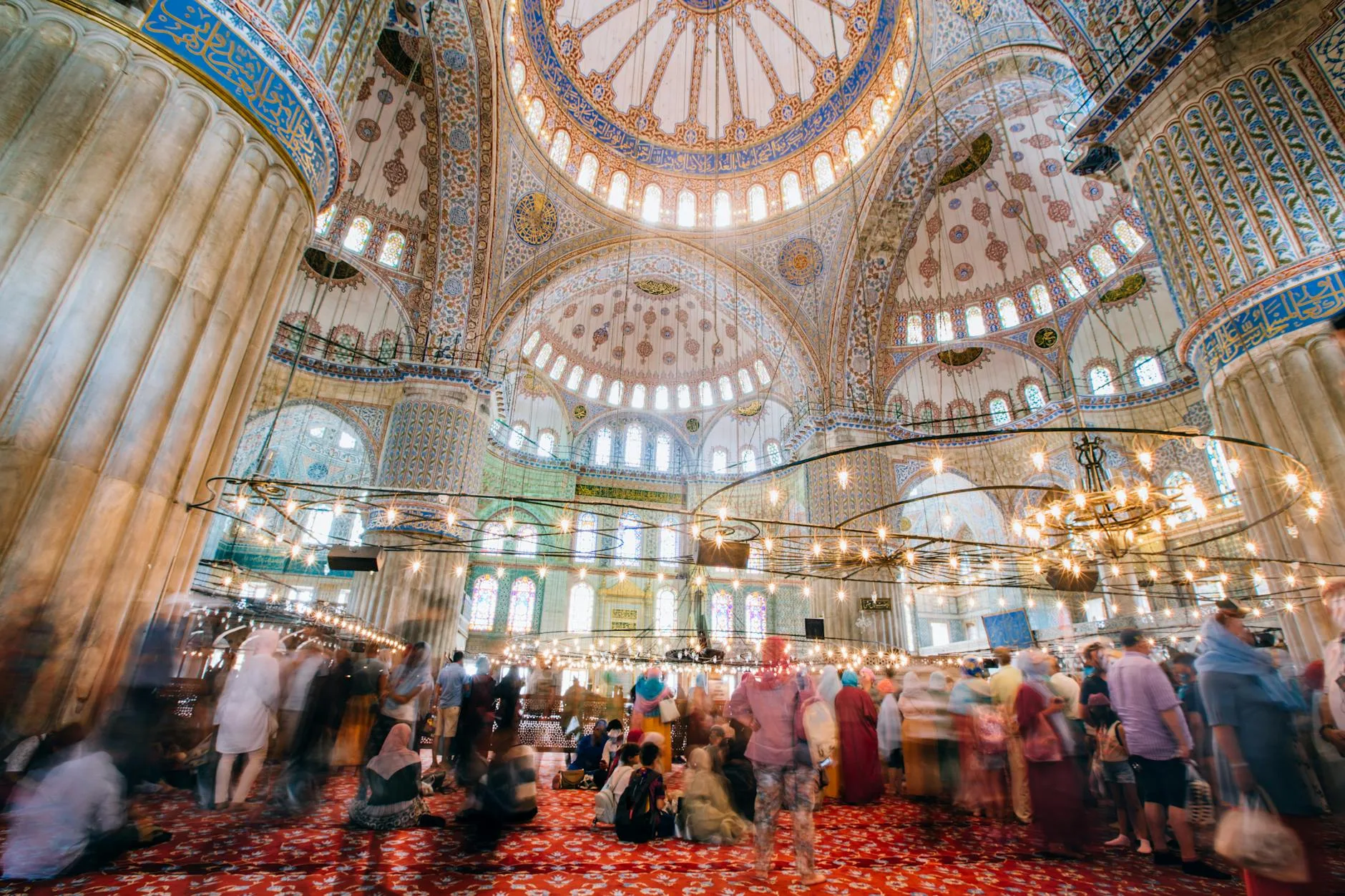
Photo by Vitaly Gariev on Pexels
What to know before visiting a mosque as a tourist
The call to prayer from the Umayyad Mosque in Damascus used to roll across the Old City at dusk like something geological — not loud exactly, but inevitable, the sound settling into the stone streets of the Hamidiyya Souk before the last syllable finished. Visitors who arrived expecting a museum found something still breathing. Men unrolled prayer mats in corners. A child slept against a pillar. The courtyard, one of the largest in the Islamic world, held several hundred people doing several different things, and tourism was only one of them.
That’s the central fact about mosques that no dress-code checklist fully captures: they are functioning places of worship, not monuments on standby for visitors. The etiquette matters not because gatekeepers will turn you away (most won’t), but because understanding it changes what you actually see. Walk in knowing nothing and you’ll circle the perimeter politely and leave. Walk in knowing what you’re looking at and the building opens up.
This guide covers the practical specifics — what to wear, when to go, where to go, and how to behave in mosques across a range of countries — along with the details that usually get left out of the pamphlet at the door.
Dress code: the specifics, not the vague advice
“Dress modestly” appears on every travel site. Here’s what it actually means.
For women: shoulders, arms, and legs must be covered — long sleeves and trousers or a skirt below the knee are the baseline. More importantly, hair must be covered inside most mosques. Carry a scarf in your bag as a matter of habit when mosque-visiting is on the agenda. Cotton or linen scarves work better than silk, which slides off. In Iran, full hijab (covering hair and neck completely) is legally required even for visiting female tourists. In Turkey, Morocco, and Egypt, a scarf wrapped loosely over the hair is standard and sufficient. In Malaysia and Indonesia, full covering including the neck is appreciated but staff at major mosques often provide abayas at the entrance for free or a small deposit.
For men: long trousers are required at most mosques. T-shirts are generally fine, though in stricter mosques (particularly in Saudi Arabia and parts of the Gulf), a modest collar is preferred. Shorts are not acceptable, and some mosques will turn men away for them — the Sultan Qaboos Grand Mosque in Muscat, Oman, is a consistent example.
Shoes: removed before entering the prayer hall without exception. Wear slip-on shoes or sandals if you’re visiting multiple mosques in a day. Many mosques have a shoe rack at the entrance; others ask you to carry your shoes in a bag (some provide plastic bags). The floor inside a prayer hall is carpeted and considered clean — you’re asked not to step in with outdoor footwear, not as a formality but for the same reason you’d remove shoes entering a Japanese home.
Prayer times: when not to visit, and why
The five daily prayers are Fajr (pre-dawn), Dhuhr (midday), Asr (mid-afternoon), Maghrib (sunset), and Isha (night). Non-Muslim tourists are not permitted inside the prayer hall during active prayers at most mosques — and even where it’s technically allowed, it’s disruptive and inappropriate to be wandering around taking photos while worshippers are praying.
Exact prayer times shift daily based on the solar calendar. Before visiting any mosque, check the day’s prayer schedule. Apps like Muslim Pro give accurate local prayer times for any city. As a rough guide, aim to visit mid-morning (after Fajr, before Dhuhr) or mid-afternoon (between Dhuhr and Asr). Friday is the most significant day in the Islamic week — the Jumu’ah prayer at midday draws large congregations, and many mosques close to non-Muslim visitors for the duration. In Egypt and Morocco, expect mosques to be entirely closed to tourists on Friday mornings.
The period around Ramadan also affects access — read up on what it’s like to travel in a Muslim country during Ramadan before planning a trip that overlaps with it, since mosque etiquette tightens considerably during the holy month.
Which mosques are open to non-Muslim visitors
This varies significantly by country, denomination, and individual mosque policy.
Open to non-Muslims (generally):
– Turkey: Almost all major mosques, including the Sultanahmet (Blue Mosque) and the Süleymaniye in Istanbul, welcome non-Muslim visitors outside prayer times. The Sultanahmet is currently the only mosque in Istanbul where visitors enter via a separate tourist entrance — allow 20–30 minutes for the queue on busy days.
– Morocco: The Hassan II Mosque in Casablanca is one of the few mosques in Morocco open to non-Muslims — it offers guided tours in Arabic, French, and English for around 120 MAD (approximately €11). Most other Moroccan mosques, including the Koutoubia in Marrakech and the Qarawiyyin in Fez, are closed to non-Muslim visitors. Knowing this before you visit saves confusion and disappointment.
– Egypt: The Ibn Tulun Mosque and the Al-Azhar Mosque in Cairo are both accessible to non-Muslim tourists. Al-Azhar, founded in 970 CE, is one of the oldest universities in the world and the mosque complex is open most mornings — a small donation is customary.
– Iran: Mosques are generally open to non-Muslim visitors outside prayer times. The Sheikh Lotfollah Mosque in Isfahan — small, asymmetrical, with a dome of cream and amber tilework that changes colour by the hour — is among the most architecturally extraordinary buildings in the world and well worth the modest entrance fee.
– Oman: The Sultan Qaboos Grand Mosque in Muscat is open to non-Muslim visitors Saturday to Thursday, 8am–11am. It’s one of the most visitor-friendly mosques in the Gulf region.
– Malaysia: The Masjid Negara (National Mosque) in Kuala Lumpur and the Sultan Salahuddin Abdul Aziz Shah Mosque in Shah Alam are both open to non-Muslim visitors in the morning. The latter, with a capacity of 24,000, has a blue dome visible for several kilometres.
Largely or entirely closed to non-Muslims:
– Saudi Arabia: The Grand Mosque (Masjid al-Haram) in Mecca and the Prophet’s Mosque in Medina are restricted to Muslims only. The entire city of Mecca is closed to non-Muslims.
– Most neighbourhood mosques across the Middle East and North Africa are not set up for tourists — not hostile, simply not oriented toward visitors. Entering a small local mosque uninvited is different from visiting a major historic site.
How to behave once you’re inside
Enter quietly. If you’re arriving in a group, split up or at minimum stop speaking loudly at the door.
Move to the sides of the prayer hall rather than walking through the centre — the central axis toward the mihrab (the niche indicating the direction of Mecca) is used for prayer. Sit down if you want to observe the space; standing in the middle taking photos can feel intrusive.
Photography is permitted in most tourist-visited mosques, but check for signs. Where photography is allowed, avoid photographing individuals praying — this is a consistent expectation across denominations and countries. Turn your flash off. Don’t use a selfie stick inside the prayer hall.
Keep voices low. If you have a question, find a caretaker or guide rather than asking worshippers mid-prayer. Many major mosques have volunteer guides or paid tour options — the Sultan Qaboos Grand Mosque in Muscat and the Blue Mosque in Istanbul both offer guided introductions that significantly deepen the visit.
Don’t touch the Quran or religious objects unless invited to do so. In some mosques, particularly in Iran, you may be greeted and offered tea by caretakers — this is genuine hospitality, not a pitch. Accept it, sit down, ask questions if you have them. Some of the most informative conversations about Islamic architecture and practice happen in exactly these unhurried exchanges.
A comparison: mosque visiting rules by country
| Country | Open to non-Muslims? | Dress code stringency | Shoes removed? | Photo rules | Best mosque to visit |
|---|---|---|---|---|---|
| Turkey | Yes, most mosques | Moderate | Yes | Generally yes | Süleymaniye, Istanbul |
| Morocco | Limited (Hassan II only) | Moderate | Yes | Inside: restricted | Hassan II, Casablanca |
| Egypt | Yes, major historic mosques | Moderate | Yes | Generally yes | Ibn Tulun, Cairo |
| Iran | Yes, outside prayer times | Strict (women: full hijab) | Yes | Generally yes | Sheikh Lotfollah, Isfahan |
| Oman | Yes (Grand Mosque, specific hours) | Strict | Yes | Yes | Sultan Qaboos Grand Mosque, Muscat |
| Malaysia | Yes, major mosques | Moderate (abayas provided) | Yes | Generally yes | Masjid Negara, KL |
| Indonesia | Yes, most mosques | Moderate (sarongs provided) | Yes | Generally yes | Istiqlal Mosque, Jakarta |
| Saudi Arabia | No (non-Muslims excluded) | N/A | N/A | N/A | N/A |
The architecture: what you’re actually looking at
Most visitors to mosques are looking at extraordinary buildings without a map to read them. A few structural elements worth knowing:
The mihrab is the niche in the qibla wall — the wall facing Mecca. Every mosque has one; it’s the visual and functional centre of the prayer hall. In great mosques like the Mezquita in Córdoba or the Umayyad in Damascus, the mihrab is covered in mosaic or carved plasterwork of extraordinary intricacy.
The minbar is the raised pulpit to the right of the mihrab, used for the Friday sermon. In Ottoman mosques, mimbars are often carved from a single piece of marble or walnut.
The sahn is the central courtyard, typically with a fountain for ablutions (ritual washing before prayer). In the Ibn Tulun Mosque in Cairo, the spiral minaret rises from the outer wall — unique in Egypt and clearly influenced by the minarets of Samarra, Iraq.
The qibla wall — the wall containing the mihrab — always faces toward Mecca. In Istanbul it faces roughly southeast; in Morocco roughly east; in Indonesia roughly northwest. The orientation shifts the geometry of the building relative to the street, which is why so many mosques in historic medinas sit at an angle to the surrounding urban grid.
The UNESCO World Heritage Sites list includes detailed documentation on many of the world’s major Islamic monuments if you want to go deeper before visiting.
Practical details that don’t usually make the pamphlet
Entrance fees: Many major tourist mosques charge entrance. The Hassan II Mosque in Casablanca: ~120 MAD. Sultan Qaboos Grand Mosque, Muscat: free. Blue Mosque, Istanbul: free (but a €5 donation is suggested and the entrance now has a formalised queue). Sheikh Lotfollah Mosque, Isfahan: around 300,000 IRR (prices shift with exchange rates). Al-Azhar, Cairo: free for the mosque, small fee for the minaret.
Guided vs. self-guided: In Morocco, Egypt, and Iran, a knowledgeable local guide transforms a mosque visit from architectural sightseeing into something with actual texture. For finding guides who genuinely know their cities, see this guide on how to find a good local guide without an agency.
Timing your visit: At major tourist mosques in Istanbul and Casablanca, the busiest period is 10am–1pm. Arriving at opening time (usually 8–9am) or in the late afternoon significantly changes the experience — quieter, better light in the interior, more time to sit and look without a crowd moving around you.
Language: At most mosques open to visitors, some staff speak English and French. In Iran, English is less consistent outside Tehran; having a guide or a few words of Farsi is genuinely useful. A simple shukran (Arabic: thank you) or merci (widely understood across the Maghreb) goes a long way.
According to National Geographic’s coverage of Islamic heritage sites, many of the world’s most significant mosques receive only a fraction of the visitors that comparable Christian cathedrals attract — partly because visitors simply don’t know they’re accessible.
The Bottom Line
- Dress code is non-negotiable and not hard to manage. Women: cover hair, arms, and legs. Men: long trousers. Carry a scarf. Wear slip-on shoes. None of this requires a special wardrobe — just a small amount of planning before you leave the hotel.
- Prayer times shape your visit more than anything else. Check the day’s schedule before you go. Aim for mid-morning. Avoid Friday midday. Being turned away from a closed mosque is easily avoided.
- Morocco is the most common disappointment. Most Moroccan mosques are closed to non-Muslims. The Hassan II Mosque in Casablanca is the exception — plan your visit there rather than arriving at the Koutoubia in Marrakech expecting entry.
- The best mosque experiences happen when you slow down. Sitting in the courtyard of the Ibn Tulun Mosque in Cairo on a weekday morning, or arriving at the Sheikh Lotfollah in Isfahan just before the light shifts, is something that cannot be rushed. Build in more time than you think you need.
- Curiosity is the best credential. Staff and caretakers at mosques across the Muslim world are generally welcoming of visitors who show genuine interest. Ask questions. Accept hospitality. The building is only part of what’s there.
Keep reading: How to respectfully visit religious sites abroad