Photo by Frederick Adegoke Snr. on Pexels
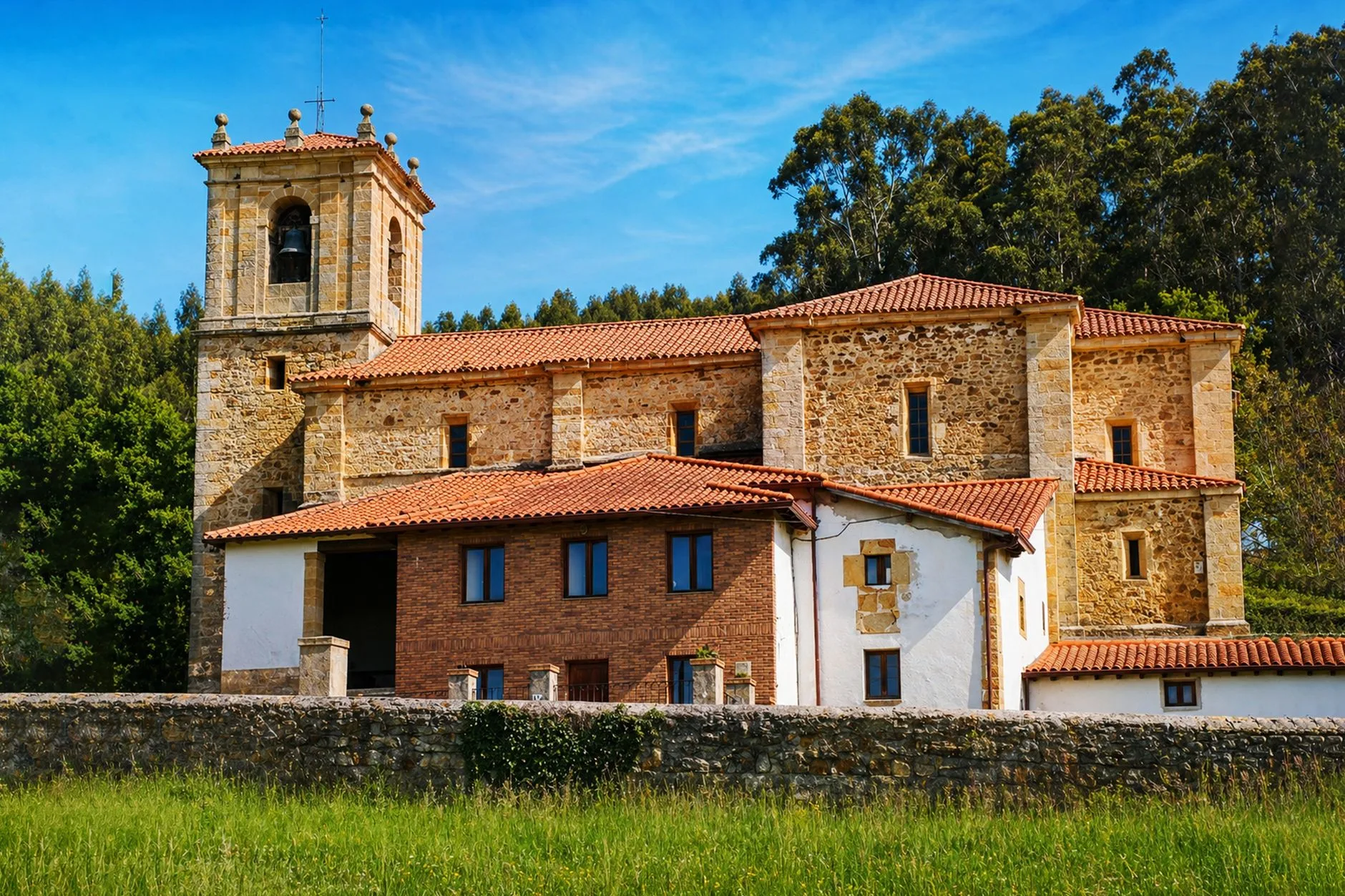
At eight in the morning in Tierra de Campos, the only sound is wind moving through wheat that hasn’t been cut yet. A stork clacks its beak on a nest wedged into the bell tower of a Romanesque church in a village of maybe forty people. The bar across the square — there is always a bar, even when there’s little else — opens at seven for the men who work the fields, and by eight it smells of toasted bread, olive oil, and the first coffee of the day pulled through a battered espresso machine that has clearly outlived several owners.
This is the Meseta, the high plateau that occupies the dead centre of Spain, and it is not where most people go. It doesn’t have a coastline, a beach, or a single landmark famous enough to anchor a two-week itinerary. What it has instead is distance, quiet, and towns that have barely changed their rhythm in a century — which is precisely why it rewards the kind of travel that doesn’t rush.
What the Meseta actually is, and why it matters
The Meseta Central is a vast, sun-bleached tableland covering much of Castile and León and Castilla-La Mancha, sitting at an average elevation of around 600–700 metres. It is agricultural, sparsely populated, and climatically brutal at both ends of the year — scorching in July and August, bitterly cold and often snow-dusted in January. This is not incidental information; it should shape when you go. The sweet spots are May to mid-June and September to mid-October, when the wheat is either green or just harvested, the light turns the colour of dry sherry in the late afternoon, and daytime temperatures sit in the comfortable low-to-mid 20s Celsius rather than the mid-30s that make walking anywhere a genuine ordeal.
Travellers who do the Meseta properly tend to be doing one of two things: walking the Camino de Santiago, or driving and training between a handful of historic cities that rarely make a first-time Spain itinerary — Zamora, Soria, Palencia — alongside the ones that occasionally do, like Salamanca, Burgos, and Segovia. Both approaches are valid, and they can be combined.
The Camino Francés through the Meseta: the honest version
If you’ve read anything about the Camino de Santiago, you’ve probably read that the stretch from Burgos to León — roughly 180 kilometres across the flattest, most exposed part of the Meseta — is the part pilgrims dread. This reputation is earned. There’s little shade, villages can be ten or more kilometres apart, and in high summer you’ll want to be walking by 6am and off the trail before noon. Many pilgrims skip this section by bus, which is a perfectly reasonable decision and not a failure of commitment.
But walking it, especially outside peak season, has its own logic. The monotony is the point — after a few days the mind stops reaching for stimulation and starts noticing smaller things: the sound of your own boots on packed dirt, a kestrel hovering over stubble fields, the particular blue of a village church door against ochre stone. Villages like Hontanas, Castrojeriz, and Terradillos de los Templarios exist almost entirely to serve pilgrims now, with simple albergues charging €8–15 a night for a bunk, but they’re also genuinely atmospheric places to stop for a menú del peregrino — a three-course set meal with wine, usually around €10–14.
If full Camino commitment isn’t the goal, you can walk sections of it as day hikes from Burgos or Sahagún and return by local bus, which is a good way to get the texture of the route without the full physical and logistical weight of it. For a broader sense of long-distance walking options across the continent, it’s worth comparing this stretch against other long distance walking trails in Europe before committing to a multi-week route.
The towns worth slowing down in
Salamanca is the obvious starting point and the easiest sell — a university city since 1218, with honey-coloured sandstone buildings that genuinely glow at sunset, and a Plaza Mayor that’s one of the finest in Spain for an evening drink. The old city is a UNESCO World Heritage Site, and the student population keeps it lively without tipping into resort-town excess. Spend a morning finding the carved frog on the façade of the Universidad Civil (students still consider it good luck for exams) and an afternoon in the Mercado Central, which is unglamorous and all the better for it — stalls selling Ibérico ham, local cheeses, and jamón sandwiches for a couple of euros.
Zamora gets a fraction of Salamanca’s visitors despite having one of the densest concentrations of Romanesque churches in Europe — more than twenty within the old town walls. It sits above the Duero river, and an evening walk along the Paseo de San Martín as the light drops is one of the quieter, more rewarding experiences on this entire route, mostly because you’ll likely have it to yourself.
Burgos is a Camino hub with a genuinely spectacular Gothic cathedral, also UNESCO-listed, but its best asset for slow travellers is the Museo de la Evolución Humana, tied to the nearby Atapuerca archaeological sites — some of the most important early human fossil finds in Europe. Burgos is also where morcilla de Burgos, a rice-based blood sausage, is at its best; try it grilled at a bar on Calle Sombrerería, the tapas street locals actually use.
Soria is the least visited of the lot and arguably the most atmospheric — poet Antonio Machado lived and wrote here, and the Monasterio de San Juan de Duero, with its oddly intersecting Mudéjar arches open to the sky, is one of the strangest and most beautiful ruins in the country. Soria has essentially no tourist infrastructure beyond a handful of good restaurants, which is either a drawback or the entire appeal, depending on temperament.
Segovia and Ávila sit at the Meseta’s northern edge, both easily reached as day trips from Madrid but far better experienced overnight, once the coach tours have left. Segovia’s Roman aqueduct, still standing without mortar after roughly two thousand years, is worth seeing at both dusk and dawn — the crowds thin dramatically after 6pm.
Getting around: trains, buses, and the case against renting a car too early
Renfe’s regional and Avant trains connect Madrid to Salamanca, Valladolid, Burgos, León, and Segovia efficiently and cheaply — the Madrid–Segovia AVE journey takes under 30 minutes, which tells you how close Segovia really is to the capital despite feeling like another century. For the smaller towns — Zamora, Soria, the Camino villages — you’ll often need ALSA buses, which are reliable and comfortable but infrequent, sometimes running only two or three times a day on rural routes. This is not a region to rush through by public transport on a tight schedule; build in slack.
A rental car gives you access to the genuinely remote stuff — hermitages, vineyard villages, the back roads of Tierra de Campos — but isn’t necessary for the main circuit. Many travellers do a hybrid: trains between the big cities, local buses or short car rentals for rural detours.
| Region/Town | Best base for | How to reach | Time to allow | Best season |
|---|---|---|---|---|
| Salamanca | University city life, architecture | Train from Madrid (~1.5 hrs) | 2–3 days | April–June, Sept–Oct |
| Zamora | Romanesque churches, quiet riverside | Train/bus from Salamanca or Madrid | 1–2 days | April–June, Sept–Oct |
| Burgos | Camino hub, Gothic cathedral, Atapuerca | Train from Madrid (~2.5 hrs) | 2 days | May–June, Sept |
| Soria | Literary history, near-empty streets | Bus from Madrid or Burgos | 1–2 days | May–June, Sept |
| Segovia | Roman aqueduct, day-trip-adjacent calm | AVE from Madrid (~30 min) | 1–2 days overnight | March–June, Sept–Nov |
| Camino Francés (Burgos–León) | Long-distance walking | On foot, or bus skip-sections | 7–10 days walking | May–June, Sept |
| Ribera del Duero | Wine, vineyard stays | Car recommended | 2 days | Sept–Oct (harvest) |
Food and wine: what’s actually on the table
The Meseta’s food is built for cold winters and hard agricultural labour, which means it leans heavy — and it’s genuinely some of the best eating in Spain if you adjust expectations away from tapas-bar lightness. Lechazo asado, slow-roasted suckling lamb, is the signature dish of Castile and León, traditionally cooked in wood-fired ovens; Arévalo and Segovia are both well known for it. Cochinillo, roast suckling pig, is Segovia’s other claim to fame — the classic test at some restaurants is cutting it with the edge of a plate rather than a knife, a gimmick, but a satisfying one.
Cheese lovers should look for queso de oveja, sheep’s milk cheese, particularly from the Zamora and Castilla-La Mancha border areas, sold at weekly markets rather than supermarkets where possible. Wine is where the region genuinely surprises people who associate Spanish wine only with Rioja: Ribera del Duero produces some of the country’s most respected reds, built mostly from Tempranillo, while Rueda, further west, is known for crisp whites from the Verdejo grape that pair well with the region’s heavier dishes. Toro, a smaller and less internationally known appellation, makes bold, high-alcohol reds worth seeking out at a bodega rather than a bottle shop. For a broader sense of how markets across the continent handle regional produce, it’s a useful comparison against some of the best local food markets in Europe.
Beyond the plateau: where the Meseta gives way
The Meseta isn’t a sealed-off region — it’s a transition zone, and part of the appeal of slow travel here is watching the landscape change as you move toward its edges. Head north from Burgos and within two hours you’re in the limestone peaks of the Picos de Europa, a dramatic contrast to the flatlands below. Head west past León and the terrain softens into Galicia’s green hills as the Camino approaches Santiago de Compostela. East, toward La Rioja, the vineyards get denser and the architecture starts showing Basque influence. None of these require you to abandon the Meseta itinerary — they’re a day or two’s extension, and they make the flatness that came before feel intentional rather than just empty.
The Bottom Line
- The Meseta rewards patience more than any other part of Spain — if you’re chasing a packed highlight reel, this isn’t the region for it, and that’s the point.
- Season matters enormously here: summer heat on the plateau is genuinely punishing for walking, so May–June and September–October are not just nicer but considerably more comfortable.
- You don’t need to walk the full Camino to get its texture — day sections from Burgos or Sahagún, reached by local bus, offer a taste without the multi-week commitment.
- Public transport between the smaller towns is sparse rather than absent — plan around bus timetables rather than assuming frequency, and don’t schedule back-to-back towns on the same day.
- The food here is heavier and more rustic than coastal Spanish cuisine, built around lamb, pork, and sheep’s cheese rather than seafood — come hungry and expect long, slow lunches, not quick tapas crawls.
Keep reading: Find more unhurried itineraries in Europe’s best cities for slow travel