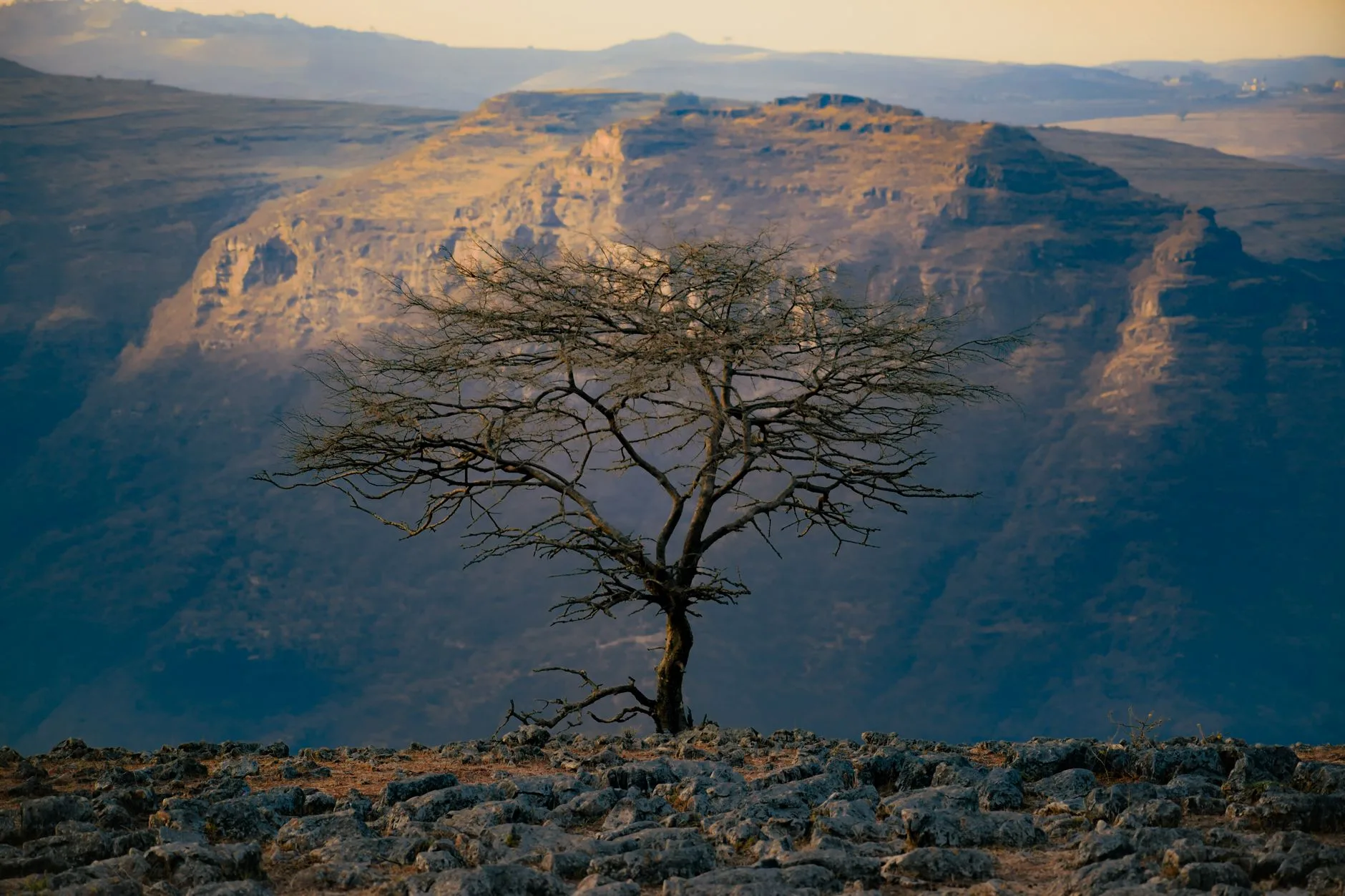
Photo by Nandakumar R on Pexels
The Simien Mountains in northern Ethiopia form one of the most dramatic highland landscapes in Africa — a series of eroded basalt plateaux rising to 4,550 metres at Ras Dejen, the fourth-highest peak on the continent, dropping in sheer escarpments of 1,000 metres or more to the lowland plains below. The mountains are a UNESCO World Heritage site and the habitat of three endemic species found nowhere else: the Gelada baboon (which lives in troops of hundreds on the cliff edges), the Walia ibex (a mountain goat found only here), and the Ethiopian wolf (critically endangered and rarely seen at lower elevations).
Independent trekking is possible, structured, and well-established. This guide covers the practical specifics.
Getting There
The gateway town is Debark, 100km northwest of Gondar on a paved road. The nearest airports are Gondar (GDQ), which has flights from Addis Ababa with Ethiopian Airlines, and Axum (AXU) to the north.
From Gondar, share taxis or buses to Debark take 2–3 hours and cost around 150–250 ETB (approximately £2–3). Gondar itself is worth a day — the 17th-century Royal Enclosure (Fasil Ghebbi), a UNESCO-listed complex of castles built during the Gondarine dynasty, is one of the most impressive pre-colonial African monuments.
From Debark, all trekking logistics are arranged — permit registration, guide hire, scout assignment, and accommodation.
Permits, Guides, and Scouts
Trekking in the Simien Mountains National Park is regulated and requires:
National Park entry fee: Around USD $10–15 per day per person (payable in ETB at current rate). The Simien Mountains National Park office in Debark handles all permits.
Compulsory armed scout: All trekkers must hire an armed scout from the park — this is non-negotiable and enforced. Cost: approximately 200–300 ETB per day (around £2–3). The scouts are generally friendly, knowledgeable, and carry their rifles more as uniform than as an active security measure. Their presence reflects a general Ethiopian government policy for foreign visitors in certain areas, not a specific threat.
Guide: Technically optional but practically essential for navigation, logistics, and making the experience richer. Guides in Debark are registered with the park and charge approximately 500–800 ETB per day (£5–8). English is spoken to varying degrees — ask to speak with a guide before committing.
Mule: Optional for carrying bags and camping equipment. If you’re doing more than a day hike, a mule is strongly advisable — the altitude (most of the trek is above 3,500m) makes carrying a heavy pack tiring. Cost: 300–500 ETB per mule per day, including muleteer.
All-in daily cost (permits, guide, scout, mule): approximately £18–30 per person per day, not including food and accommodation.
Main Routes and Stages
The classic 4-day route (Sankaber to Geech, with Chennek return):
| Day | Stages | Key sights |
|---|---|---|
| 1 | Debark → Sankaber (3,230m) | Gelada baboons from first hours; views over the escarpment |
| 2 | Sankaber → Geech (3,636m) | Jinbar Waterfall (one of Africa’s highest); increasing ibex sightings |
| 3 | Geech → Chennek (3,620m) | Best Walia ibex habitat; cliff-edge walking; Geech Abyss views |
| 4 | Chennek → return to Debark by vehicle | Optional Imet Gogo viewpoint (4,200m) before departure |
A vehicle (4WD) is needed to get from Debark to the trailhead at Sankaber (36km, mostly unpaved) and to return from Chennek. The park office can arrange this at approximately 3,000–5,000 ETB for the round trip.
Extended 7–10 day routes: Continuing from Chennek toward Ras Dejen (4,550m — two days above Chennek) significantly increases the remoteness and difficulty. The route above Chennek involves high-altitude camping, more limited water sources, and some basic navigation. This section is significantly less-trodden and offers the best wildlife and escarpment views, but requires better preparation.
What the Walking Is Like
The Simien plateau walks are not technically demanding — the paths are clear and the terrain, while rocky, doesn’t require scrambling. What makes the trek challenging is altitude. Most of the main route is between 3,200 and 3,700 metres. People who’ve trekked in the Alps or East African mountains will acclimatise more easily; those coming from sea level should allow extra time at Gondar (2,133m) before heading up.
The escarpment walks are the defining visual experience — paths that run along the edge of drops of 500–1,000 metres, with the lowland plains visible far below. This is where the Gelada baboons cluster in the mornings, grazing the short grass and occasionally approaching within a few metres of walkers. They are large (males up to 20kg), not aggressive toward humans, and spectacularly photogenic.
Walia ibex are typically seen near Chennek — look for them on the cliff faces in the early morning and late afternoon, navigating near-vertical rock that seems impossible to traverse.
Accommodation and Food
Inside the park:
– Campsites at Sankaber, Geech, and Chennek have basic facilities (pit latrines, some cooking shelters). Your guide can arrange tents and cooking equipment if you don’t carry your own.
– Small lodges/guesthouses exist at Sankaber and Geech — basic stone buildings with beds or mattresses. No consistent electricity; bring a headtorch.
In Debark:
– Several guesthouses charging 200–400 ETB per night for a basic room
– Food is basic — injera (spongy fermented flatbread) with various stews (shiro, tikel gomen, kitfo for meat-eaters) is the staple
Bring your own snacks and food for the trail unless you’ve arranged for your guide to cook meals (common; discuss before departure). Water sources are available along the main route but treat or filter all water.
Practical Notes
Currency: Ethiopian Birr (ETB). USD is useful for park fees (often priced in USD, paid in ETB). ATMs in Gondar; none in Debark or the park. Bring enough cash.
Best months: October to May (dry season). The long rains (June–September) make trails muddy and views limited. November to March is optimal — clear skies, dry paths, and the best visibility for the escarpment views.
Health: Malaria is not a risk at altitude in the Simiens (above ~2,500m). Standard travel health precautions apply (rabies vaccination is worth considering given the proximity to wild animals; altitude sickness prevention — ascend slowly — is the main practical concern).
Logistics from Debark: Arrive the afternoon before you want to start trekking to sort permits, guide, and mule. The park office can do everything on the day but it takes time.
Conclusion
The Simien Mountains offer an African highland experience that has no easy equivalent — endemic wildlife, dramatic escarpment landscape, and a trekking infrastructure that works well without being overrun.
- Fly Addis Ababa → Gondar (Ethiopian Airlines, ~1.5 hours) then bus or taxi to Debark (2–3 hours)
- The 4-day Sankaber–Geech–Chennek route is the right length for most first-time visitors and covers the best wildlife habitat
- Budget approximately £25–35 per day inside the park (permit, guide, scout, mule) plus food
- October to March is the best season — dry, clear, the escarpment views at their most dramatic
- Go slow — altitude acclimatisation and time at each camp make the trek richer than rushing through it
Keep reading: Traveling solo in Ethiopia: what to expect