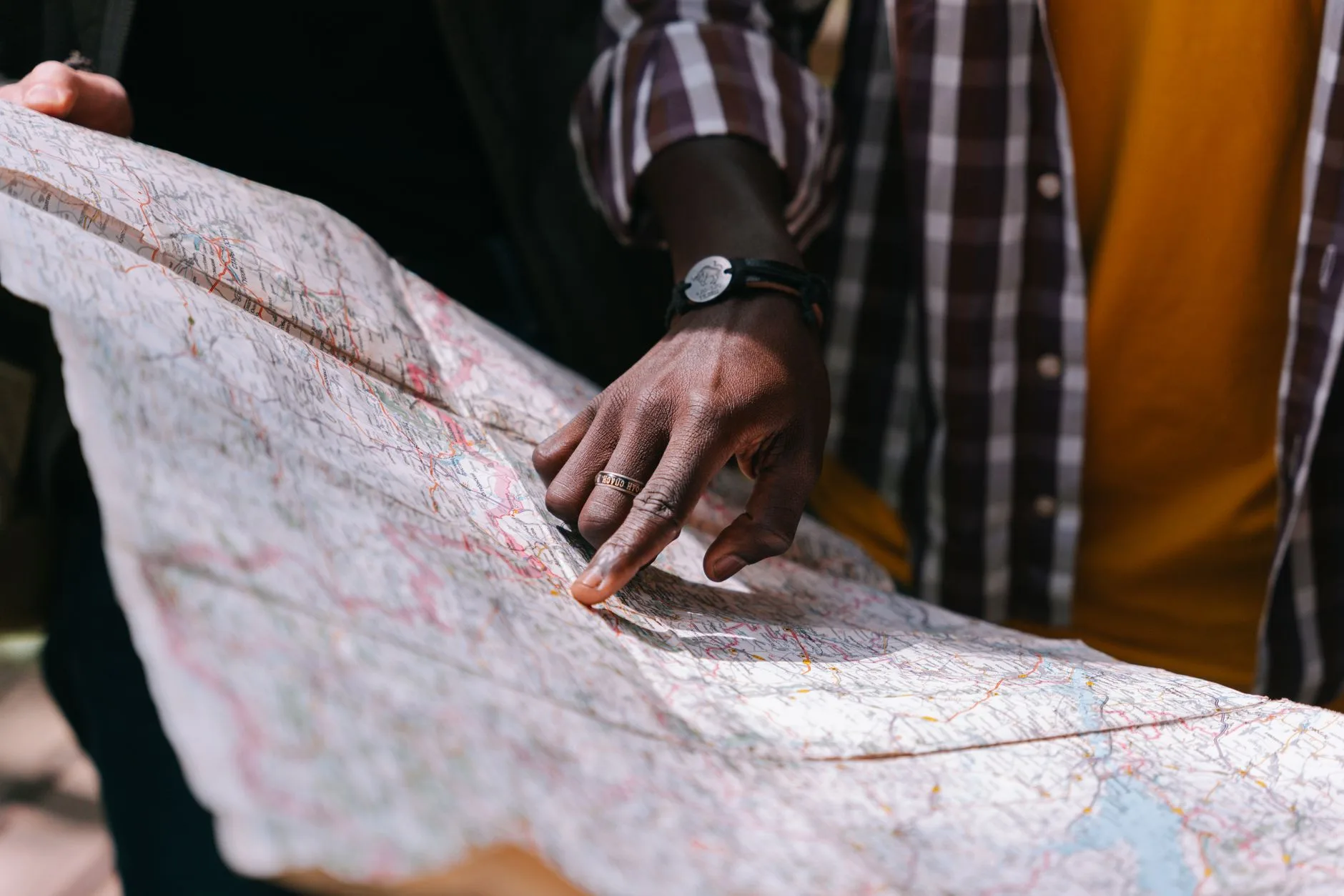
The truck to Turmi leaves when it’s full, not when the schedule says it will. You’ll know it’s close when the metal benches in the back start filling with sacks of teff flour, a goat with its legs bound, and six people who have been waiting since before you arrived. This is the road south from Jinka into Ethiopia’s Omo Valley, where the tarmac gives out after an hour and the rest is red dust that coats your bag, your teeth, and the inside of your nose by the time you reach the Hamar market at Turmi. There’s no fixed departure time, no ticket counter, and no guarantee you’ll make it before dark. That uncertainty is the entire point of going somewhere remote, and it’s also the thing that trips up travellers who plan for it like any other trip.
Remote travel isn’t a harder version of regular travel — it’s a different kind of planning altogether. The variables that barely matter in Lisbon or Chiang Mai (how often the road washes out, whether there’s a clinic within six hours, what happens if your phone has zero signal for a week) become the variables that decide whether your trip works at all. This guide is about the planning layer underneath the exciting part: the permits, the contingency math, the questions worth asking before you book anything.
What “remote” actually means for planning purposes
Remote isn’t a vibe, it’s a set of measurable constraints: distance from the nearest functioning hospital, frequency of transport in and out, reliability of communication, and how quickly plans can change due to weather, politics, or simple mechanical failure. A village four hours from Reykjavik by a paved road with an ambulance helicopter isn’t remote in the way a village four hours from the nearest clinic by unpaved track in the Bolivian altiplano is remote, even if both feel far from anywhere on a map.
Before booking, ask four questions about any place you’re considering: How often does transport actually run (not the schedule, the reality)? What’s the nearest medical facility capable of treating a serious injury, and how long to reach it? Is there a functioning communication network, even intermittent? And what’s the political and environmental stability of the region in the weeks you’ll be there? Answering these honestly will tell you more about how to pack and what to budget than any guidebook description will.
Research that actually matters: skip the highlight reel
Most remote-destination research online is written by people who went once, for four days, during the easiest season. It’s worth digging past that. Government travel advisories — the UK Foreign, Commonwealth & Development Office and the US State Department both publish region-specific advisories that are updated more frequently than most blog posts — are a genuinely useful starting point, even if their tone is cautious to a fault. Cross-reference them with recent forum posts or trip reports from the last six months, because conditions in places like the Wakhan Corridor in Tajikistan or the Danakil Depression in Ethiopia can shift season to season with road maintenance, border policy, or local unrest.
Look specifically for information on seasonal access — many remote regions are only reachable during a narrow window. The Tsum Valley in Nepal, for instance, is typically accessible from March to May and September to November; outside that, snow closes the passes and the restricted-area permit becomes somewhat beside the point. If you’re already looking at Nepal, it’s worth reading about budget travel in Nepal beyond the tourist trail and the month-by-month breakdown for trekking toward Everest Base Camp, both of which apply the same seasonal logic to routes further east in the same country.
Getting there: the last leg is the real logistics problem
Flights and long-distance buses are rarely the hard part. The hard part is the last 50 to 150 kilometres — the stretch where paved roads end and transport becomes informal. In the Gobi Desert in Mongolia, this means arranging a driver with a Russian-built UAZ van out of Dalanzadgad rather than relying on any fixed bus route, because there isn’t one past the provincial capital. In Vanuatu, reaching Tanna Island’s Mount Yasur volcano means a domestic flight from Port Vila on a plane that takes bookings seriously only the day before departure, weather-dependent, with no backup flight if it’s cancelled.
Build slack into every itinerary involving remote transport. A rule of thumb: if a single leg involves unpaved roads, river crossings, or small aircraft, assume a 50% chance of a full-day delay and plan your onward connections accordingly. This is the same principle covered in the honest guide to bus travel in South America, where washed-out roads in the Andes can turn a scheduled eight-hour journey into a two-day one with no warning and no refund.
Health, insurance, and the evacuation question nobody wants to think about
This is the section travellers skip and later regret skipping. Standard travel insurance frequently excludes “remote area” activities or caps evacuation coverage well below what a helicopter extraction from altitude actually costs — which can run into tens of thousands of dollars. Before booking anything past the last paved road, check your policy specifically for: emergency medical evacuation limits, coverage for the specific activity (trekking above a certain altitude, for example, is often excluded unless stated), and whether the policy requires pre-authorisation that’s impossible to obtain without phone signal.
Pack a physical first-aid kit appropriate to the actual risks of the trip — altitude sickness medication for anything above 3,000 metres, water purification for anywhere municipal water isn’t reliable, and a basic suture kit if you’re more than a day from medical care. The CDC’s Travelers’ Health site has destination-specific vaccination and health advisories that are worth checking even for places that feel low-risk — yellow fever certificate requirements catch people out at borders in East Africa and the Amazon basin with some regularity.
Connectivity, cash, and self-sufficiency
Assume you won’t have reliable signal and plan backward from there. Download offline maps (Maps.me or Organic Maps work better than Google Maps in areas with sparse data) before you leave the last town with wifi. Carry a satellite messenger — a Garmin inReach or similar — if you’re heading somewhere genuinely isolated, like the Carretera Austral in Chilean Patagonia, where stretches between towns can run over 100 kilometres without a petrol station, let alone a phone signal.
Cash matters more the further you go. ATMs thin out fast past regional capitals, and the ones that exist often run empty or offline for days. Carry more local currency than feels necessary, in small denominations, and don’t rely on cards working anywhere past a provincial hub. If you’re road-tripping through similarly remote stretches of southern Chile or Argentina, the same self-sufficiency principles in the beginner’s guide to multi-day hikes in Patagonia apply directly — carry more food and fuel than you think you’ll need, because the next resupply point might be further than the map suggests.
Permits, guides, and when local arrangements aren’t optional
Some remote regions require permits not as bureaucratic theatre but because local communities have genuine governance over who enters. The Omo Valley’s Hamar, Mursi, and Karo communities, for example, operate under arrangements where a local guide isn’t a tourist add-on but the actual mechanism by which visits are permitted and village fees are collected fairly. Skipping this step doesn’t just risk a fine — it undermines the system that keeps tourism income flowing back to the community rather than to an outside operator. This is the same logic behind community-based tourism examples that actually work: the places where it functions well are the places where locals control access and pricing, not where it’s bypassed for convenience.
Check permit requirements directly with the relevant government ministry or tourism board rather than relying solely on third-party booking sites, which sometimes quote outdated fees or requirements. Restricted-area permits for places like Nepal’s Upper Mustang or Tajikistan’s Gorno-Badakhshan Autonomous Region (GBAO) can take days to process and sometimes require a registered local agency as sponsor — factor that lead time into your planning calendar, not your packing list.
Comparing remoteness: what you’re actually signing up for
| Destination | How you get there | Connectivity | Permit needed | Best season | Realistic evacuation time |
|---|---|---|---|---|---|
| Omo Valley, Ethiopia | Shared truck/4×4 from Jinka | Patchy, towns only | Local guide required for villages | Sept–March (dry) | 6–12 hours to Addis Ababa |
| Tsum Valley, Nepal | Trek from Soti Khola, 7–9 days | None past Jagat | Restricted area permit + guide | Mar–May, Sept–Nov | 1–2 days to Kathmandu |
| Gobi Desert, Mongolia | 4×4 from Dalanzadgad | None outside ger camps with sat-phone | None for general travel | May–Sept | 1 day+, flight-dependent |
| Wakhan Corridor, Tajikistan | Shared jeep from Khorog | Very limited | GBAO permit required | June–Sept | 2+ days to Dushanbe |
| Carretera Austral, Chile | Self-drive or bus, ferries required | Patchy between towns | None | Nov–March | Several hours to nearest town |
The Bottom Line
Remote travel rewards patience more than planning perfection — the goal isn’t to eliminate uncertainty but to make sure uncertainty doesn’t become danger. Check your insurance’s evacuation limits before anything else; it’s the single most skipped step and the one with the worst consequences. Build in slack days around every leg involving unpaved roads, small aircraft, or seasonal access, because the last 100 kilometres are almost always the part that goes sideways. Pay for local guides and permits where they exist, not as a formality but because that’s often how the community actually benefits from your visit. And go in understanding that the thing that makes a place remote — the truck that leaves when it’s full, the signal that doesn’t exist, the clinic that’s a day away — is also the thing you came for.
Keep reading: First time in Ethiopia: practical travel guide