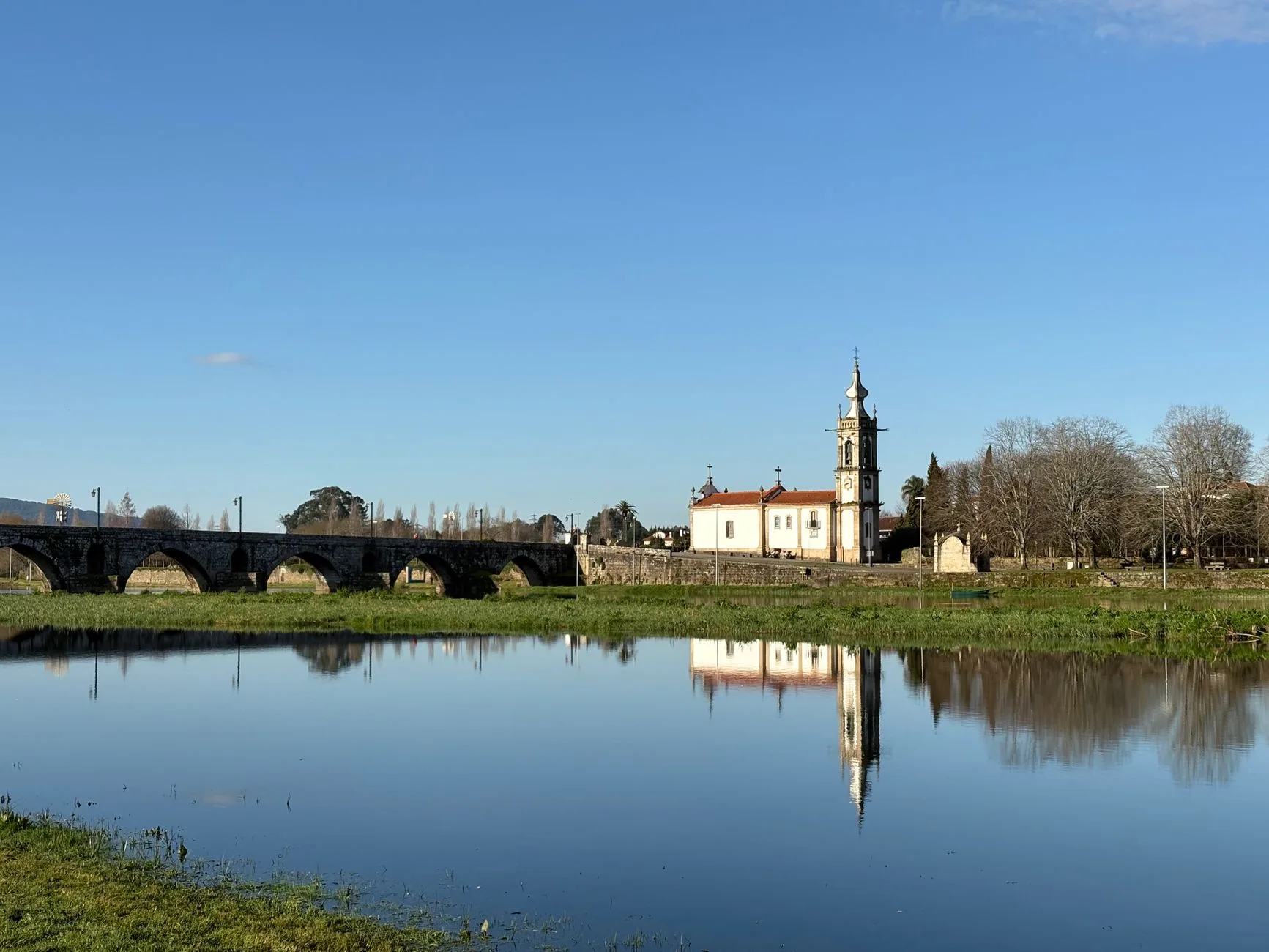
Photo by Egor Kunovsky on Pexels
The fog usually burns off the Douro by ten in the morning, but in Pinhão it lingers a little longer, caught in the folds of terraced vineyards that rise almost vertically from the river. A man loads crates of Touriga Nacional grapes onto a flat-bottomed boat that no longer carries wine — it carries tourists now, upriver to Pinhão’s sister villages — and the diesel engine coughs twice before it catches. Across the water, a rooster that has clearly never consulted a clock announces the day for the third time.
This is not a region built for speed. The roads curl around hillsides rather than cutting through them, the trains stop in villages with populations you could count on a football pitch, and the best meals happen because someone’s aunt insisted. Northern Portugal — specifically the Minho to the west and the Douro Valley inland — rewards travellers who are willing to let a week stretch into two, who don’t mind missing a bus, and who understand that a long lunch is not a delay but the point.
Why Minho and Douro, and why slowly
Minho is Portugal’s green corner: granite villages, vine-covered pergolas, Atlantic-cooled air, and a dialect of Portuguese so distinct that locals in Lisbon sometimes struggle with it. The Douro, an hour or two inland, is drier, hotter, and carved by one of Europe’s great wine rivers into a landscape of schist terraces that UNESCO has recognised as a World Heritage cultural landscape.
The two regions sit close enough together that a single trip can take in both without feeling rushed — but only if you resist the urge to see everything. This is a place for a rented room above a café in Ponte de Lima, a week spent walking the same five kilometres of river path until you know where the herons fish, a quinta stay where the owner teaches you to read a vineyard’s age by the thickness of its vine trunks. Three nights minimum per base; longer if you can manage it.
Braga and the Minho lowlands: where to start
Braga is the practical gateway — an hour north of Porto by train (around €3.80, roughly 55 minutes on the Urbano line), with a historic centre dense enough to spend two unhurried days in without exhausting it. The Sé Cathedral anchors the old town, but the more interesting rhythm is in the streets around Largo do Paço, where university students from the nearby Universidade do Minho fill the cafés until well past midnight.
Skip the taxi to Bom Jesus do Monte and walk the Escadório instead — the zigzagging baroque staircase with its allegorical fountains takes about 25 minutes uphill and is genuinely one of the better pieces of civic architecture in the country, not just a photo stop. There’s a funicular if your knees object.
From Braga, buses run regularly to Guimarães (20 minutes), the town Portuguese schoolchildren learn was “where Portugal was born” — the first king, Afonso Henriques, was reputedly born in its castle. The medieval centre is compact enough to absorb in an afternoon, but staying the night means catching it empty after the day-trip buses from Porto clear out.
Ponte de Lima and the Lima Valley: the slow heartland
If one town in Minho deserves an extended stay, it’s Ponte de Lima, built around a Roman bridge that still carries foot traffic across the Lima River. The riverside promenade, shaded by plane trees, is where the town actually lives — mornings bring joggers and dog walkers, afternoons bring families with ice cream, and on the second and fourth Monday of each month the centuries-old Feira de Ponte de Lima takes over the riverbank with livestock, produce stalls, and a genuinely chaotic energy that’s worth timing a visit around.
This is prime territory for the Caminho Português along the coastal or central route to Santiago de Compostela — many walkers pass through without stopping, which is a mistake. Base yourself here for four or five nights and use day trips to the surrounding quintas, several of which offer wine tastings of vinho verde, the young, slightly effervescent white that the region is known for and that tastes almost nothing like the bottled export version most people have tried.
Rent a bicycle (available through several guesthouses in town, typically €10–15 a day) and ride the Ecovia do Rio Lima, a mostly flat riverside path that stretches roughly 10 kilometres in each direction — manageable in half a day with stops.
Into the Douro: Pinhão, Peso da Régua, and the valley
The journey from Porto into the Douro is itself an event. The Linha do Douro train hugs the river for much of its length, and the stretch between Peso da Régua and Pinhão — about 25 minutes — is consistently ranked among the more scenic rail journeys in Europe, running past terraced vineyards close enough to touch from a window seat. Book a seat on the right-hand side heading east for the best river views.
Pinhão itself is tiny — one main street, a handful of quintas within walking or short-taxi distance, and a train station whose interior is tiled with azulejos depicting the wine harvest. It makes a far better base than the larger, more functional Régua, which has the infrastructure but little of the atmosphere.
Quinta stays here vary enormously. Budget options run from around €70–90 a night for a simple room with vineyard views; the well-known names with pools and tasting rooms attached run considerably higher, often €200+. Either way, book the half-day walk through the vineyard terraces that most quintas offer — these aren’t staged activities but a genuine look at how the port and table wine actually gets made, including the autumn grape harvest (vindima) in September and October, when some quintas still invite guests to help with the treading.
A note on logistics: car hire gives the most freedom in the Douro, since the valley’s back roads (the N222, named one of the world’s best driving roads by Top Gear some years back, is the famous one) connect villages that trains don’t reach. But the road is narrow, poorly lit at night, and genuinely hair-raising in fog — if you’re not confident driving mountain switchbacks, the train-plus-boat combination covers the essentials without the stress.
What to eat, and where
The Minho’s defining dish is caldo verde, a kale and potato soup usually finished with a slice of chouriço, found on nearly every menu but best in the smaller tasca-style restaurants rather than anywhere with a laminated English menu. In Ponte de Lima, look for arroz de sarrabulho, a rich rice dish made with pork and blood that is not for the squeamish but is a genuine regional specialty worth trying once.
In the Douro, the food leans heartier — posta à mirandesa (thick-cut grilled veal) and alheira sausage, a curious smoked sausage invented by Jewish communities forced to convert during the Inquisition, who filled it with poultry rather than pork to maintain appearances while publicly eating “sausage.” The irony is now mostly lost on diners who just find it delicious.
Markets are where you’ll get the clearest sense of regional food culture. The Mercado Municipal in Braga and the smaller weekly market in Ponte de Lima are both worth a wander — comparable in spirit to some of the best local food markets found across Europe, though smaller and considerably less touristed.
Comparing the two bases
| Minho (Braga / Ponte de Lima) | Douro (Pinhão / Peso da Régua) | |
|---|---|---|
| Landscape | Green, Atlantic-influenced, river valleys | Dry, terraced, schist hillsides |
| Pace | Walking, cycling, village life | Vineyard visits, boat trips, scenic rail |
| Best season | May–June, September | June–October, especially harvest (Sept–Oct) |
| Budget per night | €40–80 (guesthouses) | €70–200+ (quintas) |
| Getting around | Bus, bike, walking | Car, train, river boat |
| Signature food | Caldo verde, arroz de sarrabulho | Posta à mirandesa, alheira, port wine |
| Ideal stay length | 4–6 nights | 3–5 nights |
Honest logistics: getting there and around
Porto’s Francisco Sá Carneiro Airport is the sensible entry point for both regions — the Metro connects the airport directly to the city centre in about 45 minutes for under €3. From Porto, trains to Braga and the Douro line both depart from São Bento or Campanhã station; book Douro tickets a few days ahead in peak summer and harvest season, as the scenic sections do sell out.
A rental car makes sense if you’re combining both regions in one trip, since public transport between Minho and the Douro involves routing back through Porto rather than a direct connection. Expect around 90 minutes to two hours of driving between Ponte de Lima and Pinhão, depending on the route taken through the Marão mountains.
Avoid trying to do this as a long weekend. The entire appeal of this region — much like the broader case for slow travel across Portugal — is in the unhurried version: the extra hour at a quinta tasting, the missed bus that means another coffee in the square, the conversation with a market vendor that goes nowhere useful except toward a better understanding of where you are. Readers who’ve also explored backpacking in Portugal beyond Lisbon will recognise the pattern — the country rewards exactly the kind of travel that resists a checklist.
The Bottom Line
- Pick one region to anchor each week of your trip rather than trying to cover both on a tight loop — Minho and Douro have different rhythms and conflating them flattens both.
- The Douro’s scenic train is genuinely worth the hype, but the N222 driving route offers a deeper, slower look at the valley if you’re comfortable with mountain roads.
- September and October bring harvest season to the Douro, which is extraordinary but also the most expensive and crowded window — May and June offer a quieter, greener alternative.
- Budget guesthouses in Minho are considerably cheaper than Douro quintas; if cost matters, weight your trip toward more nights in Ponte de Lima and fewer in Pinhão.
- Public transport handles the Minho comfortably; a car becomes genuinely useful, if not essential, once you cross into the Douro’s back roads.
Keep reading: Pairing this with a wider look at slow travel across the country