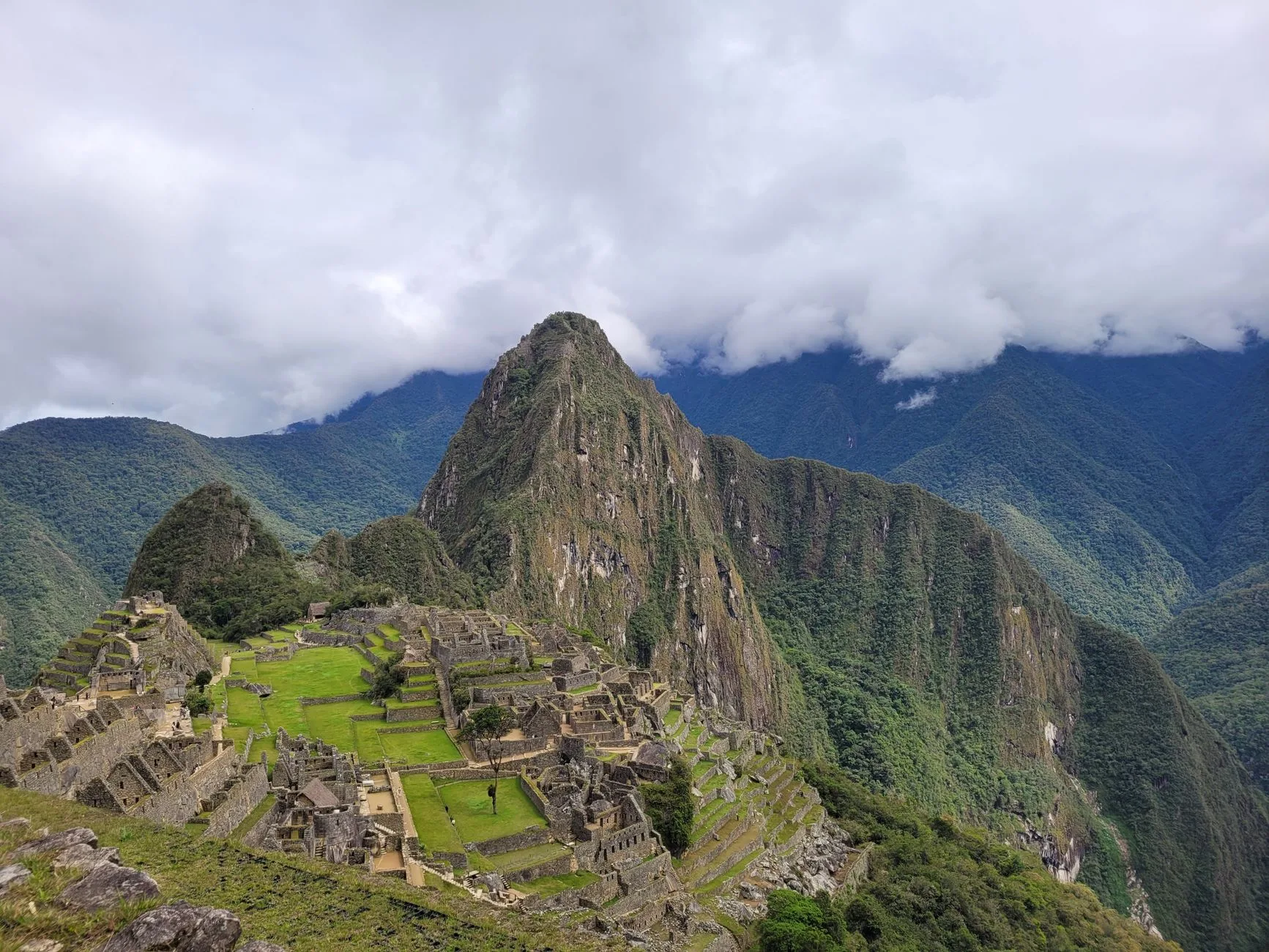
Photo by Laura Rudi on Pexels
The comedor in Huancayo’s Mercado Mayorista smells of frying yucca and cheap instant coffee at six in the morning, and a woman ladles caldo de gallina into bowls for porters heading to the highland fairs. Nobody here is thinking about Machu Picchu. It’s four hundred kilometres away and might as well be another country — which, in a sense, it is. Peru is enormous, and the citadel that appears on every postcard occupies maybe two percent of what the country actually offers a traveller with time and a limited budget.
That’s the case for going elsewhere first, or instead. Peru outside the Cusco tourist corridor is dramatically cheaper, less scripted, and arguably more interesting: glacier lakes you’ll have to yourself, colonial towns where a three-course lunch costs the same as a bottle of water in Aguas Calientes, and bus rides through landscapes that make the postcard shot look modest by comparison.
Why the budget maths change once you leave Cusco
Cusco and the Sacred Valley run on a two-tier economy — one price for locals, another for anyone who looks like they’ve come for the ruins. A menu del día in San Blas costs three times what the same meal costs in Ayacucho or Huaraz. Machu Picchu itself carries unavoidable costs: entrance tickets (from around 152 soles, roughly $40, depending on the circuit), the train to Aguas Calientes (from $70 return with PeruRail or Inca Rail), and accommodation in a town built entirely around extracting money from day-trippers.
Move away from that corridor and a full day’s food, transport, and a private room can run $20–30. Long-distance buses are the backbone of Peruvian travel and remain genuinely cheap — a 10-hour overnight run on a reclining “cama” seat with Cruz del Sur or Oltursa rarely exceeds $25–35, and shorter regional routes on local companies cost a fraction of that. If you haven’t budgeted for South American bus culture, it’s worth reading up on it separately — the terminals, the ticket touts, the surprisingly good legroom — before you build an itinerary that leans on it.
Huaraz and the Cordillera Blanca
Huaraz, a scrappy mountain town nine hours north of Lima by bus, is the base for trekking in the Cordillera Blanca — the highest tropical mountain range on earth, with over thirty peaks above 6,000 metres. The Santa Cruz Trek, a four-day, three-night route through the Huascarán National Park, costs a fraction of anything comparable in Nepal or Patagonia: guided treks run $180–250 including mules, a cook, and park fees, or you can hike it independently for the cost of a park permit (65 soles) plus food.
For a single-day payoff, Laguna 69 — a turquoise glacial lake at 4,600 metres reached by a demanding but doable six-hour round-trip hike — costs $15–20 for a shared minivan and guide from most Huaraz hostels. Acclimatise in town for at least two days first; Huaraz sits at 3,050 metres and the altitude gain to the lake is real. Refugio meals in town — trout from the nearby rivers, a bowl of Andean quinoa soup — run $4–6 at family-run picanterías near the Plaza de Armas.
Ayacucho: colonial Peru without the crowds
Ayacucho, a highland city reached by a spectacular 10-hour bus ride from Cusco through the Apurímac canyon, or a short flight from Lima, has 33 colonial churches, a Semana Santa (Holy Week) celebration that rivals Seville’s, and almost none of the foot traffic that clogs Cusco’s centre. Rooms around the Plaza Mayor cost $10–15 a night. The Mercado Carlos F. Vivanco is the place for puca picante — pork in a peanut-and-beet sauce — and choclo con queso, and a full lunch there rarely tops $3.
Ayacucho is also the access point for the Wari ruins, a pre-Inca imperial capital largely ignored by tour buses, reachable by a 20-minute colectivo (shared taxi) for a couple of soles.
The Colca Canyon and Arequipa
Arequipa, Peru’s second city, built almost entirely from white volcanic sillar stone, is worth two or three days on its own — the Monasterio de Santa Catalina, a walled colonial city within the city, and the picanterías of the Yanahuara district serving rocoto relleno (stuffed spicy peppers) for $4–5. From Arequipa, the Colca Canyon — one of the deepest canyons in the world, roughly twice the depth of the Grand Canyon — is a three-hour bus ride to Chivay.
A two-day trek into the canyon, staying at basic family-run lodges in the oasis village of Sangalle, costs $30–50 self-arranged versus $80–100 through a Cusco-based agency. Condors circle the Cruz del Cóndor viewpoint most reliably between 8 and 10am — arrive early and skip the tour buses that roll in around 9:30.
Lake Titicaca away from Puno’s tourist docks
Puno, the usual gateway to Lake Titicaca, has become a small industry around the reed islands of Uros — worth seeing once, but crowded and increasingly performative. A better use of a couple of days is Amantaní or Taquile Island, both reachable by public boat (not the tourist package boats) from Puno’s main dock for around 25 soles round trip. On Amantaní, families host travellers in homestays for $15–20 a night including meals — usually quinoa soup, fried trout, and muña tea grown on the hillside terraces.
The lake sits at nearly 3,800 metres, so bring warm layers; nights are properly cold even in the dry season (May–September).
Getting between it all without flying
Peru’s long-distance bus network is extensive and, for the budget traveller, the main mode of transport. A rough overland loop — Lima to Huaraz, back to Lima, down to Ayacucho, on to Cusco, then Arequipa and Puno — is entirely doable by bus, though it eats time: reckon on 60–70 hours of total transit for that loop. Domestic flights (Lima–Arequipa, Lima–Cusco) with LATAM or Sky Airline can be found for $40–70 if booked a few weeks ahead, and are worth it when time matters more than money.
| Region | Highlight | Typical daily budget | Best season |
|---|---|---|---|
| Huaraz / Cordillera Blanca | Laguna 69, Santa Cruz Trek | $20–30 | May–September (dry season) |
| Ayacucho | Colonial churches, Wari ruins | $15–20 | April–October |
| Arequipa / Colca Canyon | Canyon trekking, condors | $20–35 | May–November |
| Lake Titicaca (Amantaní/Taquile) | Island homestays | $15–25 | May–September |
| Cusco / Machu Picchu corridor | The citadel itself | $40–60+ | Shoulder months (April, October) cheaper |
What to actually eat, and where
Peruvian food outside the Lima fine-dining scene is some of the best-value eating in South America. Menu del día lunches — soup, a main, a small dessert, and a juice — cost 8–15 soles ($2–4) almost anywhere outside tourist zones. Look for anticuchos (grilled beef heart skewers) from street carts in the evening, chicharrón sandwiches at market stalls before noon, and, in the highlands, pachamanca — meat and potatoes slow-cooked underground with hot stones, usually only served on weekends or by advance order in smaller towns.
Altitude affects appetite and digestion for the first few days almost everywhere above 3,000 metres — coca tea, sold everywhere for pennies, genuinely helps, and it’s worth reading general guidance from a source like the UK government’s Peru travel advisory before heading into remote highland regions where medical care is limited.
Money, safety, and the honest logistics
Soles are the only currency accepted outside high-end Cusco establishments; ATMs are reliable in regional cities but scarce in villages, so carry cash for homestays and rural buses. Petty theft on buses and in crowded markets is the main risk, not violent crime — keep valuables close on overnight buses and avoid unmarked taxis late at night in Lima and Arequipa. Lonely Planet’s Peru coverage is a useful cross-reference for current road conditions, since landslides periodically close highland routes in the wet season (December–March).
If a Cusco-based agency is your only option for a trek like the Colca Canyon or the Inca Trail, it’s worth comparing costs against arranging permits and guides independently — the savings can be substantial, though the logistics take more legwork.
The Bottom Line
- Huaraz, Ayacucho, the Colca Canyon, and Lake Titicaca’s smaller islands cost roughly half of what comparable experiences cost in the Cusco corridor, with a fraction of the crowds.
- Long-distance buses are cheap and reliable for planning purposes, but budget real time for them — this isn’t a country you can rush on a tight schedule without flying.
- Homestays on Amantaní and Taquile, not the Uros package tours, are the better use of time and money around Titicaca.
- Go in the dry season (May–September) for mountain trekking; shoulder months (April, October) balance decent weather with lower prices around Cusco itself.
- Carry cash — soles, not dollars — once you’re outside major cities, and expect ATMs to thin out fast in the highlands.
Keep reading: Hiking the Inca Trail without a tour agency