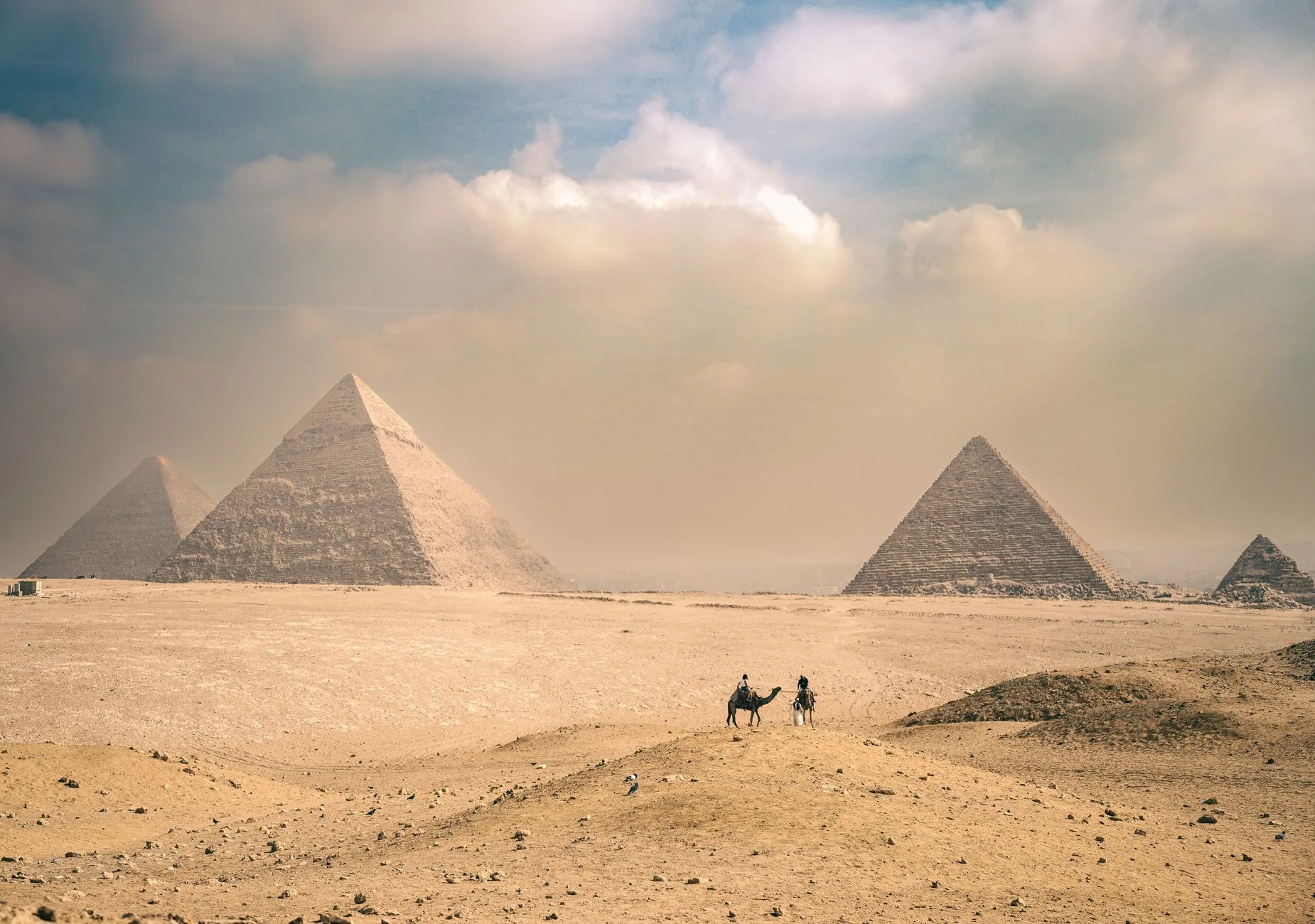
Photo by hayriyenur . on Pexels
The overnight train from Cairo to Luxor leaves Ramses Station a little after 8pm, and by the time it clears the city’s northern suburbs the carriage lights have dimmed to something closer to candlelight. A porter brings sweet tea in a plastic cup that burns your fingers. Outside, the Nile Delta slides past in black fields and the occasional string of bulbs marking a roadside café still open at midnight. Somewhere around 2am you wake to the muezzin’s call drifting faintly through a cracked window at a station you can’t name, and then you’re asleep again before the train pulls out.
This is the Egypt that sits just behind the one in the postcards — not instead of the pyramids at Giza, but around them, reached by the same buses, trains, and felucca crossings that locals use every day. Egypt is, by most measures, one of the more affordable countries in the eastern Mediterranean to travel through, provided you’re willing to take the second-class seat, eat where the queue is longest, and accept that the schedule on the ticket is a suggestion rather than a promise.
This guide covers how to move through the country cheaply, where to stay beyond Giza and the Cairo hotel strip, and which detours — Siwa, the White Desert, Nubian Aswan, Alexandria — reward the extra day or two they cost.
Getting around without a private driver
Private drivers are the default sell to tourists in Cairo, and they’re not cheap at anywhere near local rates. The alternative network is extensive, if you’re patient with it.
Trains run the Cairo–Luxor–Aswan spine daily. The sleeper service (Watania/Abela Egypt Sleeping Trains) costs considerably more than day trains but includes a bunk and two meals, and saves a night of accommodation. Day trains between the same cities are far cheaper — often under $10 in second class — but seat classes vary in cleanliness and air conditioning reliability, and foreigners are sometimes steered toward pricier first-class tickets at the station window. Buying a day or two ahead at the station, rather than online, usually gets you the fare locals pay.
Microbuses and the Go Bus network cover routes trains don’t, including Cairo to Siwa, Cairo to Bahariya, and coastal runs down to Hurghada or across to Dahab. Go Bus operates fixed departures with assigned seats from Cairo’s Turgoman and Abdel Moneim Riad terminals — more reliable than a microbus, slightly pricier, still inexpensive by any Western measure.
Feluccas across the Nile at Aswan cost a few Egyptian pounds and are the actual way Nubian families get between the east bank and islands like Elephantine — not just a sunset tourist activity, though it doubles as one.
| Route | Transport | Approx. time | Approx. cost (one way) |
|---|---|---|---|
| Cairo → Luxor | Sleeper train | 10–11 hrs | $60–90 |
| Cairo → Luxor | Day train, 2nd class | 9–10 hrs | $5–10 |
| Luxor → Aswan | Day train | 3–4 hrs | $3–6 |
| Cairo → Siwa | Go Bus / microbus | 9–10 hrs | $10–15 |
| Cairo → Bahariya Oasis | Microbus | 4–5 hrs | $6–8 |
| Aswan → Abu Simbel | Shared minibus (convoy) | 3 hrs each way | $12–20 |
Fares fluctuate with fuel prices and the season, so treat these as a rough guide, not gospel.
Luxor and Aswan without the group-tour markup
Most visitors see the Valley of the Kings and Karnak Temple as part of a packaged day trip from a Nile cruise ship. You can do both independently for a fraction of the cost: a shared taxi or tuk-tuk from Luxor’s East Bank to the West Bank ferry crossing, then local minibuses or a hired bicycle to reach the Valley of the Kings, Hatshepsut’s temple at Deir el-Bahari, and the Colossi of Memnon. Entry tickets for each site are purchased separately at the official ticket office near the West Bank ferry landing, and it’s worth deciding in advance which tombs you want — not all are included in the standard Valley of the Kings ticket, and the better-preserved tombs (Tutankhamun’s, Seti I’s) cost extra.
Aswan moves at a slower pace than Luxor and rewards it. The Nubian villages on Elephantine Island and across the river are reachable by felucca for the price of a local ferry ticket, and a walk through the sandy lanes between indigo-painted houses — stopping for karkade, the hibiscus tea served ice-cold here — costs nothing at all. Abu Simbel, further south, requires either an early-morning convoy minibus from Aswan or a short domestic flight; the temples, relocated stone by stone when the Aswan High Dam was built, are UNESCO-listed and worth the detour even on a tight budget, though the 3am departure for the convoy is not for everyone. You can check current site information through UNESCO’s World Heritage listings before you go.
Siwa Oasis: a genuine detour, not a side quest
Siwa sits near the Libyan border, a nine-to-ten-hour bus ride from Cairo through increasingly empty desert, and it feels like a different country entirely from the Nile valley. The town is built around salt lakes and freshwater springs, with mudbrick ruins at Shali Fortress crumbling photogenically at its centre. Guesthouses here are simple, often family-run, and inexpensive — expect to pay less for a room with a fan than you would for a coffee in central Cairo.
Siwa’s economy runs on dates and olives, and the market stalls selling both are worth a slow wander. The Great Sand Sea stretches south of town, and half-day 4×4 trips to the dunes and hot springs are arranged easily and cheaply through guesthouses rather than agencies. This is slower travel by design — buses are infrequent, plans shift, and that’s the point.
The White Desert and Bahariya Oasis
Bahariya is the launch point for the White Desert, a landscape of chalk-white rock formations carved by wind into shapes locals have nicknamed — the Mushroom, the Chicken — scattered across a stark protected area roughly four hours southwest of Cairo by microbus. Budget camping trips, arranged through small operators in Bahariya town rather than Cairo agencies, typically include a 4×4, a guide, dinner cooked over an open fire, and a night under genuinely dark skies with no settlement visible in any direction. It’s one of the more atmospheric nights available anywhere in the country, and it costs a fraction of what the same experience would through a Cairo-based tour company.
Alexandria: the Mediterranean side of Egypt
Alexandria gets skipped by travellers moving straight from Cairo to Luxor, which is a shame — it’s two and a half hours by train from Cairo’s Ramses Station and feels, architecturally and atmospherically, like a different country layered on top of Egypt. The Corniche stretches along the waterfront past faded Belle Époque buildings, and the Qaitbay Citadel, built on the site of the vanished Lighthouse of Alexandria, sits at the harbour’s edge. The Bibliotheca Alexandrina, a modern reinterpretation of the ancient library, is inexpensive to enter and worth the hour.
Food in Alexandria leans toward the sea: grilled fish and calamari sold by weight at the stalls around the fishing harbour, eaten plastic-chair-and-table style with little more than bread, tahini, and lemon.
What to eat, and what it costs
Egyptian street food is some of the cheapest and most satisfying in the region. Koshari — a carb-heavy stack of rice, lentils, macaroni, and fried onions under spiced tomato sauce — is sold everywhere from dedicated koshari shops to street carts, and a full plate rarely costs more than a dollar or two. Ful medames (stewed fava beans) and taameya (Egyptian falafel, made with fava beans rather than chickpeas) are breakfast staples, usually stuffed into bread with pickles and tahini. In Luxor and Aswan, riverside cafés serve grilled tilapia from the Nile itself, simply prepared with rice and salad.
Bottled water is non-negotiable outside major hotels; tap water isn’t advisable for visitors. Street food is generally safe where turnover is high and the stall is busy — the same logic that holds across much of the region, as covered in our guide to eating at local markets in Southeast Asia.
Practical logistics: visas, money, and honest cautions
Most nationalities can get an Egypt visa on arrival at Cairo International Airport, paid in US dollars or euros, or apply in advance for an e-visa — worth doing if you want to skip the arrival queue. Carry small denominations of Egyptian pounds for tips, ticket windows, and tuk-tuk fares; ATMs are reliable in cities but scarcer in Siwa and Bahariya.
Hassle around the Giza plateau and Khan el-Khalili bazaar in Cairo is real and persistent — unofficial “guides,” camel touts, and inflated prices are part of the experience there, and a firm “la, shukran” (no, thank you) goes further than engaging. It eases considerably once you’re outside Cairo and Luxor’s main tourist strips. Check your government’s current travel advisory before booking — the US State Department’s Egypt travel advisory is updated regularly and worth a read for region-specific notes, particularly around Sinai and the western desert border areas. If you’re weighing Egypt against other budget-friendly options for a first big trip, our broader piece on first time visiting Egypt, Cairo and beyond covers the capital in more depth.
The Bottom Line
- The real savings in Egypt come from transport choices, not accommodation — trains and Go Buses over private drivers will cut costs dramatically and put you alongside the people who actually use these routes daily.
- Siwa and the White Desert require slack in your schedule; buses run infrequently and 4×4 trips depend on weather and group numbers, so build in buffer days rather than a tight itinerary.
- Luxor and Aswan reward independent ticket-buying over packaged excursions, but budget extra time for navigating ticket offices and crossings yourself.
- Alexandria is genuinely underrated as a stop, not just a detour, and costs little extra given its proximity to Cairo by train.
- Egypt’s budget travel hassle is concentrated almost entirely around Giza, Luxor’s tourist strip, and Khan el-Khalili — the rest of the country is considerably calmer, and considerably cheaper, than its reputation suggests.
Keep reading: Diving in the Red Sea: Sharm el Sheikh vs Dahab