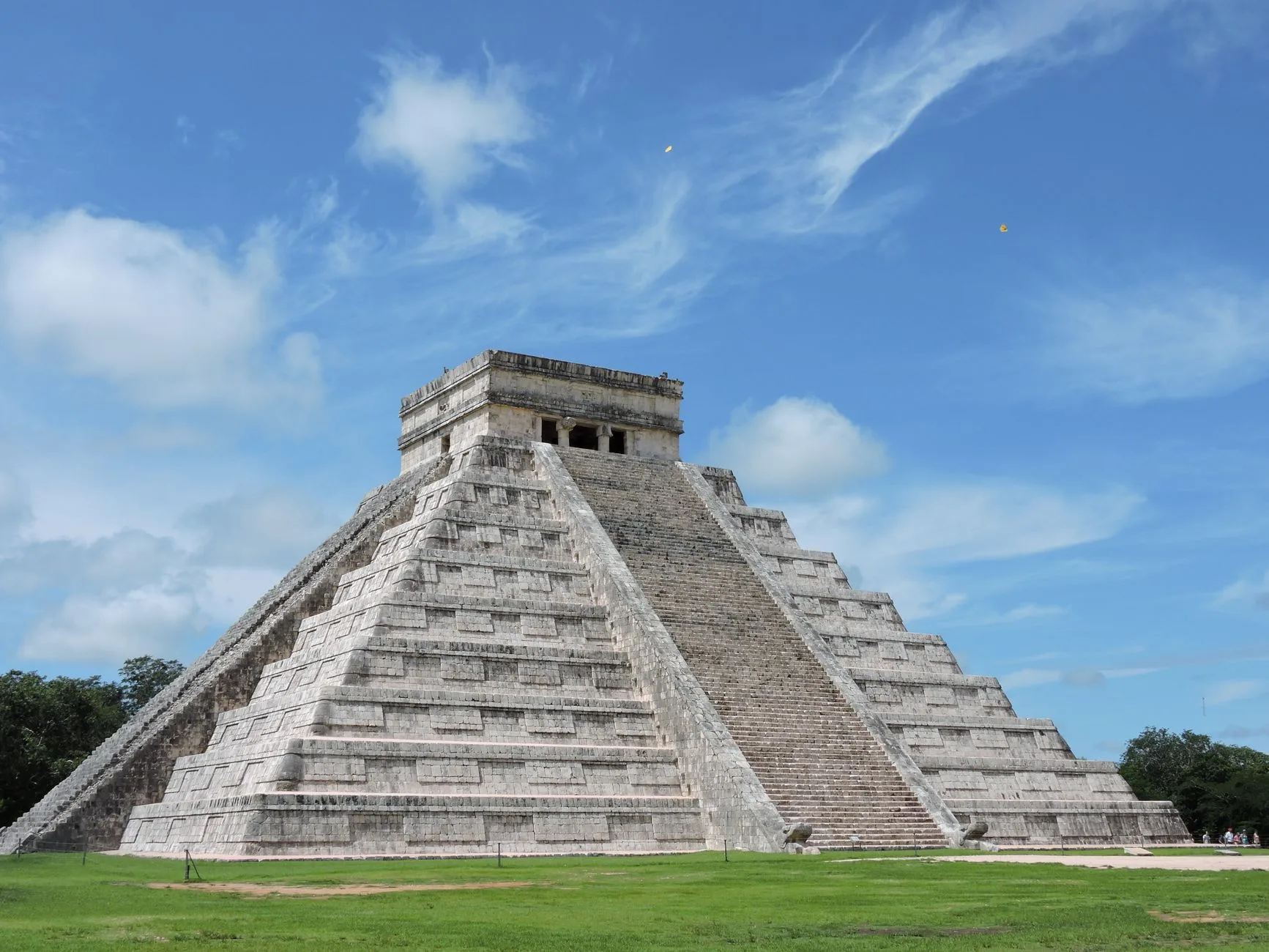
Photo by François Bucaioni on Pexels
By seven in the morning, the market in Izamal is already in full swing, though nobody seems to be rushing. Women in huipiles lay out piles of habanero and chile dulce next to buckets of marigolds destined for a saint’s day altar. A man grinds fresh masa in a stall that has clearly done this every morning for decades, and the smell of it — warm, mineral, faintly sweet — drifts out past the yellow-painted arcades that give this town its nickname, La Ciudad Amarilla. Nobody is herding anyone toward a bus. There is no bus.
This is the Yucatán that exists about ninety minutes inland from the resort strip of Cancún and the Riviera Maya, and it runs on an entirely different clock. The peninsula is compact enough to cross by road in a day, but doing so would miss the point. Slow travel in the Yucatán, Mexico, beyond Cancún means trading the all-inclusive bracelet for a rented room above a courtyard, trading the catamaran excursion for a two-hour wait at a cenote until the tour groups clear out, and trading the airport transfer straight to the beach for a longer, more interesting route through colonial towns, limestone sinkholes, and Mayan ruins that most visitors never see because they never leave the coast.
Why the Yucatán Rewards a Slower Pace
The Yucatán Peninsula has a geography that makes unhurried travel genuinely practical rather than just aspirational. It’s flat, it’s relatively small — roughly the size of Scotland — and its road network connects a dense cluster of towns, ruins, and cenotes within a few hours of one another. Unlike destinations where slow travel means long stretches of transit between isolated highlights, here the highlights are close together. You can base yourself in one town for a week and still reach a different cenote, ruin, or market every day without more than an hour on the road.
It’s also, by Mexican standards, a safe and well-governed region to move through slowly. The state of Yucatán in particular has one of the lowest crime rates in the country, which matters if your plan involves wandering back roads, taking colectivos with strangers, or arriving somewhere after dark because the bus ran late — which it will, occasionally.
Valladolid: A Base for a Month, Not a Weekend
If the Yucatán has a natural hub for slow travel, it’s Valladolid, a colonial town of around 50,000 people roughly equidistant between Mérida and Cancún. It gets day-trippers heading to Chichén Itzá, but very few of them stay the night, which means the town after 4pm belongs almost entirely to residents and the travellers who’ve chosen to linger.
Base yourself near the Calzada de los Frailes, a cobbled street lined with low colonial houses in mustard yellow and oxblood red, running down to the Ex-Convento de San Bernardino de Siena. In the early evening, it’s one of the few streets in the Yucatán where the light does something cinematic — low, gold, raking across the stone. The town’s central cenote, Cenote Zací, sits almost in the middle of the grid and is swimmable, though it’s more atmospheric than pristine; better cenotes lie a short bike ride outside town.
Food here is unfussy and excellent. Try cochinita pibil — pork marinated in achiote and sour orange, wrapped in banana leaf and slow-roasted — at the market stalls inside the Mercado Municipal, or the lighter, less famous papadzules (egg-filled tortillas in a pumpkin-seed sauce) at a comedor rather than a restaurant aimed at visitors. A week in Valladolid, eating at the same three or four places until the owners recognise you, does more for understanding the region than a week of day trips ever could.
Mérida and the Art of the Unhurried Afternoon
Mérida, the Yucatán’s capital, rewards patience in a different way. It’s a genuine city — around a million people in its metro area — with a colonial centre built around the Plaza Grande and a 19th-century boulevard, the Paseo de Montejo, lined with the mansions of former henequén barons. The pace here isn’t slow because the city is quiet; it’s slow because the heat demands a siesta-shaped rhythm, and because the things worth doing — the Lucas de Gálvez market, the Sunday street closures along Paseo de Montejo for the Bici-Ruta, the free Noches de Mérida cultural performances in the plazas — happen on their own schedule, not a tourist one.
Stay in the Santiago or Santa Ana neighbourhoods rather than the immediate centre; both are a 15-minute walk from the Plaza Grande, quieter, and full of neighbourhood cantinas rather than restaurants aimed at a transient crowd. Marquesitas — a crisp rolled crepe filled with cheese and either Nutella or cajeta — are sold from carts around the Parque de Santa Ana most evenings and are worth the slightly absurd amount of sugar.
Mérida also works as a practical logistics base, with direct ADO bus connections to Campeche, Valladolid, Celestún, and Progreso, and it’s a sensible place to spend a few days decompressing if you’ve arrived from the more frenetic pace of other Mexican cities — a contrast worth reading about in the context of budget travel in Mexico City, which moves at a considerably faster clip.
The Cenotes Away from the Tour Buses
Cenotes — limestone sinkholes filled with startlingly clear groundwater — are the signature experience of the region, but the famous ones near Tulum and Playa del Carmen are now reliably crowded, with timed entry and queues. The slower approach is to head instead to the Homún cenote cluster, a village about 50 minutes south of Mérida that sits atop dozens of cenotes, many on private land accessed by horse-drawn cart or mototaxi for a few dollars.
Cenote Santa Cruz, Cenote San Antonio Mulix, and Cenote Dzonbacal near Homún rarely see more than a handful of visitors at a time, even on weekends. Near Valladolid, the trio of Cenote Suytun, X’Keken, and Samula are better known (and photographed) but still manageable outside the 10am–2pm tour-bus window — arrive at 8am and you may have the water to yourself for twenty minutes before the first vans appear.
The honest caveat: many cenotes charge entry fees that guidebooks underplay, typically $5–15 USD depending on infrastructure, and some require a local guide from the village cooperative, which is less an inconvenience than a direct way of putting money into the community that maintains the site.
The Ruta Puuc and the Quiet Cousins of Chichén Itzá
Chichén Itzá is worth seeing once, ideally at opening time before the tour buses from Cancún arrive by mid-morning. But the more interesting slow-travel route runs south of Mérida along the Ruta Puuc, a loop connecting four Mayan sites that see a fraction of Chichén Itzá’s visitors: Uxmal, Kabah, Sayil, and Labná. Uxmal in particular — a UNESCO World Heritage Site since 1996 — has architecture as sophisticated as anything at Chichén Itzá, including the Pyramid of the Magician’s unusual elliptical base, without the crowds.
There’s no direct public bus looping all four sites; the practical options are a rental car for the day, a shared colectivo from Mérida’s Noreste terminal to Uxmal (with onward connections requiring more patience), or a guided day trip from Mérida that handles the gaps between sites. Renting a car for just this one day, even if you’re otherwise relying on buses, is a reasonable compromise.
| Site | Distance from Mérida | Visitor Volume | Best For |
|---|---|---|---|
| Chichén Itzá | ~120 km (1.5–2 hrs) | Very high | First-timers, early morning only |
| Uxmal | ~80 km (1 hr) | Moderate | Architecture, sunset light |
| Ek Balam | ~170 km, near Valladolid | Low–moderate | Climbing the main pyramid (still permitted) |
| Kabah / Sayil / Labná | ~100–115 km | Low | Quiet exploration, no crowds |
| Calakmul | ~300 km, near Campeche border | Very low | Jungle canopy, wildlife, full-day commitment |
Flamingos, Salt Flats, and the Coast Nobody Rushes
The Yucatán’s north coast offers a different texture of slow travel: wetlands, salt flats, and flamingo colonies rather than ruins. Celestún, a fishing village about 90 minutes from Mérida by colectivo, sits on a biosphere reserve where small boats (lanchas) head out into the mangrove estuary to see American flamingos feeding in the shallows — thousands of them in peak season, typically December through March. Boat tours are run cooperatively by local fishermen and cost roughly $60–80 USD split between passengers, which sounds steep until you’re actually drifting through the mangrove channels listening to nothing but oars and birdsong.
On the opposite side of the peninsula, Río Lagartos and the nearby Las Coloradas salt flats — pink from the concentration of algae and brine shrimp — offer a similar experience with noticeably fewer visitors. Both towns are genuinely small, with a handful of guesthouses and simple seafood comedores rather than hotels, which is precisely the point.
Further south, Bacalar’s Lagoon of Seven Colors deserves an honest caveat: it has become considerably more developed in recent years, with hostels and restaurants lining the lagoon’s edge, and the paddleboard-and-hammock crowd has arrived in force. It’s still beautiful, but it no longer sits comfortably in the “undiscovered” category — go for the colour of the water, not the expectation of solitude.
Getting Around: Colectivos, Buses, and the Case Against Renting a Car Immediately
Public transport in the Yucatán is better than its reputation suggests. ADO runs comfortable, air-conditioned buses between all the major towns — Mérida, Valladolid, Campeche, Cancún — on a reliable schedule, bookable in advance online or at the terminal. For shorter hops between towns and villages, colectivos (shared vans or cars) run constantly from designated stops, cost a few dollars, and leave once full rather than on a fixed timetable — which means waiting ten minutes or forty, depending on the day.
A rental car makes sense only for specific legs: the Ruta Puuc loop, reaching Celestún or Río Lagartos outside colectivo hours, or the long haul to Calakmul near the Campeche–Guatemala border region. Driving in town centres is more trouble than it’s worth, given one-way colonial streets barely wide enough for a single vehicle. The slower, and arguably more interesting, approach is buses and colectivos for the inter-town legs, bicycles for exploring within Valladolid or Mérida, and a rental car booked for two or three specific days rather than the whole trip.
The Bottom Line
- Base yourself in Valladolid or Mérida for a week or more rather than hopping hotels nightly — the Yucatán’s density means you don’t need to move to see more.
- Visit cenotes before 9am or consider the Homún cluster over the famous trio near Valladolid if crowds are a dealmaker.
- The Ruta Puuc offers Chichén Itzá-level architecture with a fraction of the visitors — budget a full day and either rent a car or hire a guided tour to cover the gaps between sites.
- Bacalar has changed; go for the lagoon’s genuine beauty but don’t expect solitude.
- Colectivos and ADO buses can realistically carry a slow, car-free itinerary across most of the peninsula — save the rental car for Celestún, Río Lagartos, or Calakmul specifically.
Keep reading: Budget travel in Mexico City: a practical guide