Photo by Sara Ertem on Pexels
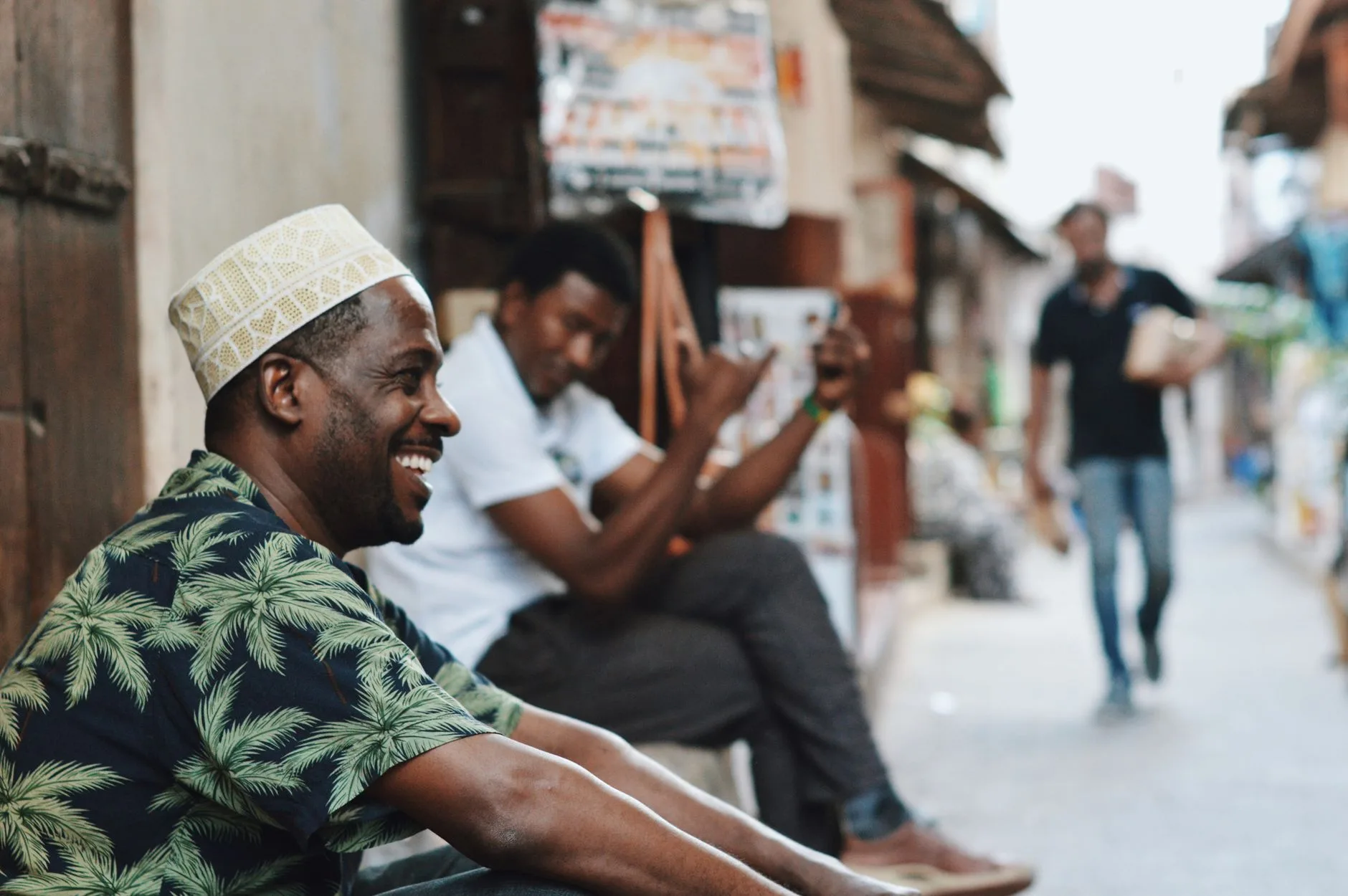
How to connect with locals when travelling abroad
A man in a worn apron is arranging dried chillies outside a spice shop in the Mellah, the old Jewish quarter of Marrakech’s medina. You stop — not to photograph the red pyramid of peppers, but because the smell is extraordinary: warm, dusty, faintly sweet. He notices. Offers a pinch. You sneeze. He laughs. No transaction takes place. That’s the whole point.
Moments like this don’t happen because you followed a formula. But they do happen more often when you’ve made certain choices before and during your trip: where you stay, how you eat, which bus you take, how many words of Darija you learned on the flight. None of it requires adventurousness for its own sake. It requires paying attention — and giving people a reason to pay attention back.
This guide is practical. It covers the specific settings, habits, and decisions that make genuine connection more likely — across destinations, budgets, and travel styles.
1. Start before you arrive: language and context
The single most reliable thing you can do to connect with people in another country is learn a handful of words in their language. Not fluency. Not even competence. Just enough to greet someone in their own tongue, apologise when you’ve misunderstood, and ask whether this bus goes to the market.
In Japanese, “sumimasen” (excuse me) and “arigatou gozaimasu” (thank you, formal) open doors that English alone doesn’t reach. In Turkish, “teşekkür ederim” earns a different quality of smile than “thanks”. In rural Georgia, any attempt at “gmadlobt” (thank you) tends to result in an immediate offer of chacha. The words matter less than the signal they send: I did something before I got here. I thought about you.
Apps like Pimsleur or Anki flashcard decks for specific languages take 15–20 minutes a day. Lonely Planet’s phrasebook series covers over 100 languages and is still worth carrying in print for destinations with unreliable internet. A pocket phrasebook in, say, Amharic or Khmer is also a conversation starter in itself — people are often curious, sometimes amused, and occasionally moved that you bothered.
Learning Spanish before a trip to Guatemala isn’t just practically useful — it’s the foundation for everything else. The language schools in Antigua, Guatemala offer one-on-one immersion homestay packages where you study by day and eat dinner with a local family. That combination — structured learning plus daily domestic life — is one of the most effective ways to arrive somewhere and immediately have context, conversation, and belonging.
2. Choose accommodation that puts you in the neighbourhood
Where you sleep determines what you encounter in the morning. A resort or international hotel offers comfort but places you behind glass. A guesthouse in a working neighbourhood means you buy coffee from the same woman every day, nod at the man walking his dog, and gradually become a face that belongs.
Specific options worth knowing:
Homestays place you directly inside a family’s home. In rural Indonesia, this means sharing meals, watching how the day is structured, and experiencing hospitality in a form that has no equivalent in hotel culture. The logistics, etiquette, and what to expect from a homestay in rural Indonesia are worth reading before you book.
Guesthouses in residential neighbourhoods — not the traveller quarter — are available in nearly every destination. In Hanoi, this means staying in Tây Hồ or Ngũ Xã rather than the Old Quarter. In Istanbul, Balat or Kadıköy rather than Sultanahmet. In Tbilisi, Vera or Chugureti rather than the tourist stretch near Rustaveli Avenue.
Ryokans in Japan offer something different: structured intimacy. The hosts bring your meals, explain the onsen etiquette, and check on you with a formality that gradually softens into warmth. There’s a full guide to staying in a traditional Japanese ryokan if you haven’t done it before — the customs are specific and worth knowing in advance.
The principle is consistent: the further your accommodation is from the tourist ecosystem, the more your daily movements intersect with ordinary life.
3. Eat where people eat, not where tourists are directed
Food is the most reliable common ground across cultures. The act of eating together — or even eating in the same space — is fundamentally social, and markets and street-food settings are where this happens most naturally.
Don’t look for the place with an English menu outside or the restaurant a hotel concierge recommended without being asked. Look for:
- Municipal markets in the morning — Mercado de San Telmo in Buenos Aires at 8am, Namdaemun Market in Seoul before noon, Marché de Adjamé in Abidjan at dawn — these are working places where people shop for the week, not for Instagram
- Lunch canteens near bus or train stations — workers eat here, and the food is regional and cheap
- Night markets that aren’t in the tourist guide — in Chiang Mai, the Warorot Market (Kad Luang) on the east bank of the Ping River is a wholesale and local market that functions alongside rather than for visitors
- Neighbourhood bakeries, tea houses, and coffee shops — in Morocco, a café serving atay (mint tea) on a side street will be full of locals playing cards; in Ethiopia, a coffee ceremony in someone’s home or a local café serving buna is a ritual with its own time and protocol
The mechanics of eating safely and well at local markets in Southeast Asia involve a few specific habits — watching for busy stalls with high turnover, pointing and smiling rather than demanding translation, and accepting that a dish you can’t identify is often the best one.
4. Use shared transport, not private transfers
The airport taxi and the private transfer are fine. But the minibus, the shared tuk-tuk, the slow boat, the third-class train carriage — these are where travel happens between the destinations.
| Transport type | What it offers | Where it’s most useful |
|---|---|---|
| Shared minibus (matatu, marshrutka, songthaew) | Full local interaction; low cost; unpredictable timing | East Africa, Georgia, Thailand, Central Asia |
| Slow overnight ferry | Long shared time; meals together; conversation inevitable | Greece (islands), the Philippines, Indonesia |
| Third-class train | Regional life; food vendors; families travelling | India, Morocco, Vietnam, Egypt |
| Slow boat (river) | Forced patience; shared space over many hours | Laos (Mekong), Bangladesh (rivers), Amazon |
| Local bus (not tourist bus) | Cheaper; slower; often the only option in rural areas | Everywhere |
The Mekong slow boat from Huay Xai to Luang Prabang is a two-day journey on a wooden boat with bench seating. You share it with Lao families, monks, produce, and occasionally livestock. By the second afternoon, you will have had more real conversation — even across a language barrier — than in a week of organised tours.
The physical constraints of shared transport do the work. You can’t be elsewhere. Neither can anyone else.
5. Participate in structured community settings
Organic connection is real, but it’s not the only kind. Structured settings — classes, workshops, festivals, guided experiences run by local people — create legitimate context for interaction and often lead somewhere genuine.
Cooking classes work best when they’re run by individuals in their own kitchens rather than commercial operations in tourist centres. A cooking class in a village near Hội An, where you visit the market with the host family first and cook in a home kitchen, is not the same as a branded experience in a converted restaurant. Many of these are bookable directly through local guesthouses or community tourism boards.
Language exchange meetups exist in most mid-size cities. Locals practising English or French meet travellers trying to practise Vietnamese or Arabic. In Hanoi, these happen at cafés in the Hoàn Kiếm district on weekend evenings. In Buenos Aires, Intercambio events are listed on local Facebook groups and Meetup. The exchange is equal; no one is doing the other a favour.
Festivals and ritual events require a different kind of attention. Attending a local festival in Bali as an outsider is possible and often welcomed — but it comes with responsibilities around dress, behaviour, and spatial awareness that are worth understanding before you arrive. The same applies to Ramadan in Morocco, Diwali in Varanasi, or Timkat in Lalibela.
Community-based tourism programmes are worth seeking out specifically. These are not charity experiences — they’re local enterprises designed to distribute tourism income directly while giving visitors genuine access to community life. The difference between a well-run programme and a performative one is largely in the ownership structure: who designed it, who profits, and whether it continues when the NGO funding ends.
6. Slow down enough for things to happen
Most of the conditions listed above — the market, the guesthouse, the shared bus, the cooking class — are useless if you’re moving too fast to let anything develop. A week in five countries produces photographs. A week in one neighbourhood produces something closer to understanding.
Slow travel isn’t a philosophy. It’s a logistical decision: book fewer places, give yourself more days in each one, build in time that isn’t allocated. In practical terms, this means:
- Staying at least four nights in a non-capital destination before moving on
- Returning to the same café or market stall more than once — recognition is the beginning of relationship
- Not filling every day with organised activities — the unstructured hours are where encounters happen
- Accepting boredom as a feature, not a problem. Boredom is the condition under which you finally sit down somewhere, order whatever the person next to you is having, and wait to see what happens next
The best places for slow travel in Portugal — towns like Évora, Tavira, and Viana do Castelo — work well for this precisely because they’re sized for being known. You will see the same faces after two days. After four, you’ll know who opens the pastelaria and what time the evening passeo starts.
7. Understand the context you’re entering
Connection across cultures requires, at minimum, not being offensive. More than that, it requires some curiosity about the rules of the place you’re visiting — not to perform compliance, but because understanding how a society works is interesting, and getting it wrong closes doors that might otherwise open.
In Japan, understanding customs before you visit — removing shoes, accepting business cards with both hands, the etiquette around eating and queuing — signals respect for the social fabric, which is taken seriously. In religious settings across the Islamic world, Hindu India, or Buddhist Southeast Asia, how you dress and behave in communal spaces matters to people beyond the immediate moment. A guide to visiting religious sites respectfully covers the practical specifics across traditions.
National Geographic’s research on cross-cultural communication makes the point clearly: the willingness to understand context — not just accept it, but be genuinely curious about why it exists — is what separates a visitor from a tourist in the way that actually counts.
None of this is about perfection. Mistakes happen, and in most places, a genuine attempt followed by a genuine apology is received warmly. The failure mode to avoid is not mistakes — it’s indifference.
The Bottom Line
Learn at least ten words before you land. Greeting someone in their own language is not a trick. It’s the minimum acknowledgement that they exist in a world that isn’t yours.
Stay in the neighbourhood, not in the tourist zone. A guesthouse in a working residential area costs less and gives you daily life instead of a curated version of it.
Eat at the market at the hour when working people eat. Lunch at 12:30, not 2pm. The municipal market on a Tuesday, not the restaurant with the photo menu. Turnover and noise are better indicators of quality than reviews.
Use shared transport at least once per destination. Not because it’s authentic, but because it works. You will be in a small space with people going somewhere for real reasons, and that creates conversation by necessity.
Spend more time in fewer places. Four nights in one town lets you become a recognisable face. Recognition is the foundation of everything else.
Keep reading: Community-based tourism examples that actually work